Key Takeaways
- Stain bonds to clean, open wood, so cleaning has to come first.
- Too much pressure gouges soft wood and leaves marks that show through stain.
- A wood cleaning solution and gentle rinse remove mildew and grime safely.
- Wood must dry fully before staining, which takes days in NC humidity.
- Redeemed Pro Wash cleans and preps decks safely, with free estimates.
Deck cleaning before staining is the step most homeowners underestimate, and it's the step that decides how good the finished stain looks. Stain bonds to clean, open wood. Applied over dirt, mildew, or old flaking finish, even the best stain peels and fades fast.
In North Carolina, decks work hard. Humidity feeds mildew on shaded boards. Pollen settles into the grain every spring. Red clay and foot traffic leave the surface grimy. All of that has to come off before any stain goes on.
This guide walks through why cleaning comes first, what proper deck prep involves, and how to know when your deck is truly ready for stain. Whether you plan to stain yourself or hire it out, a clean start makes the difference.
Why Clean Wood Holds Stain Better
Wood stain works by soaking into the grain. If the surface is coated with dirt, pollen, or a layer of mildew, the stain sits on top of that grime instead of the wood. It looks fine for a few weeks, then starts to lift and peel.
Old, failing stain is the same problem. New stain won't bond well over a flaking layer of old finish. That old coat has to be cleaned and stripped away so fresh stain reaches bare wood.
Mildew is especially sneaky. Seal a mildew-covered board under stain and the growth keeps living underneath. It shows through and shortens the life of the finish. Cleaning it out first is the only real fix.
There's a simpler way to think about it. Stain is only as good as the surface under it. Spend a little effort on cleaning and prep, and an average stain performs well. Skip the prep, and even a premium stain fails early. The prep is where the lasting result actually comes from.
The Danger of Too Much Pressure on Wood
It's tempting to blast a deck clean with high pressure, but wood is soft. Too much pressure gouges the boards, raises fuzzy grain, and leaves marks that show right through the stain. Those scars are hard to sand out.
Softwoods like pine and cedar are especially easy to damage. A pressure setting that's fine for concrete will tear these boards apart. The result is a rough, uneven surface that stain only makes more obvious.
The safer approach is lower pressure combined with a wood-appropriate cleaning solution. The cleaner does the work of lifting mildew and grime, and a gentle rinse finishes the job without carving up the wood.
The difference shows once the stain goes on. A smoothly cleaned board takes stain evenly and looks rich. A board chewed up by too much pressure shows every gouge and fuzzy patch, and no amount of stain hides it. Gentle cleaning is what sets up a finish you'll be happy with.
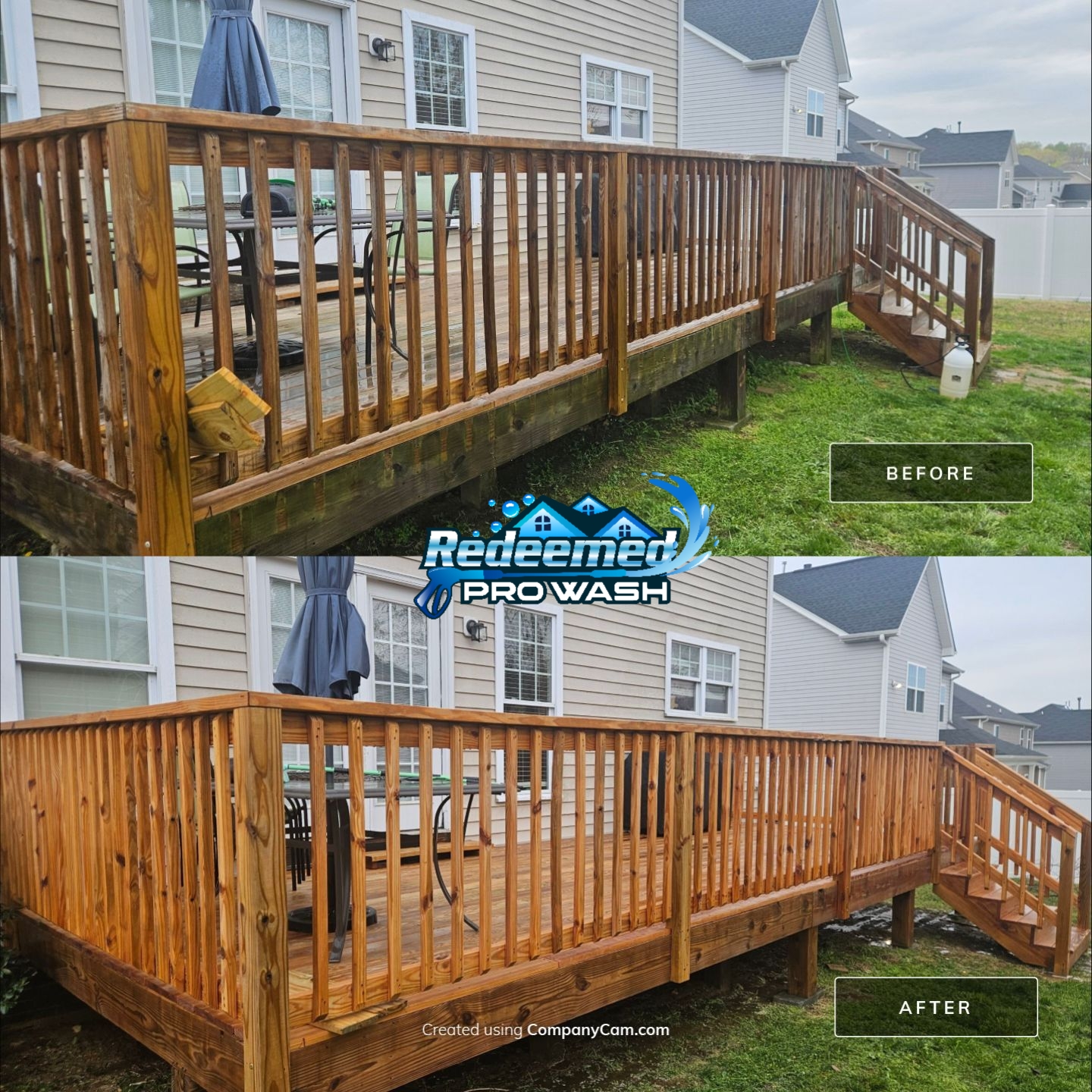
What Proper Deck Prep Involves
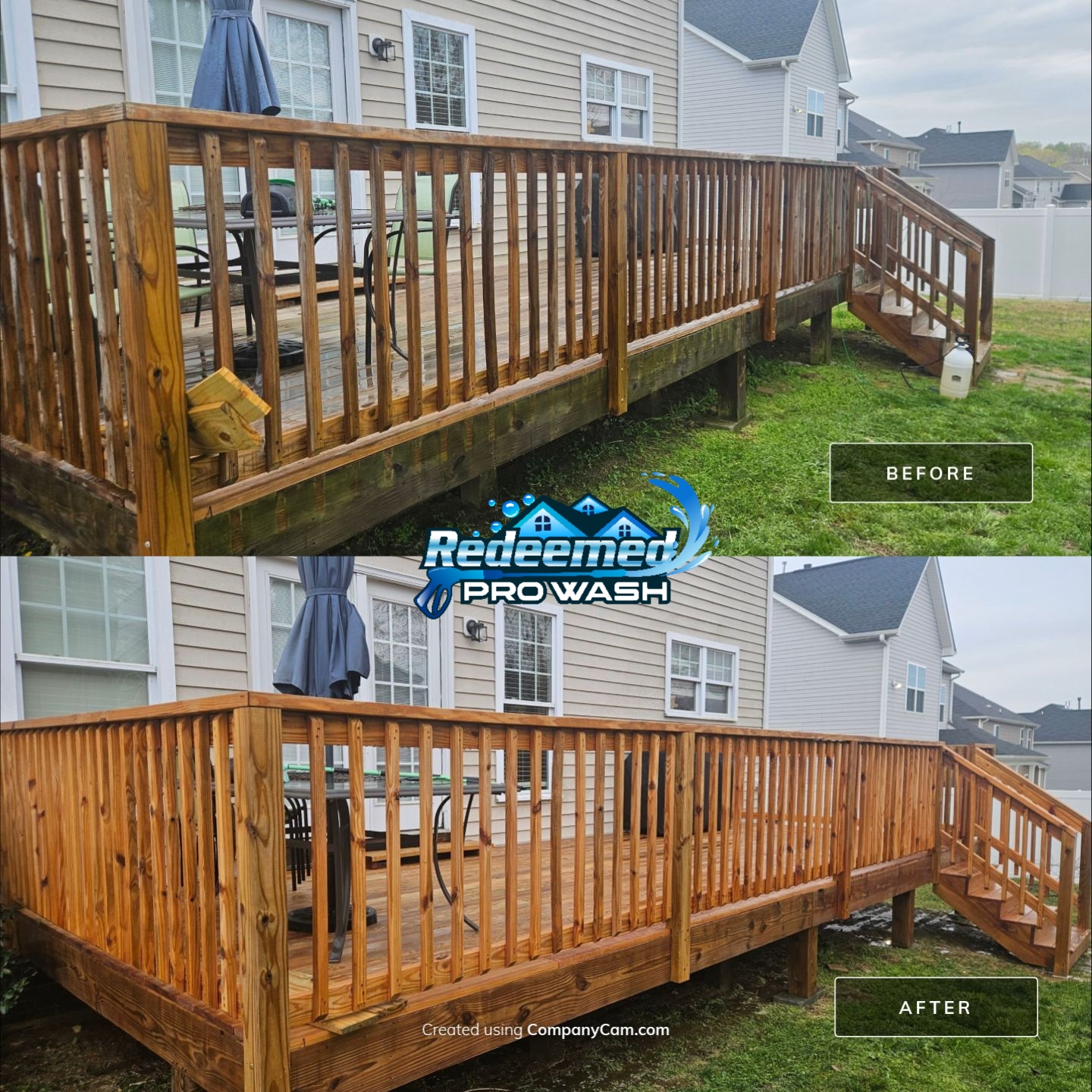
Good prep starts with removing dirt, mildew, algae, and pollen from the surface. A wood cleaning solution loosens the buildup so it rinses away cleanly, leaving the grain open and ready.
If there's old stain or a graying weathered layer, that needs to come off too. A brightener is often used to even out the wood tone and open the grain further, so new stain absorbs evenly. That gray, weathered look is sun and moisture damage on the surface fibers, and clearing it is what lets fresh stain reach sound wood.
Then the deck has to dry. Wood needs time to release the moisture from cleaning before stain goes on. Staining damp wood traps water and leads to a blotchy, short-lived finish.
How to Know Your Deck Is Ready to Stain
The surface should be clean, with no visible mildew, dirt, or flaking old finish. Run your hand across the boards. They should feel clean, not gritty or slick. A quick water test helps too. Sprinkle a little water on the wood, and if it soaks in rather than beading up, the grain is open and ready to accept stain.
The wood also needs to be dry all the way through, not just on the surface. In humid North Carolina weather, that can take a couple of days after cleaning, longer for shaded or covered decks. A board can feel dry on top while still holding moisture underneath, so it's worth giving it extra time before you commit to staining.
Weather matters for the staining itself. A dry stretch with moderate temperatures gives the best result. Staining right before rain or in high humidity works against you.
This is where North Carolina timing gets tricky. Summer afternoons often bring pop-up storms, and spring mornings stay damp with dew. Watching the forecast and giving the wood real drying time between cleaning and staining is worth the patience.
When to Bring In a Local Pro
Deck cleaning is doable as a DIY project, but the pressure and the cleaning solution both take a careful hand. One overpowered pass can leave marks that show through the stain for years.
A local company that knows wood can clean the deck safely and prep it right, so you or your stainer start with a clean, even surface. We use the correct pressure and the right products for the boards you have.
Redeemed Pro Wash is locally owned, licensed, and insured, and serves homeowners across the Triad. If a deck cleaning is on your list before staining season, we're glad to give you a free estimate.
Getting the prep right is the least glamorous part of a deck project and the part that decides how long your stain lasts. Whether you hand off the whole job or just the cleaning, starting with clean, sound wood is the smart move. Reach out anytime and we'll help you set up a finish that holds.
Related Services & Areas
Frequently Asked Questions
The wood needs to dry fully first. In North Carolina humidity that usually means a couple of days, and longer for shaded or covered decks. Staining before the wood is dry leads to a blotchy, short-lived finish.
It's risky. Too much pressure gouges soft wood, raises the grain, and leaves marks that show through the stain. Lower pressure with a wood-safe cleaning solution is the better approach.
Usually, yes, if the old stain is flaking or failing. New stain won't bond well over a failing coat, so that layer should be cleaned or stripped so fresh stain reaches the wood.
Absolutely. We can clean and prep the deck so you start with a clean, even surface, then you handle the staining on your own schedule.