Sidewalk & Walkway Cleaning in North Carolina
Safe, thorough sidewalk and walkway cleaning across the North Carolina Triad. We lift away slippery algae, red-clay stains, and grime to restore a clean, safe path to your door.
Sidewalk and walkway cleaning in North Carolina is about more than looks. Every path around your home collects a thin film of algae, dirt, pollen, and organic growth, and in our warm, humid Triad climate that film turns slick fast. Redeemed Pro Wash is an owner-operated, licensed and insured company based in Gibsonville, and we clean walkways the right way so your surfaces come back safe, bright, and welcoming.
Concrete paths, brick borders, and paver walkways each behave differently under water and pressure. Using too much force in the wrong spot can etch concrete, stripe the surface, or blast the sand out of paver joints. We match our method to your material, so you get a deep, even clean without the damage that a rented pressure washer can leave behind.
Below we walk through why walkways get dirty and slippery, how professional cleaning actually works, what pressure washing can and cannot fix, and honest pricing starting at $99. We serve Gibsonville, Greensboro, High Point, Winston-Salem, Burlington, and communities across the Triad and statewide.
Key Takeaways
- Slippery algae and moss on walkways are a genuine slip-and-fall hazard, and routine cleaning is a simple way to reduce that risk for your family, guests, and property.
- The right method depends on the surface: solid concrete can be pressure washed with a surface cleaner, while pavers, brick, and stone need gentle soft washing to avoid etching and joint-sand blowout.
- DIY pressure washing commonly causes etching, striping, and loosened pavers, and treating algae only with water lets the growth return quickly.
- Most Triad walkways benefit from cleaning once or twice a year, with shaded and sprinkler-fed paths needing more frequent attention.
- Redeemed Pro Wash is licensed, insured, owner-operated, and backed by 50 five-star reviews, with walkway cleaning starting at $99 and free estimates.
Why Sidewalks and Walkways Get Dirty and Slippery in North Carolina
North Carolina gives walkways a hard time. Long humid summers, heavy spring pollen, shaded north-facing paths, and frequent rain create the exact conditions that organic growth loves. The green or black film you see building along the edges of your walkway is usually algae, and the fuzzy green cushions in the low, damp spots are moss. Both hold moisture, and both get dangerously slick the moment they get wet.
There is a second local factor many homeowners miss: red clay. The iron-oxide-rich soil across the Piedmont Triad washes onto sidewalks with every rain and can leave rusty, orange-brown staining that a garden hose will never touch. Add tire marks near driveway aprons, leaf tannin from overhanging trees, mildew in the mortar joints, and a season of yellow pine pollen, and even a newer walkway starts to look tired and neglected.
On paver and stone paths you may also see efflorescence, a chalky white haze that rises to the surface as water moves through the material and leaves mineral salts behind. It is a natural process, not dirt, and it responds to a different approach than algae or clay. Knowing what you are actually looking at is the first step to cleaning it correctly, which is a big part of what we bring to every job.
Slippery Walkways Are a Real Safety and Liability Concern
A slick walkway is not just unsightly, it is a hazard. Algae and moss are among the most common causes of slips and falls on residential and commercial paths, and the risk climbs sharply when the surface is wet from rain, dew, or a sprinkler. A path that looks harmless when dry can be treacherous first thing on a foggy Triad morning.
For homeowners, that means protecting family, guests, and delivery drivers. For businesses, HOAs, churches, and rental owners, it can mean real liability. Property owners are generally expected to keep walking surfaces reasonably safe, and a neglected, algae-covered path is exactly the kind of condition that draws attention after someone falls. Routine cleaning is one of the simplest ways to reduce that risk.
Cleaning also removes the moisture-trapping organic layer that hides trip hazards. Once a walkway is clear, cracks, lifted slabs, and uneven joints become visible so you can address them. We will point out anything we notice, though repairing structural issues is outside our cleaning scope. Our job is to remove what is making the surface slick and dirty so the path is safer to use.
Pressure Washing vs. Soft Washing: Choosing the Right Method
There is no single correct way to clean every walkway, and that is the most important thing to understand. Solid, cured concrete sidewalks can handle true pressure washing, and that is our primary method for them. We use a flat-surface cleaner rather than a bare wand tip, which spins water in an enclosed head to deliver even cleaning with no wand stripes or zebra lines across your path.
Pavers, natural stone, brick, and older or flaking concrete are a different story. Blasting these with high pressure and a narrow jet tip can etch the surface, chip edges, expose aggregate, and, on pavers, blow the stabilizing sand right out of the joints, which loosens the whole path. On these materials we lean on soft washing: low pressure paired with eco-conscious, plant-safe cleaning solutions that break down algae, mold, and mildew at the source and then rinse away clean.
This matters because algae is a living organism. Simply blasting it off with water removes what you can see but leaves microscopic spores behind, so the growth returns quickly. Our cleaning solutions treat the growth itself, which gives you a cleaner result that stays clean longer. We choose pressure, tip, flow, and detergent to match your specific surface, which is exactly the judgment a rented machine cannot make for you.
What Can Go Wrong With DIY and the Wrong Approach
Rented and home pressure washers are powerful, and on the wrong surface that power works against you. The most common DIY mistakes we get called to fix are etched concrete, where too-high pressure or a pinpoint nozzle held too close carves visible lines and rough patches into the surface, and striping, where uneven passes leave a permanent light-and-dark plaid across the walkway.
On paver walkways the damage can be worse. A jet nozzle can strip the color-rich fines from the surface, dull the finish, and flush out the joint sand that holds pavers in place. Once that sand is gone the pavers shift, the path becomes uneven, and weeds and ants move into the open joints. Repairing that costs far more than a professional cleaning would have.
There is also the safety side of DIY. Pressure washers can drive debris and cleaning chemicals back at the operator, and working on wet, slick surfaces around home foundations and plantings invites accidents. As a licensed and insured, owner-operated business, we bring the right equipment, protect your landscaping and nearby vegetation, and take on the risk so you do not have to.
Our Sidewalk and Walkway Cleaning Process
Every walkway cleaning starts with a look at what we are working with. We identify the material, note shaded or chronically damp sections, spot red-clay and rust staining, and check paver joints and any flaking or spalling concrete so we can set the correct approach before a drop of water touches the ground.
Next we protect the area, pre-treating heavy algae, moss, and mildew with plant-safe solutions and taking care around your grass, beds, and plantings. For solid concrete we then run a surface cleaner at the right pressure for an even, stripe-free finish, working stains and edges by hand where needed. For pavers, brick, and stone we soft wash, letting the cleaning solution do the work so the material stays intact.
We finish with a controlled rinse that carries the loosened grime off the path rather than back into your flower beds, and we walk the results with you. Where a walkway would clearly benefit from ongoing maintenance because it sits in deep shade or gets hit by sprinklers, we will tell you honestly rather than overselling a single visit.
How Often Should You Clean Your Walkways?
For most Triad homeowners, cleaning walkways once or twice a year keeps them safe and presentable. A single annual cleaning suits paths in sunny, open areas with light traffic. Twice a year, typically after the spring pollen wave and again in fall, fits busier homes and anything that greens up quickly.
Some walkways need more attention. Shaded, north-facing paths, sections under trees, and any concrete near sprinkler spray stay damp longer and grow algae and moss faster, so they may benefit from more frequent service. High-traffic commercial and HOA walkways also tend to need a steadier schedule to stay safe and looking their best.
The goal is to clean enough to stay ahead of slippery growth without over-cleaning. A sensible seasonal rhythm protects appearance and safety at the same time, and it is far easier to maintain a clean walkway than to recover one that has been neglected for years. We are happy to recommend a cadence that fits your specific property when we provide your free estimate.
Local Sidewalk and Walkway Cleaning Across the Triad
Redeemed Pro Wash is based in Gibsonville and works throughout the North Carolina Triad, including Greensboro, High Point, Winston-Salem, and Burlington, with service available statewide. Being local means we understand the surfaces and the conditions here: the red clay that stains our concrete, the black algae streaking that thrives in our humidity, and the heavy pollen that coats every path each spring.
We are owner-operated, so the person who gives you an estimate is invested in doing the job right, and we are licensed and insured for your protection. Our work is backed by 50 five-star Google reviews from neighbors across the Triad who trust us with their homes and businesses.
If your sidewalk, walkway, or garden path has gone green, gray, or streaked, we would be glad to help. Sidewalk and walkway cleaning starts at $99, and estimates are always free. Call Redeemed Pro Wash at (351) 242-0666 for a free estimate and let us restore a clean, safe path to your door.
What We Clean
- Concrete sidewalks and front walks
- Paver walkways and garden paths
- Brick paths and mortared borders
- Natural stone and flagstone walkways
- Stamped and decorative concrete paths
- Steps, stoops, and porch landings
- Walkways leading to pools and patios
- Commercial and HOA public walkways
- Curbs, edges, and driveway aprons
- Shaded, algae-covered north-facing paths
Our Process
- Step 1
Inspect and Identify
We assess the material, note shaded and damp trouble spots, and check for red-clay staining, flaking concrete, and paver joints so we choose the correct method before we begin.
- Step 2
Protect and Pre-Treat
We apply eco-conscious, plant-safe solutions to break down algae, moss, and mildew at the source, taking care to protect your grass, beds, and nearby vegetation.
- Step 3
Clean the Right Way
We surface-clean solid concrete at the correct pressure for a stripe-free finish and soft wash pavers, brick, and stone to lift growth without etching or blowing out joint sand.
- Step 4
Rinse and Review
We rinse the loosened grime off the path rather than into your landscaping, then walk the finished results with you and answer any questions.
Pro Tips from Brian
- Watch the shaded, north-facing stretches first. Paths that stay damp grow algae and moss fastest and turn slippery long before the sunny sections do.
- Keep sprinkler heads from spraying directly onto walkways. Constant moisture feeds algae and speeds up regrowth after any cleaning.
- That white haze on pavers is usually efflorescence, not dirt. It is mineral salts rising to the surface and needs a different approach than algae, so do not just scrub harder.
- Skip the pinpoint jet nozzle on pavers and stone. It strips color, chips edges, and flushes out joint sand, which loosens the whole walkway.
- Clean before growth gets thick. A light annual or twice-a-year cleaning is far easier and safer than recovering a path that has been neglected for years.
- Test any walkway with your foot when it is wet, not dry. A path that feels fine dry can be surprisingly slick with morning dew or after rain.
What Affects Your Price
Sidewalk & Walkway Cleaning starts at $99. Most companies hide pricing — we don't. Here's what shapes the final number:
- Total square footage and length of the walkways being cleaned
- Surface type, since pavers, brick, and stone require slower, more careful soft washing than plain concrete
- Degree of buildup, from light pollen film to heavy algae, moss, and years of neglect
- Presence of tough staining like red-clay rust, oil, tire marks, or leaf tannin
- Access and layout, including steps, tight garden paths, and distance from a water source
- Whether the walkway is part of a larger job, such as bundling with driveway or house washing
Every estimate is free, written, and itemized — no surprise fees.
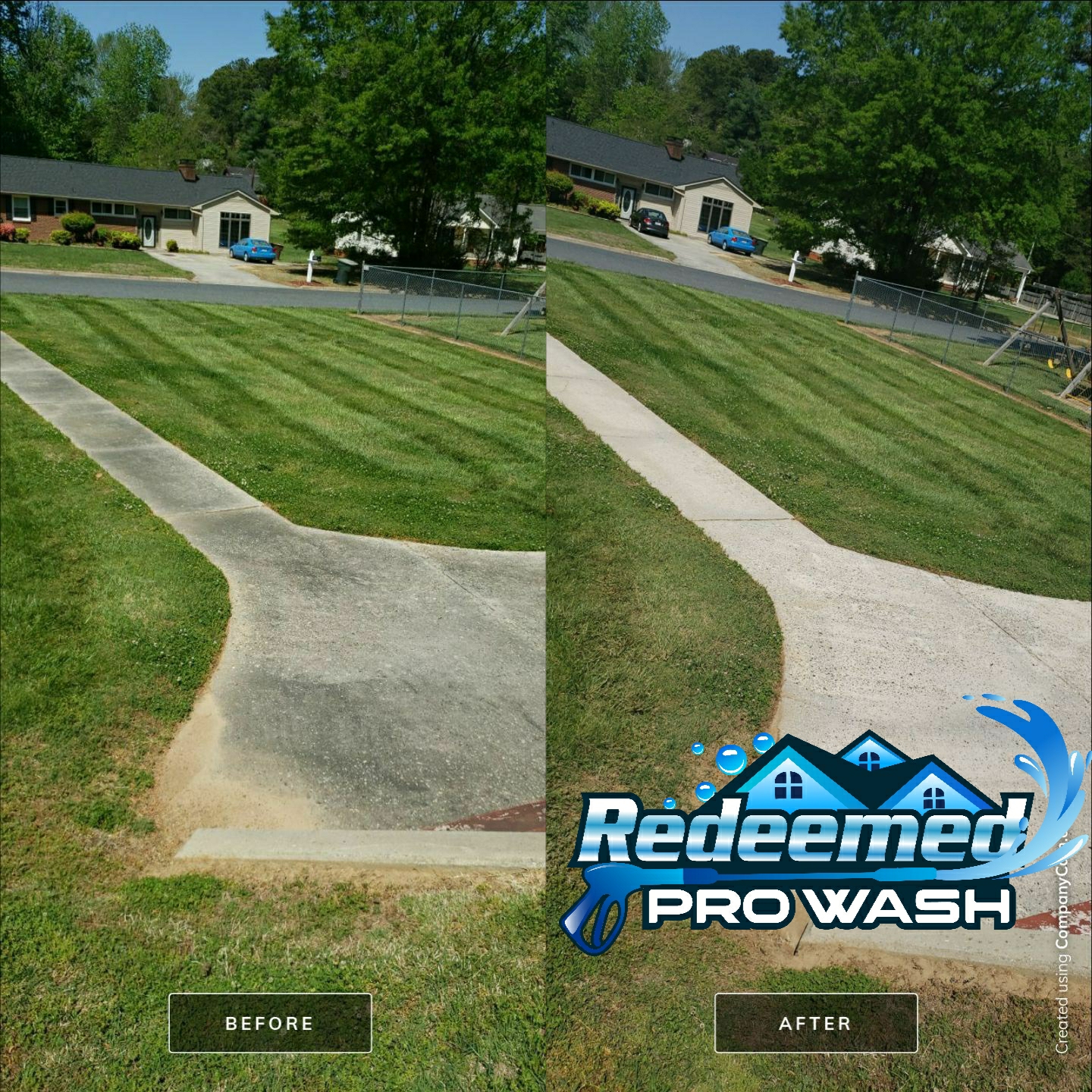
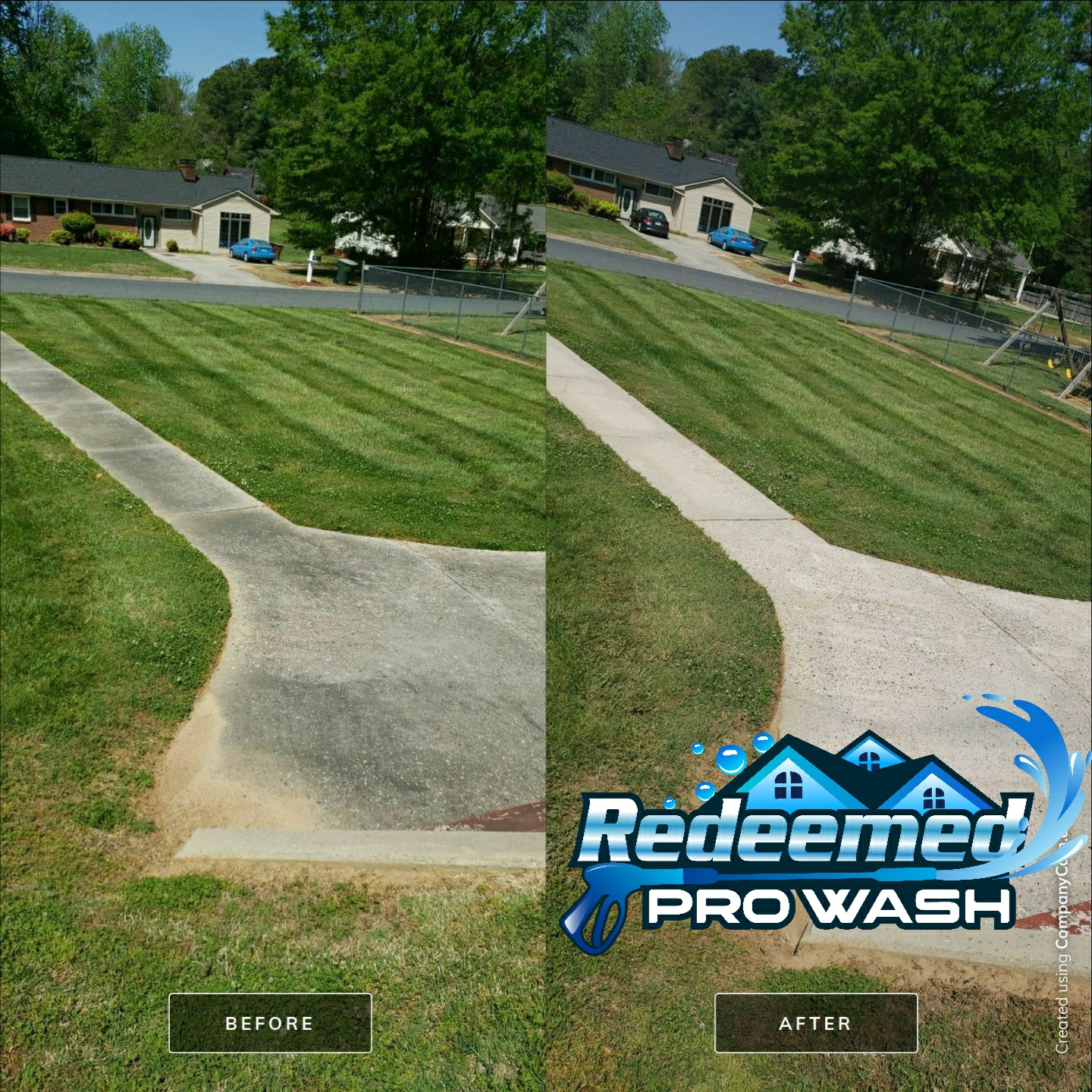
Sidewalk & Walkway Cleaning — Before & After
Actual work from Redeemed Pro Wash customers across the Triad.
 Before / After
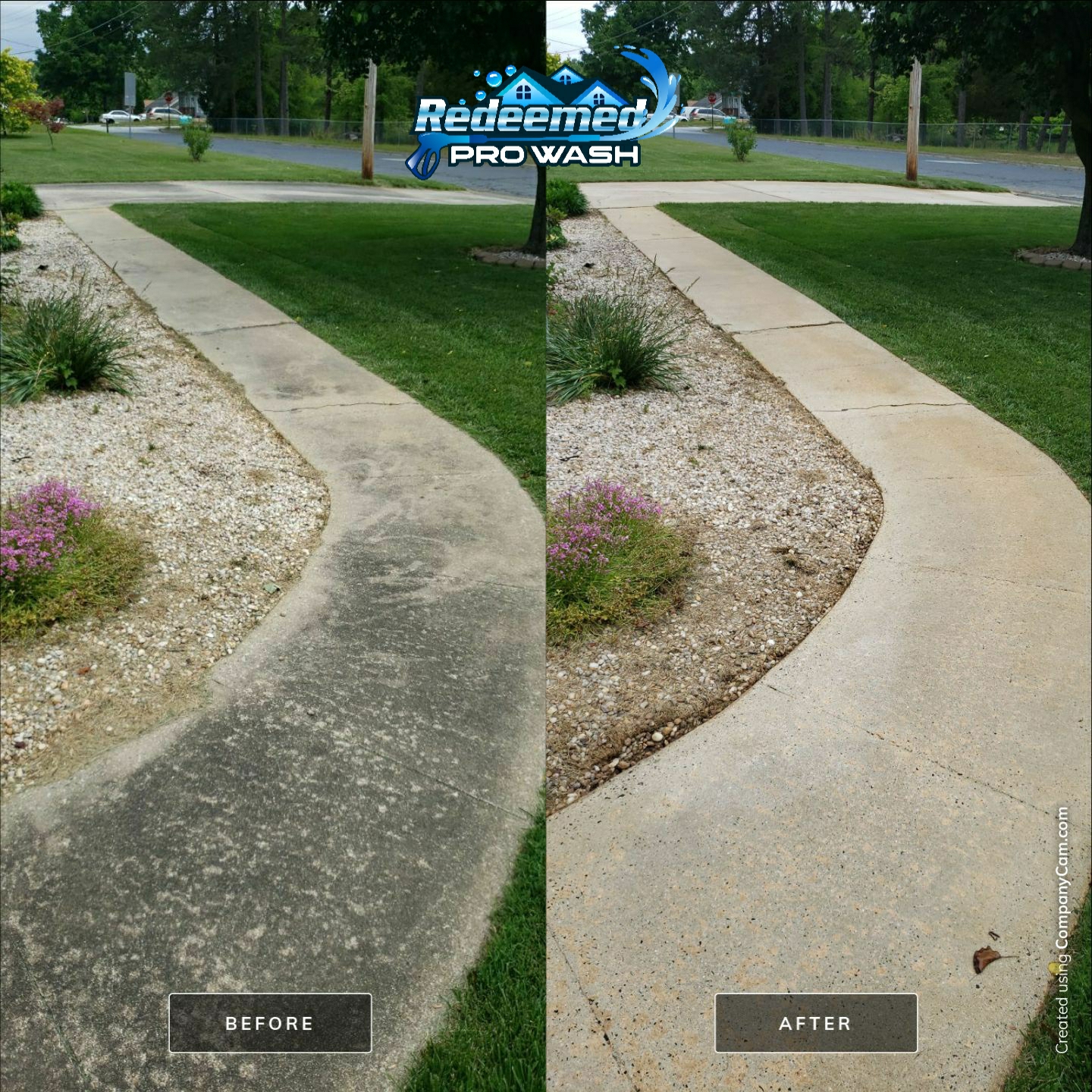 Before / After
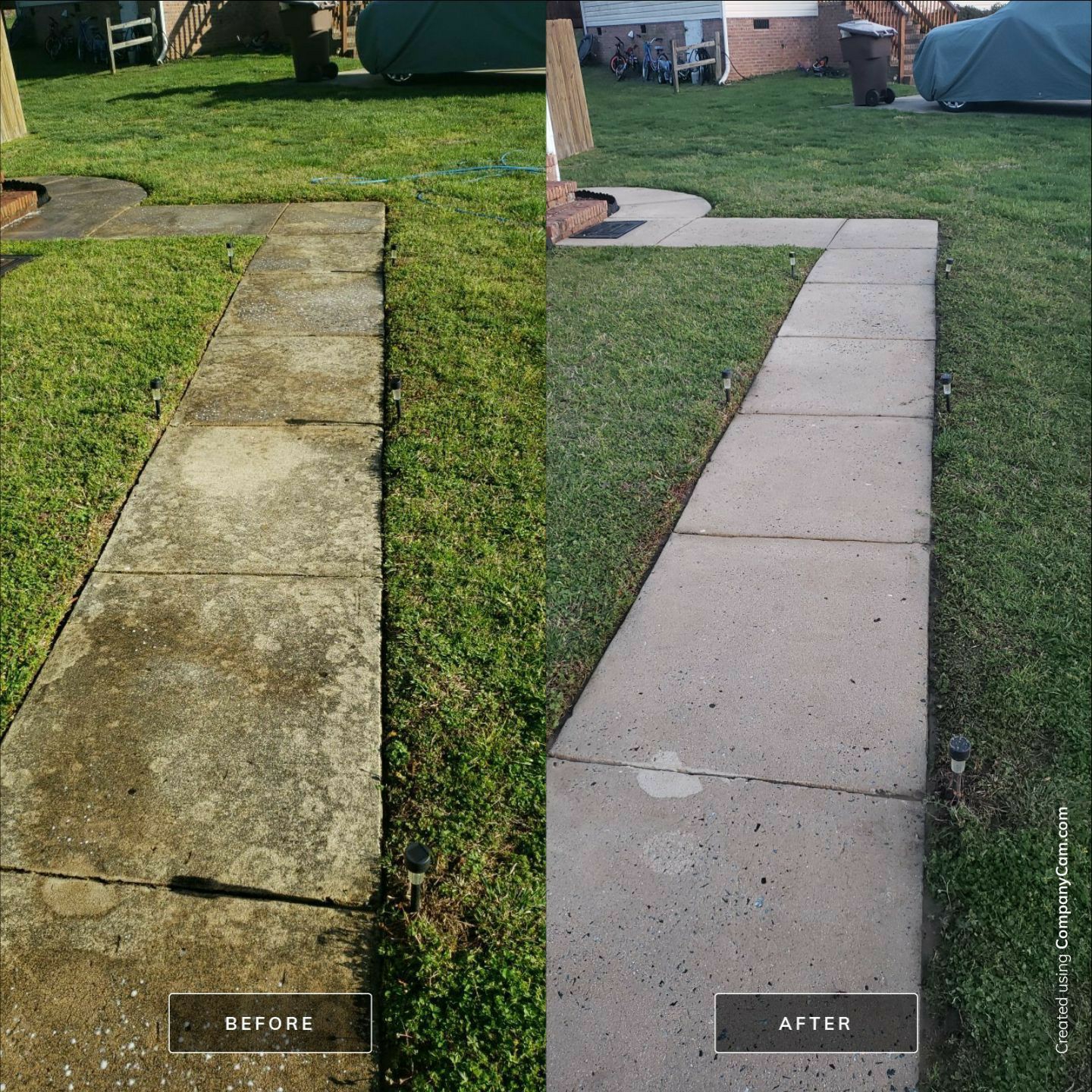 Before / After
Sidewalk & Walkway Cleaning Across the NC Triad
We provide sidewalk & walkway cleaning in these communities and more:
Related Services
Sidewalk & Walkway Cleaning FAQs
Our walkway cleaning starts at $99. The final price depends on the square footage, the surface material, how much buildup and staining is present, and how easy the path is to access. Estimates are always free, and bundling walkways with other services like driveway or house washing often makes the most sense.
It can, if it is done the wrong way. Too much pressure or a narrow jet tip can etch concrete, leave stripes, or blast the sand out of paver joints. That is why we match the method to the material, using a surface cleaner for solid concrete and gentle soft washing for pavers, brick, and stone.
Cleaning removes the algae and moss and makes the surface safe again, but algae is a living organism and will eventually return, especially in shaded or damp spots. Our plant-safe solutions treat the growth at the source so it stays cleaner longer than a plain water blast, and a yearly or twice-yearly cleaning keeps it in check.
Most Triad homeowners do well with cleaning once or twice a year. Shaded, north-facing paths, walkways under trees, and areas hit by sprinklers grow algae faster and may need more frequent service. We will suggest a sensible schedule for your property during your free estimate.
We work hard to lift red-clay and iron-oxide staining, which is very common on Piedmont Triad concrete, and most walkways come back dramatically improved. Some deeply set stains may not release completely, so we are honest about that up front rather than promising guaranteed removal.
Both. We clean concrete sidewalks, paver walkways, brick paths, and natural stone. Pavers and stone call for a gentler soft-wash approach so we lift the growth without etching the surface or flushing out the joint sand that keeps pavers stable.
Yes. We use eco-conscious, plant-safe cleaning solutions and take care to protect your grass, beds, and nearby vegetation while we work. We rinse in a way that carries grime off the path rather than into your landscaping.
A rented machine has plenty of power but no judgment, and on the wrong surface that leads to etching, striping, and blown-out paver joints that cost more to fix than a professional cleaning. As a licensed and insured, owner-operated company, we bring the right equipment and technique for each surface and take the risk off your hands.
Yes. We clean public walkways for businesses, HOAs, churches, and rental properties across the Triad. Keeping these paths free of slippery algae and moss is an important part of maintaining a safe property, and we can set up a schedule that fits your needs.
We are based in Gibsonville and serve the entire North Carolina Triad, including Greensboro, High Point, Winston-Salem, and Burlington, with service available statewide. Call us at (351) 242-0666 for a free estimate.