Concrete Cleaning Services in North Carolina
Even, streak-free concrete for patios, pool decks, steps, and slabs across the North Carolina Triad. Licensed, insured, and owner-operated.
Concrete cleaning services in North Carolina keep the hardest-working surfaces on your property looking clean and cared for. Patios, pool decks, steps, porches, and parking pads take a beating from foot traffic, weather, and the region's stubborn organic growth. Over time that shows up as dark green algae, gray-black grime, and rust-colored clay staining that no amount of sweeping will fix.
Redeemed Pro Wash is an owner-operated pressure and soft washing company based in Gibsonville, serving the whole Triad and beyond. We clean flatwork the right way: the correct pressure, a plant-safe cleaning solution when the surface calls for it, and a surface cleaner attachment that leaves an even, streak-free finish instead of the zebra stripes a wand leaves behind.
This page walks through how concrete gets dirty, why method matters, what can go wrong with the wrong approach, and honestly what affects the price. Pricing starts at $149, and estimates are always free.
Key Takeaways
- Concrete is porous, so in the Triad's humid, shaded, pollen-heavy climate it collects algae, grime, and red clay staining quickly, all of which clean up well with the right method.
- Controlled pressure with a surface cleaner delivers an even, streak-free finish, while a plant-safe cleaning solution treats algae and mildew at the root so results last.
- The wrong approach, meaning too much pressure held too close, can permanently etch concrete or strip its sealer, which is why method and matched pressure matter.
- Most Triad concrete benefits from an annual clean, with shaded patios, pool decks, and high-traffic areas often needing more frequent attention.
- Redeemed Pro Wash is licensed, insured, and owner-operated with 50 five-star reviews; concrete cleaning starts at $149 and estimates are free.
Why North Carolina Concrete Gets Dirty So Fast
Concrete looks solid, but it is porous. The surface is full of tiny pores that soak up moisture, hold dirt, and give organic growth a place to root. In the North Carolina Triad, that porosity meets a climate that is close to ideal for buildup. Warm, humid summers, heavy spring pollen, and long stretches of shade on north-facing slabs all feed the same problem.
The green and black film you see on a patio or pool deck is almost always algae and mildew. It thrives in damp, shaded spots that stay wet after rain or morning dew. Left alone, it spreads, holds moisture against the surface, and gets slick, especially on steps and pool decks where a slip is a real hazard.
Then there is the red clay. Iron-oxide staining from our regional soil settles into concrete pores and leaves a rusty tint that a garden hose will never touch. Add tire marks, grease from where the car parks, leaf tannin from overhanging trees, and grill splatter on the patio, and a slab that started out light gray can turn several shades darker in just a couple of seasons.
None of this means your concrete is failing. It means it is dirty, and dirty concrete responds very well to the right cleaning. Gibsonville, Greensboro, High Point, Winston-Salem, and Burlington all share this same climate profile, so the buildup is predictable and, more importantly, treatable.
What We Clean: Patios, Pool Decks, Steps, and Slabs
Concrete cleaning covers a lot more than the driveway. We clean nearly every flat concrete surface around a home or business, and each one has its own quirks. Patios collect grill grease, leaf stains, and mildew in the shade. Pool decks build up algae and sunscreen film and need a finish that is clean without being made slick or damaged. Steps and porches are high-touch, high-slip areas where an even, safe surface matters most.
We also clean parking pads, sidewalks and walkways, garage floors, basement floors, entryways, and the concrete aprons in front of commercial buildings. If it is a poured or finished concrete surface, chances are we can clean it. For attached surfaces like a driveway or a full exterior, we handle those too, and we are glad to bundle related work into one visit.
Every surface gets matched to the right approach. A shaded pool deck coated in algae is a different job than a sun-baked parking pad with tire marks, and treating them the same is how people end up disappointed. We look at what is actually on your concrete before we decide how to clean it.
Pressure Wash vs. Soft Wash: Getting the Method Right
The word people reach for is pressure washing, and for a lot of concrete that is exactly right. Solid, cured concrete can take real pressure, and a good pressure wash lifts embedded dirt, grime, and tire marks out of the pores in a way a chemical alone cannot. This is the primary method we use for concrete flatwork.
But pressure is only half the story when organic growth is involved. Algae, mold, and mildew are living things. Blasting them off with water knocks back the surface color, but the roots stay in the pores and the green comes right back, often within weeks. The lasting fix is a cleaning solution that treats the growth at the source before we rinse. We use eco-conscious, plant-safe solutions, let them dwell, then clean. That is what makes the results last instead of just looking good for a month.
For most jobs, the winning combination is a soft-wash treatment to kill the biological growth followed by controlled pressure with a surface cleaner to lift out the dirt and even the finish. We adjust the pressure to the surface. Younger or decorative concrete, brick pavers, and anything with a sealer or a delicate finish get a gentler touch. Solid gray slabs can take more. Choosing the method to fit the surface, rather than forcing every job through the same nozzle, is the difference between a clean slab and a damaged one.
The Surface Cleaner: Why Your Concrete Comes Out Even
If you have ever seen a driveway with light and dark stripes after a wash, you have seen what a pressure wand does on flat concrete. The wand cleans in a narrow arc, and it is nearly impossible to overlap every pass perfectly by hand. The result is streaking, sometimes called zebra striping, that can look worse than the dirt did.
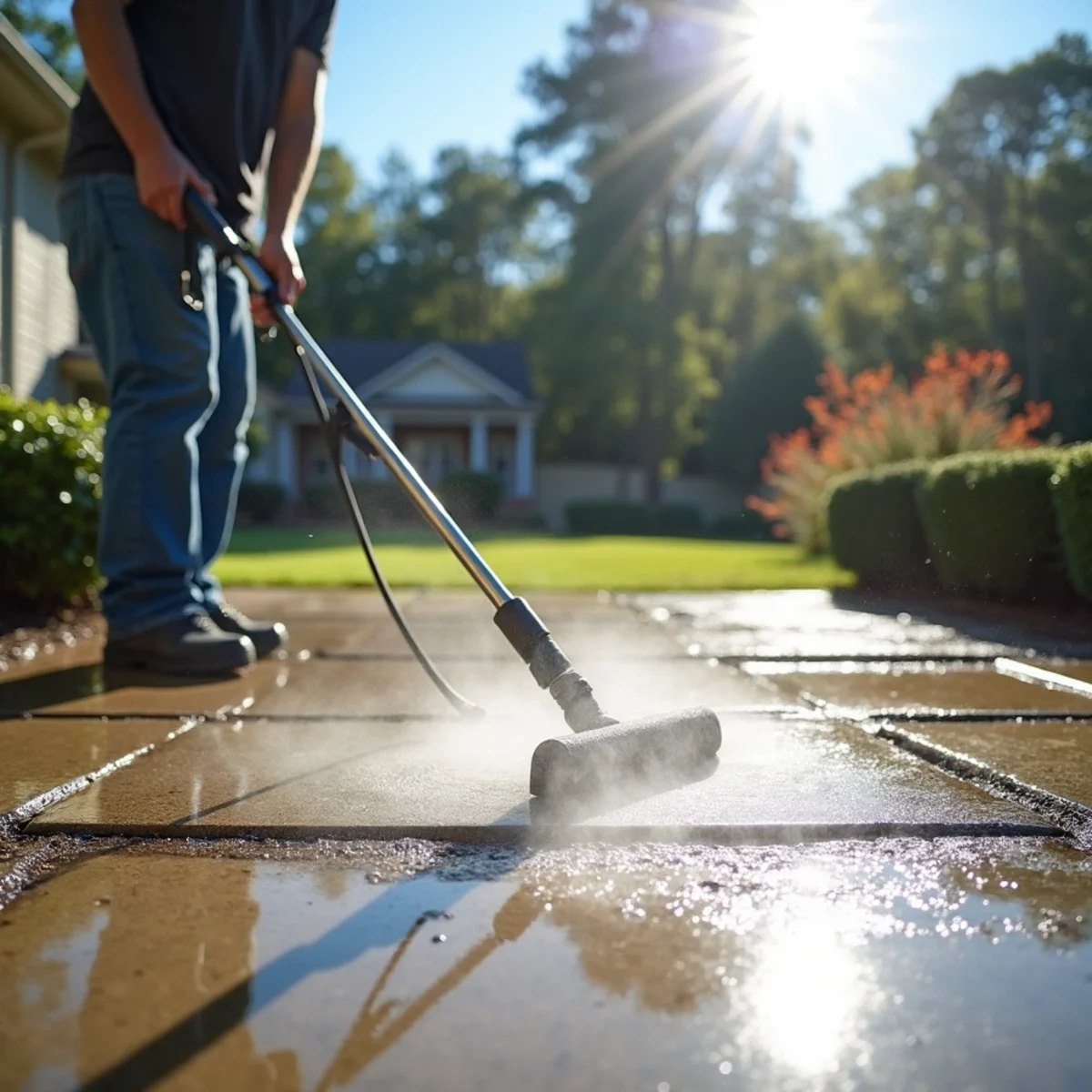
We clean flatwork with a surface cleaner: a flat, spinning attachment that rides just above the concrete and cleans a wide, consistent path with even pressure across the whole width. It removes grime uniformly, which is what gives you that clean, edge-to-edge finish with no stripes. It is also faster and gentler than a concentrated wand tip, because the pressure is spread out instead of focused on one point.
We follow the surface cleaner by detailing the edges, corners, and expansion joints with a wand where the machine cannot reach. That combination, a surface cleaner for the field and hand detailing at the borders, is how a patio or pool deck comes out looking clean all the way across rather than clean in the middle and grimy along the sides.
What Goes Wrong With the Wrong Approach
Concrete forgives a lot, but it does not forgive everything. The most common damage we see is from too much pressure held too close for too long. A concentrated tip can etch the surface, leave wand marks, and expose the aggregate underneath, which cannot be undone. Once concrete is etched, it is etched. This is a big reason we favor a surface cleaner and matched pressure over an aggressive wand in an untrained hand.
Pressure that is too high can also strip an existing sealer, which leaves the concrete less protected than before it was cleaned. If your concrete is sealed, or you are not sure, that is worth mentioning to us up front so we can adjust.
The other frequent mistake is skipping the chemistry. When someone pressure washes algae off without treating it, the surface looks clean for a few weeks and then greens right back up, because the roots were never addressed. People assume the cleaning did not work when the real issue was method. And on pool decks and steps, using the wrong process can leave a surface slicker rather than safer. Doing it right the first time is cheaper than doing it twice, and a lot safer.
Prepping Concrete Before Sealing
If you are planning to seal your concrete, cleaning is not optional, it is the most important step. Sealer bonds to the concrete, and it can only bond to a clean, open surface. Any dirt, algae, oil, or grime trapped in the pores gets sealed in and interferes with how well the sealer sticks and how long it lasts. A cheap seal over a dirty slab fails early. A good clean first is what makes the seal worth doing.
Timing matters too. Concrete needs to be genuinely dry before sealing, not just dry to the touch. Moisture pulled deep into the pores during a wash needs time to evaporate, and in our humid, shaded conditions that can take longer than people expect. As a general rule, give a freshly cleaned slab a day or two of dry weather before any sealer goes down, and longer if it is shaded or the weather is damp.
We are happy to clean your concrete as pre-seal prep whether you are sealing it yourself or having another contractor do it. Just let us know that sealing is the plan so we can prep the surface with that goal in mind.
How Often Should You Clean Concrete in the Triad?
For most Triad homes, cleaning concrete once a year keeps it looking good and keeps organic growth from getting established. An annual clean is enough for sunny, open slabs that dry out quickly and do not sit under trees.
Some surfaces need it more often. Heavily shaded patios, north-facing slabs, and anything under trees or near a lot of moisture can green up in well under a year and may do better on a spring-and-fall rhythm. Pool decks and high-traffic entries also benefit from more frequent attention because of constant use and constant dampness. Our humidity and heavy pollen season push buildup faster here than in drier parts of the country.
The value of staying on a regular schedule is that regular cleaning stops buildup from ever getting deeply rooted. A slab that is maintained annually cleans up quickly and evenly. A slab that has gone five years cleans up too, but it takes more work to get there. Treating a shaded surface with an algae-killing solution also buys you a longer stretch of clean before the green returns, because you are addressing the growth rather than just the color.
Honest Pricing and Your Free Estimate
Concrete cleaning with Redeemed Pro Wash starts at $149. Where a specific job lands depends on real factors we would rather be upfront about than surprise you with. The biggest ones are square footage, how heavy the staining is, and what kind of buildup we are dealing with. A lightly soiled patio is a quick job. A pool deck coated in years of algae, or a slab with deep rust and oil staining, takes more product, more dwell time, and more labor.
Honest note on stains: cleaning restores appearance, and it lifts the vast majority of dirt, algae, and grime. Deep, old oil stains and heavy iron-oxide clay staining are the toughest cases, and while we improve them significantly, we will always tell you plainly what to expect rather than promise a specific stain will vanish completely. Straight talk beats an overpromise.
We are licensed and insured, owner-operated, and proud of our 50 five-star Google reviews from neighbors across the Triad. When you reach out, we will look at your actual concrete and give you a clear, no-pressure quote. Call Redeemed Pro Wash at (351) 242-0666 or request your free estimate today, and we will get your patio, pool deck, steps, or slab looking clean again.
What We Clean
- Concrete patios and porches
- Pool decks and surrounds
- Front and back steps
- Sidewalks and walkways
- Parking pads and aprons
- Garage and basement floors
- Entryways and landings
- Concrete slabs and flatwork
- Commercial concrete surfaces
- Retaining walls and curbs
Our Process
- Step 1
Free On-Site Assessment
We look at your actual concrete, identify the staining and growth, and match the method to the surface. You get a clear, no-pressure quote before any work starts.
- Step 2
Pre-Treat and Protect
We rinse loose debris, protect nearby plants and fixtures, and apply an eco-conscious, plant-safe cleaning solution where organic growth is present, letting it dwell to treat algae and mildew at the root.
- Step 3
Surface Clean for an Even Finish
We clean the field with a surface cleaner at pressure matched to your concrete, delivering a consistent, streak-free result with no zebra striping.
- Step 4
Detail the Edges and Joints
We hand-detail corners, borders, and expansion joints where the surface cleaner cannot reach, so the whole slab looks clean edge to edge.
- Step 5
Final Rinse and Walkthrough
We do a thorough final rinse, clear the area, and walk the finished work with you to make sure you are happy before we leave.
Pro Tips from Brian
- Treat organic growth, do not just blast it. Algae and mildew have roots in the concrete pores. A cleaning solution that kills the growth keeps your patio or pool deck clean far longer than pressure alone.
- Watch for shade. North-facing and tree-covered slabs green up fastest in our humid climate. If a spot stays damp, expect it to need cleaning more often than the sunny areas.
- Never seal dirty or wet concrete. Sealer only bonds to a clean, dry, open surface. Clean first, let it dry a day or two in good weather, then seal.
- Skip the pressure wand on wide flatwork. A surface cleaner gives an even finish. A concentrated wand tip held too close can etch concrete permanently and leave stripes.
- Address new stains early. Fresh oil, grease, or clay staining lifts far more easily than a stain that has soaked in and set over several seasons.
- Wait about 30 days before cleaning brand-new concrete. Freshly poured concrete needs time to cure before it can take a proper wash.
What Affects Your Price
Concrete Cleaning starts at $149. Most companies hide pricing — we don't. Here's what shapes the final number:
- Square footage of concrete being cleaned, which is the single biggest driver of price
- Severity and type of staining, since deep oil, rust, and heavy algae take more product, dwell time, and labor
- Whether organic growth needs a soft-wash treatment in addition to pressure cleaning
- Surface condition and finish, including sealed, decorative, or delicate concrete that needs a gentler approach
- Accessibility and site factors like slope, obstacles, water access, and how much edge detailing is required
- Whether the job is combined with other services such as house washing or driveway cleaning in the same visit
Every estimate is free, written, and itemized — no surprise fees.
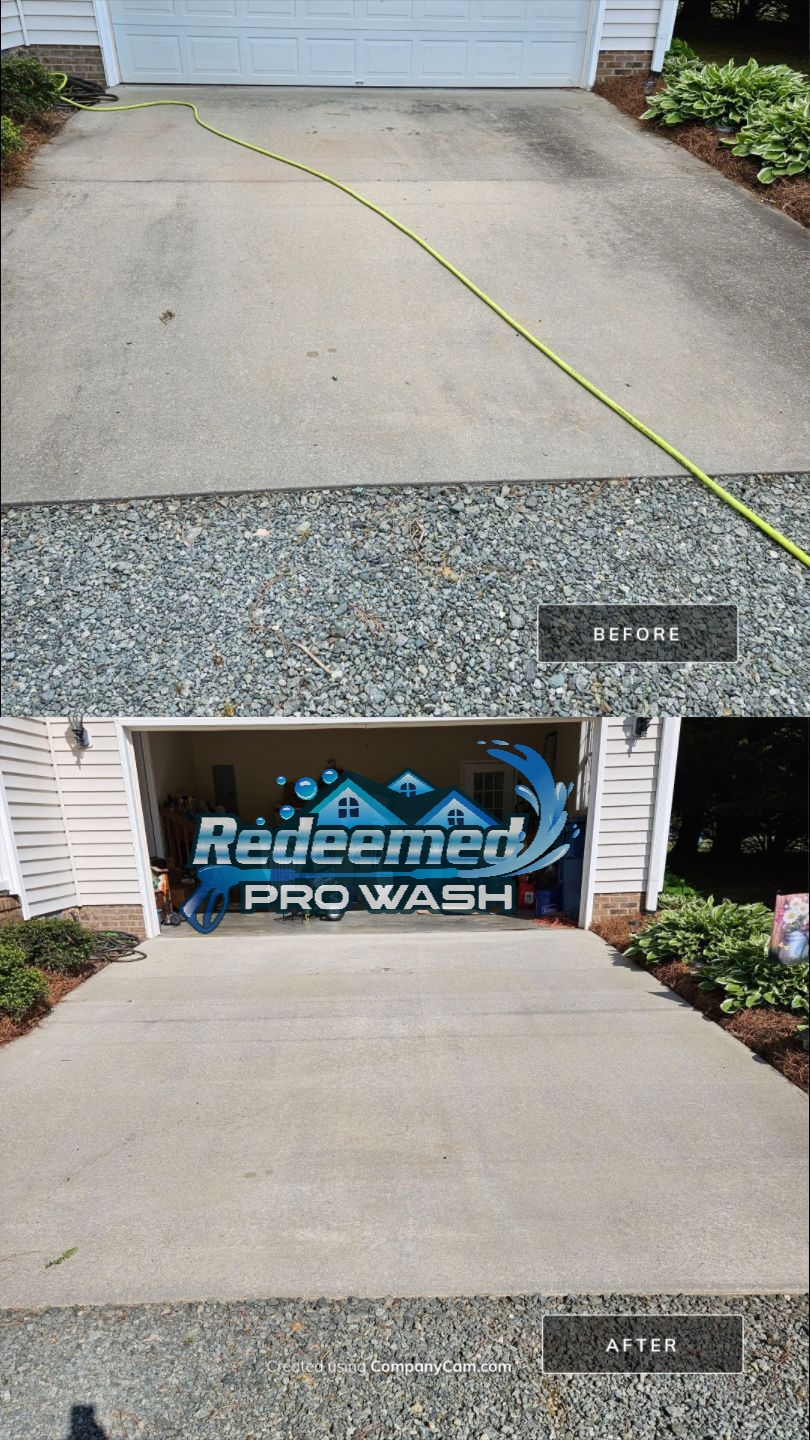
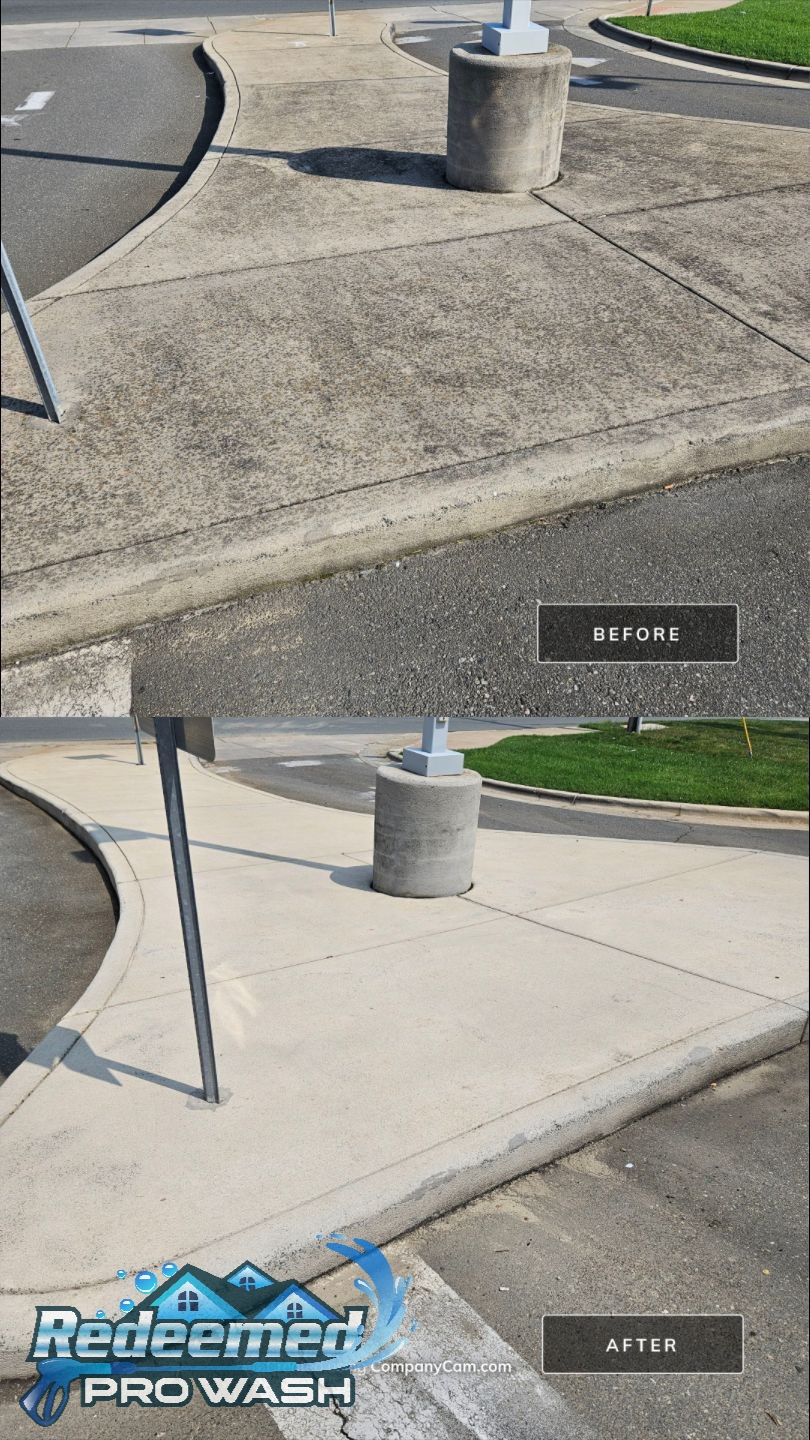
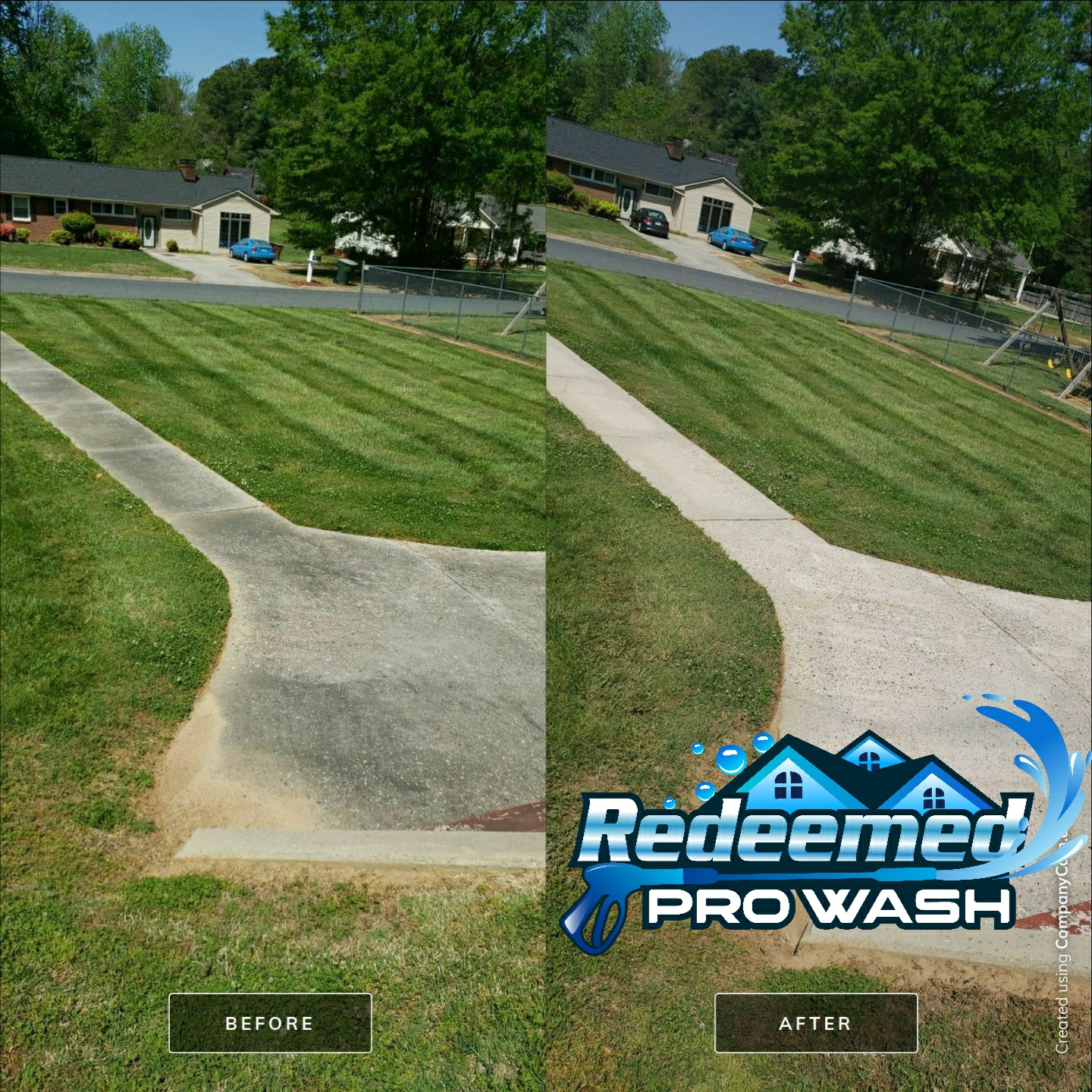
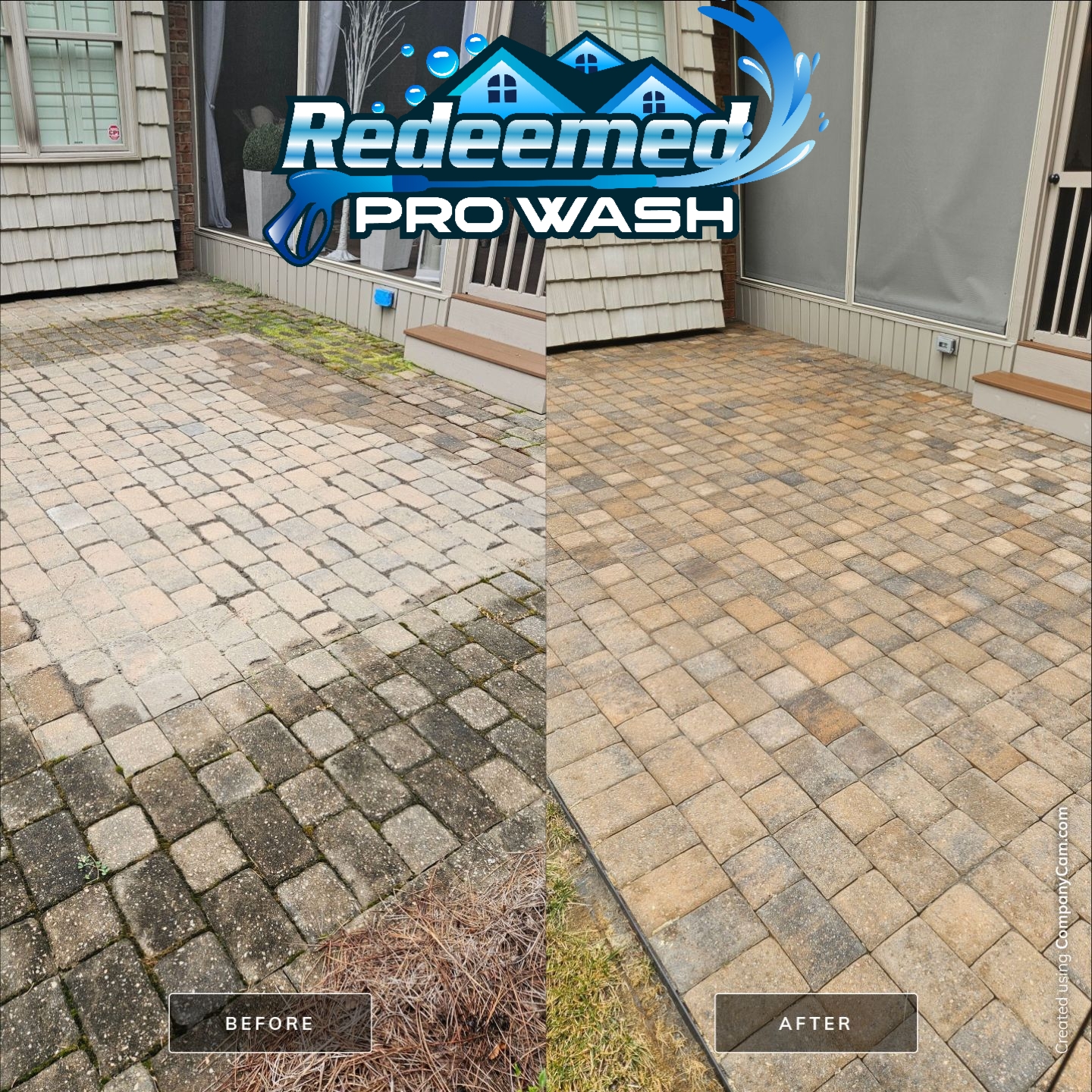
Concrete Cleaning — Before & After
Actual work from Redeemed Pro Wash customers across the Triad.
 Before / After
 Before / After
 Before / After
 Before / After
Concrete Cleaning Across the NC Triad
We provide concrete cleaning in these communities and more:
Concrete Cleaning FAQs
Concrete cleaning with Redeemed Pro Wash starts at $149. The final price depends on square footage, how heavy the staining is, and whether organic growth needs a soft-wash treatment. We give you a clear, free estimate after looking at your actual concrete, so there are no surprises.
Not when it is done correctly. The risk comes from too much pressure held too close, which can etch the surface or strip a sealer. We clean flatwork with a surface cleaner at pressure matched to your surface, which cleans evenly and gently. That is exactly why the method matters.
For most Triad homes, once a year keeps concrete looking good and stops buildup from setting in. Shaded patios, north-facing slabs, pool decks, and high-traffic areas may do better on a spring-and-fall schedule because our humidity and pollen speed up growth.
Because pressure alone removes the color but leaves the roots in the concrete pores. Algae and mildew are living growth, so they return in weeks if only rinsed off. We apply a plant-safe cleaning solution that treats the growth at the source, which keeps the surface clean much longer.
We lift the large majority of dirt, algae, and grime and significantly improve oil and clay staining. Deep, old oil stains and heavy iron-oxide clay are the toughest cases. We will always tell you plainly what to expect for your specific stains rather than overpromise.
Yes. Pool decks and steps are slip-sensitive, high-use surfaces, so we match the method to leave them clean and safe, not slick or damaged. We also treat the algae that makes shaded pool decks slippery in the first place.
The surface is usually walkable soon after, but the concrete pores hold moisture longer. If you plan to seal, give it a day or two of dry weather first, and longer if the area is shaded or the weather is humid, so the sealer can bond properly.
Yes, once it has cured. As a general rule, wait about 30 days after a fresh pour before the first cleaning so the concrete can fully cure. After that, regular cleaning helps keep it looking new.
Not necessarily, as long as we have access to the concrete and a water source. We are licensed and insured and owner-operated, and we are happy to walk the finished work with you if you would like to be there.
We are based in Gibsonville and serve the whole North Carolina Triad, including Greensboro, High Point, Winston-Salem, and Burlington, plus surrounding areas statewide. Call us to confirm coverage for your address.