
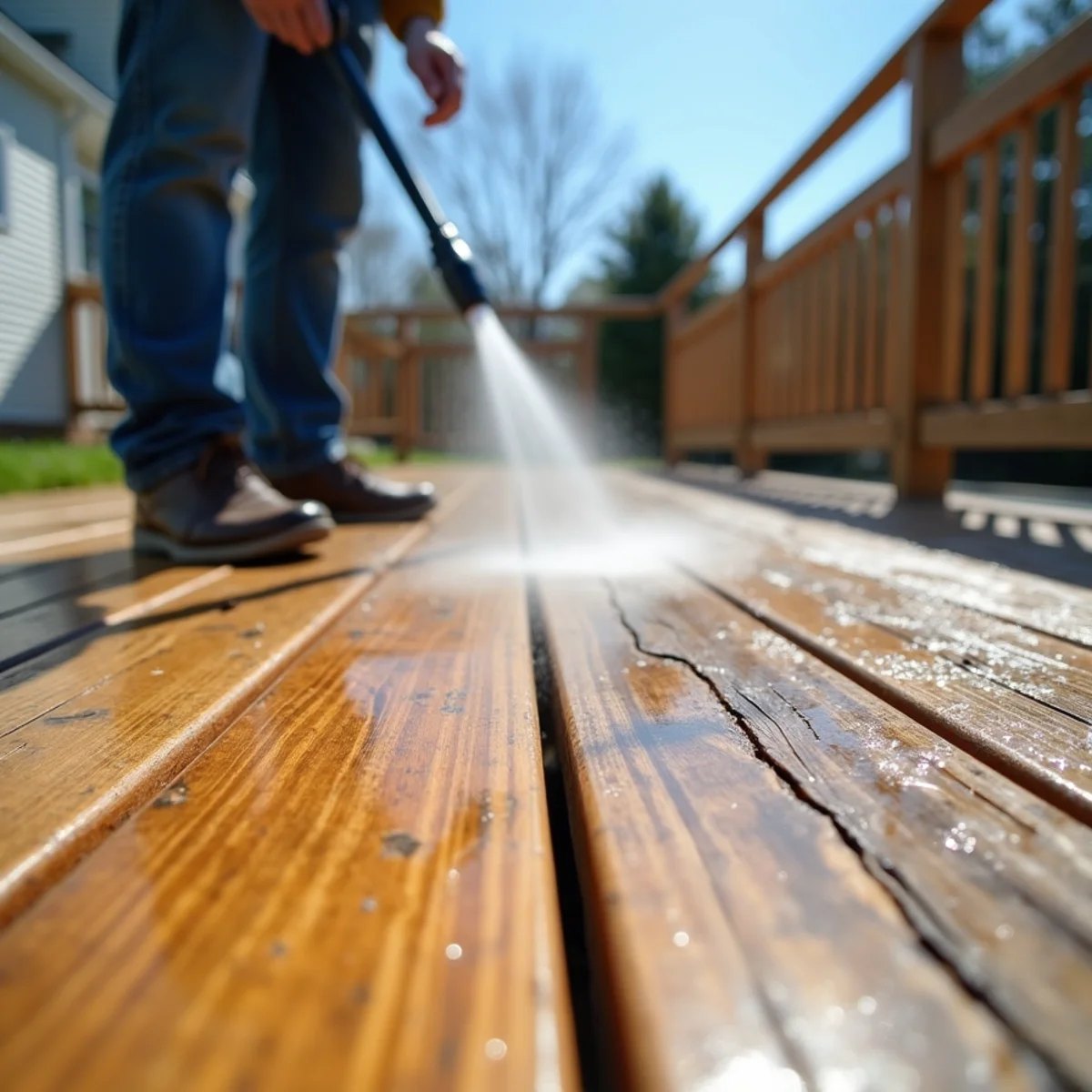
Deck Cleaning Services in North Carolina
Low-pressure deck cleaning and wood brightening across the North Carolina Triad. We lift gray weathering, mold, and grime without gouging your boards, and leave the wood ready for stain.
Deck cleaning services in North Carolina are about far more than blasting off dirt. A deck is soft wood or engineered composite that lives outside through Triad pollen season, summer humidity, and long shaded winters. Hit it with the wrong pressure or skip the wood brightener, and you can gouge the boards, raise a fuzzy grain, and leave the surface too damaged to hold stain. Done right, the same deck comes back bright, even-toned, and ready to protect.
At Redeemed Pro Wash, we clean decks the way the wood actually needs to be cleaned: low pressure to remove the grime and the gray weathered layer, then a wood brightener to reset the pH and pull the natural color back out. We are owner-operated, licensed and insured, and we serve Gibsonville, Greensboro, High Point, Winston-Salem, Burlington, and the wider North Carolina Triad.
This page walks through what actually happens to a deck outdoors, why the method matters, what can go wrong with a careless approach, and honest pricing factors. Deck cleaning starts at $249, and estimates are always free.
Key Takeaways
- Decks need low pressure, not high pressure. The gray on wood is a layer of damaged fibers, and blasting it off gouges the boards and leaves permanent damage that will not hold stain.
- The correct method is two steps: a cleaner to remove mold and weathering, then a wood brightener to neutralize the pH and restore the natural color. Skipping the brightener leaves wood dull and uneven.
- Composite decks are soft-washed, not blasted. High pressure and harsh chemistry can mar the surface or void the warranty, so composite gets a gentle clean-and-rinse instead.
- Cleaning is required prep before staining or sealing, and the wood needs to dry 24 to 48 hours first so the finish actually bonds instead of peeling.
- Deck cleaning starts at $249, estimates are free, and Redeemed Pro Wash is owner-operated, licensed and insured, serving the North Carolina Triad.
Why North Carolina Decks Turn Gray, Green, and Grimy
Wood is organic, and outdoors it is under constant attack. Ultraviolet light breaks down lignin, the natural glue that holds wood fibers together and gives the surface its color. As lignin degrades, the top layer of the wood turns that familiar dull silver-gray. It is not just dirt sitting on top. It is a thin layer of damaged, loosened wood fibers, and no amount of ordinary washing removes it without the right approach.
On top of that, the North Carolina Triad gives decks a hard time. Our humid summers keep horizontal boards damp for hours after a rain, which feeds mold, mildew, and algae. That is what turns a shaded deck greenish-black, especially on north-facing sections and under furniture where the sun never reaches. Heavy spring pollen settles into the grain and becomes a food source for more growth. And in areas with red clay soil, iron-oxide can leave orange staining along the boards nearest the ground.
Composite and PVC decks are not immune either. Homeowners buy composite expecting it to be maintenance-free, but the surface still collects pollen, organic film, and mold in the shade. The growth does not eat the board the way it does with wood, but it absolutely discolors it and makes it slick. Both wood and composite need the same thing: the right cleaner, the right pressure, and enough patience to do it without damage.
Low Pressure and Wood Brightener: The Method That Protects the Wood
The single most important thing to understand about deck cleaning is that a deck is not a driveway. Concrete can take thousands of pounds of pressure. Soft wood cannot. Point a high-pressure tip at a wood deck and you will carve visible lines into the boards, tear out soft grain, and leave a raised, splintery fuzz that ruins the look and refuses to hold stain evenly. That damage is permanent. You cannot sand a whole deck back to smooth.
Our method uses low pressure paired with the right cleaning solutions. We apply an appropriate deck cleaner to break down mold, algae, pollen film, and the gray weathered layer, let it dwell so the chemistry does the work instead of brute force, then rinse at a controlled low pressure that lifts everything away without chewing up the wood. The cleaning is done by the solution, not by the machine. That is the whole point of soft washing.
The second step is what most people skip and what separates a real deck cleaning from a rushed rinse: a wood brightener. Deck cleaners are alkaline, and after cleaning they leave the wood at a high pH that looks slightly darkened or washed-out. A brightener is a mild acidic rinse that neutralizes that pH, opens the wood pores, and restores the natural warm tone of the wood. Brightener is applied while the wood is still damp so it penetrates properly. The difference is dramatic. Clean-then-brighten is the correct two-step process, and it is how the wood ends up truly ready to be stained or sealed.
Wood Decks vs. Composite Decks: Different Surfaces, Different Care
Wood decks, whether pressure-treated pine, cedar, or a tropical hardwood, benefit from the full clean-and-brighten process. Softwoods like cedar are especially easy to damage and need the lightest touch. The brightener step matters most here, because it both neutralizes the cleaner and pulls the natural grain color back to life. When we clean a wood deck we always work with the grain and keep the pressure low across the whole surface.
Composite and PVC decks are a different animal. The manufacturers of composite decking generally warn against high-pressure washing, and using too much pressure or the wrong chemical can permanently mar the surface or affect the color. Many composite warranties can be voided by improper pressure washing. So for composite we lean even harder on the soft-wash approach: the correct detergent, gentle agitation where needed, and a low-pressure rinse. We treat composite as a clean-and-rinse job, not a strip-and-brighten job, because composite does not have wood grain to restore.
This is exactly why an experienced, licensed operator matters. Knowing when to brighten and when not to, how much pressure a given board can take, and which cleaner is safe for which surface is the difference between a deck that looks new and a deck that is scarred for good. We identify your decking material before we start and match the method to it.
What Can Go Wrong With the Wrong Approach
The most common damage we get called to look at is furring and gouging from high pressure. A homeowner or an inexperienced crew rents a machine, holds the tip too close, and leaves the boards raised and rough. Once the grain is torn open, the wood soaks up water unevenly, weathers faster, and takes stain in a blotchy, patchy way. There is no quick fix for that beyond extensive sanding or, in bad cases, replacing boards.
Skipping the brightener is the quieter mistake. The deck gets cleaned, it looks fine when wet, and then it dries to a dull, slightly gray, uneven tone because the pH was never neutralized. Any stain applied over that surface tends to sit unevenly and can fail early. Cleaning without brightening is only half the job on a wood deck.
The other issue is using harsh chemistry on the wrong surface, especially on composite, where the wrong product can lighten or streak the color, or on nearby plants and grass. We use plant-conscious, eco-conscious solutions and we pre-wet and rinse surrounding landscaping to protect it. Careful chemistry and careful pressure are both part of doing the job right.
Cleaning as Prep for Stain and Seal
If your plan is to stain or seal your deck, cleaning is not optional, it is step one. Stain and sealer can only bond to clean, open, correctly pH-balanced wood. Applying finish over a dirty deck, an old failing finish, or an unbrightened surface traps grime underneath and causes the new coat to peel and fail early. That is wasted money on stain and wasted time.
Our clean-and-brighten process leaves the wood in the ideal state to accept a fresh finish: free of mold and the gray weathered layer, with the pores open and the pH neutralized. After we clean and brighten, the wood needs to dry thoroughly before any stain goes on, generally around 24 to 48 hours depending on the weather and humidity here in the Triad. Rushing stain onto damp wood is another common way finishes fail.
To be honest about scope: our deck cleaning service covers the cleaning and brightening. If you want the deck stained or sealed afterward, tell us during the estimate and we will talk through the timing so the surface is properly prepped and dry before any finish is applied.
How Often Should You Have Your Deck Cleaned
For most decks in the North Carolina Triad, a professional cleaning once a year keeps the wood healthy and looking good. Decks that sit in heavy shade, under trees, or on the damp north side of a house often do better with a cleaning twice a year, typically once in spring after pollen season and once in late summer or fall.
The reason for that cadence is our climate. Spring dumps a thick coat of pollen on everything, and our humid summers keep decks damp long enough for mold and algae to take hold. Clearing that growth off before it sets in protects both the appearance and the surface. A deck that gets cleaned on schedule almost never reaches the badly weathered, slippery state that requires aggressive restoration.
If you have a wood deck that is refinished on a cycle, cleaning naturally pairs with that. A clean-and-brighten right before you re-stain, plus a maintenance cleaning between finish cycles, keeps the wood in good shape year-round. For composite, an annual or twice-yearly wash keeps the boards from getting that slick, discolored film in the shaded spots.
Honest Pricing and What to Expect
Deck cleaning with Redeemed Pro Wash starts at $249. Where a specific deck lands depends on real factors, not a random number, and we walk you through them in the estimate. The biggest drivers are the square footage of the deck, the decking material, how heavily weathered or mold-covered it is, and the complexity of the structure. A simple single-level deck cleans faster than a multi-level deck with lots of railings, spindles, stairs, and built-in benches.
Whether the job includes wood brightening also affects the price, since that is a separate solution and a separate step. Composite decks are usually a straightforward clean-and-rinse, while a badly grayed wood deck that needs full clean-and-brighten takes more product and more time. Access matters too. A ground-level deck is quicker than a second-story deck that requires more setup.
We give free, no-pressure estimates, and we would rather look at your actual deck than guess. As an owner-operated company with 50 five-star Google reviews, we are licensed and insured, and Brian handles the work himself, so you are dealing with the person actually cleaning your deck. Call (351) 242-0666 or request your free estimate, and we will give you an honest number for your specific deck.
What We Clean
- Pressure-treated pine decks
- Cedar and softwood decks
- Tropical hardwood decks
- Composite decks (Trex and similar)
- PVC and capped composite decking
- Deck railings, spindles, and balusters
- Deck stairs and step treads
- Built-in deck benches and planters
- Pergolas and deck-attached structures
- Deck boards prepped for stain or seal
Our Process
- Step 1
Free Estimate and Deck Assessment
We look at your deck, identify the decking material, check for mold, gray weathering, and any existing finish, and give you an honest free estimate. Knowing whether it is wood or composite decides the method.
- Step 2
Protect the Surroundings
We pre-wet and rinse nearby plants, grass, and landscaping before we start. Our solutions are eco-conscious and plant-safe, and protecting your yard is part of the job.
- Step 3
Apply Cleaner and Let It Dwell
We apply the appropriate deck cleaner to break down mold, algae, pollen film, and the gray weathered layer, then let it dwell so the chemistry does the work instead of brute force.
- Step 4
Low-Pressure Rinse
We rinse at a controlled low pressure, working with the grain, to lift away the grime and loosened fibers without gouging or furring the wood or marring composite boards.
- Step 5
Wood Brightener
On wood decks we apply a brightener while the wood is still damp. It neutralizes the pH from the cleaner, opens the pores, and restores the natural warm tone of the wood.
- Step 6
Final Walkthrough
We check the whole deck, rails and stairs included, and make sure it is evenly cleaned. If you are staining next, we talk through drying time so the wood is properly prepped.
Pro Tips from Brian
- Never let anyone put a high-pressure tip on a wood deck. The gray you see is a layer of damaged wood fibers, and blasting it off tears the grain and leaves permanent lines. Low pressure plus the right cleaner does the job without the scars.
- On a wood deck, insist on the brightener step. Cleaner leaves the wood at a high pH that dries dull and uneven. A brightener resets the pH and pulls the natural color back, and it is the difference between a deck that looks refreshed and one that looks washed-out.
- If you plan to stain, always clean and brighten first, then let the wood dry a full 24 to 48 hours in Triad weather before applying finish. Staining over damp or unbrightened wood is the top reason deck finishes peel early.
- Check your composite decking warranty before anyone pressure washes it. Many composite manufacturers warn against high pressure, and improper washing can void coverage. Composite should be soft-washed, not blasted.
- Time your cleaning around our seasons. A wash after spring pollen and again in late summer keeps shaded, north-facing boards from turning green and slick during our humid months.
- Do not stain over old, failing finish or a dirty deck. Trapped grime and a failing coat cause the new stain to peel. Clean, brighten, and dry first so the finish actually bonds.
What Affects Your Price
Deck Cleaning starts at $249. Most companies hide pricing — we don't. Here's what shapes the final number:
- Square footage of the deck. Larger decks take more product and more time, which is the biggest single driver of price.
- Decking material. Wood decks that need a full clean-and-brighten differ from composite decks, which are usually a straightforward soft-wash clean and rinse.
- Level of weathering and mold. A lightly dirty deck cleans faster than one that is heavily grayed or covered in mold and algae.
- Structural complexity. Multi-level decks with lots of railings, spindles, stairs, and built-in features take longer than a simple single-level deck.
- Whether wood brightening is included. Brightener is a separate solution and a separate step on wood decks, which affects the total.
- Access and height. A ground-level deck is quicker to service than a second-story deck that needs more setup.
Every estimate is free, written, and itemized — no surprise fees.
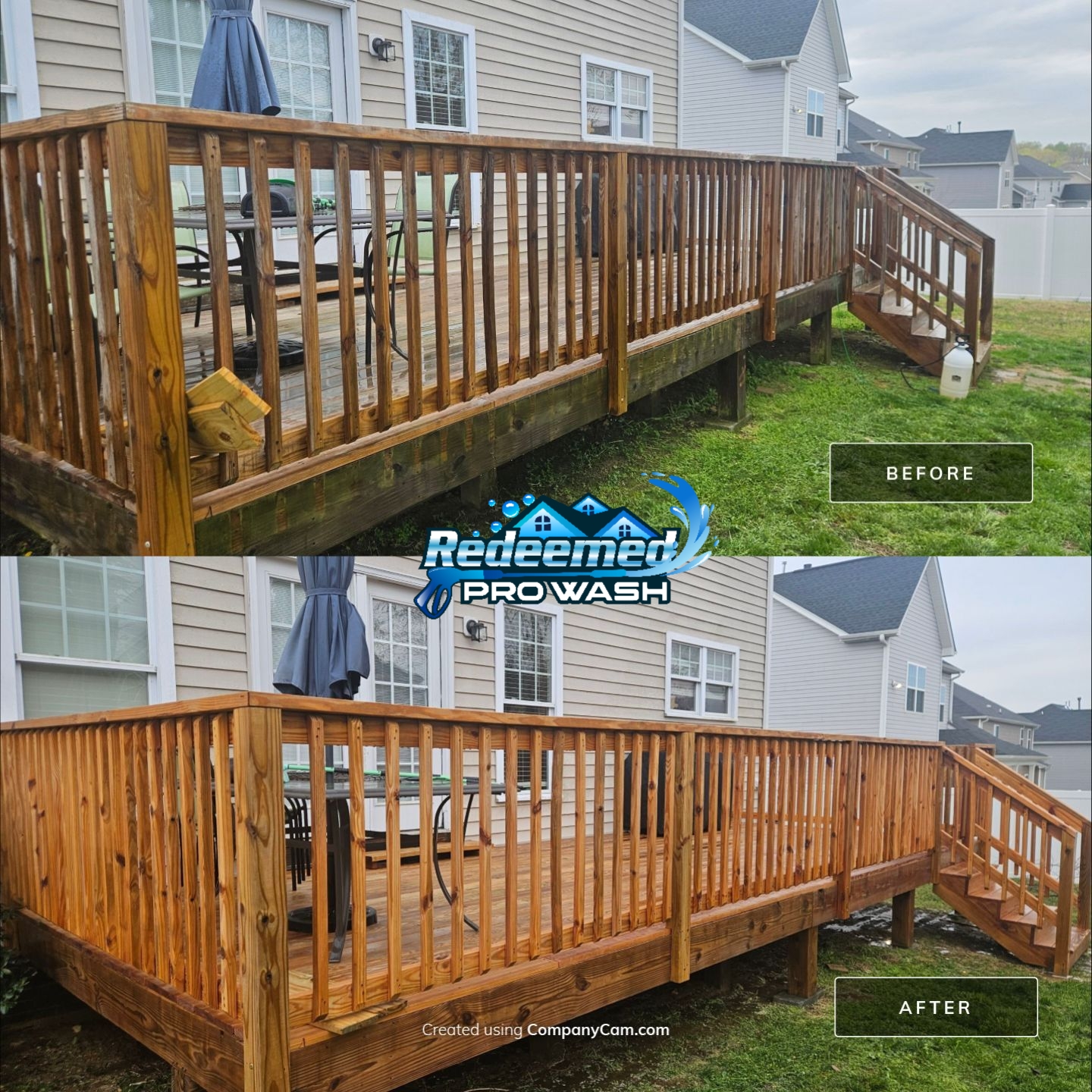
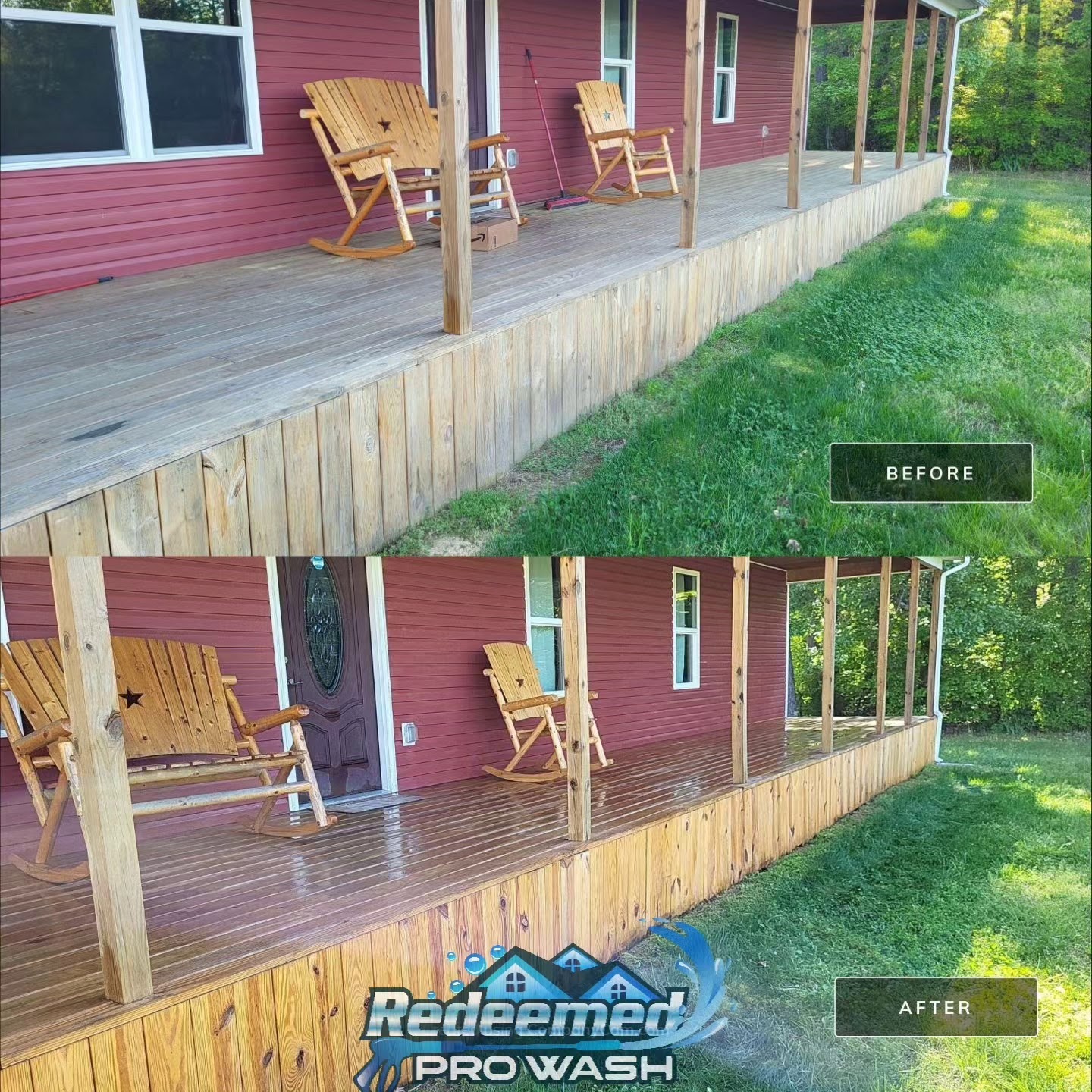
Deck Cleaning — Before & After
Actual work from Redeemed Pro Wash customers across the Triad.
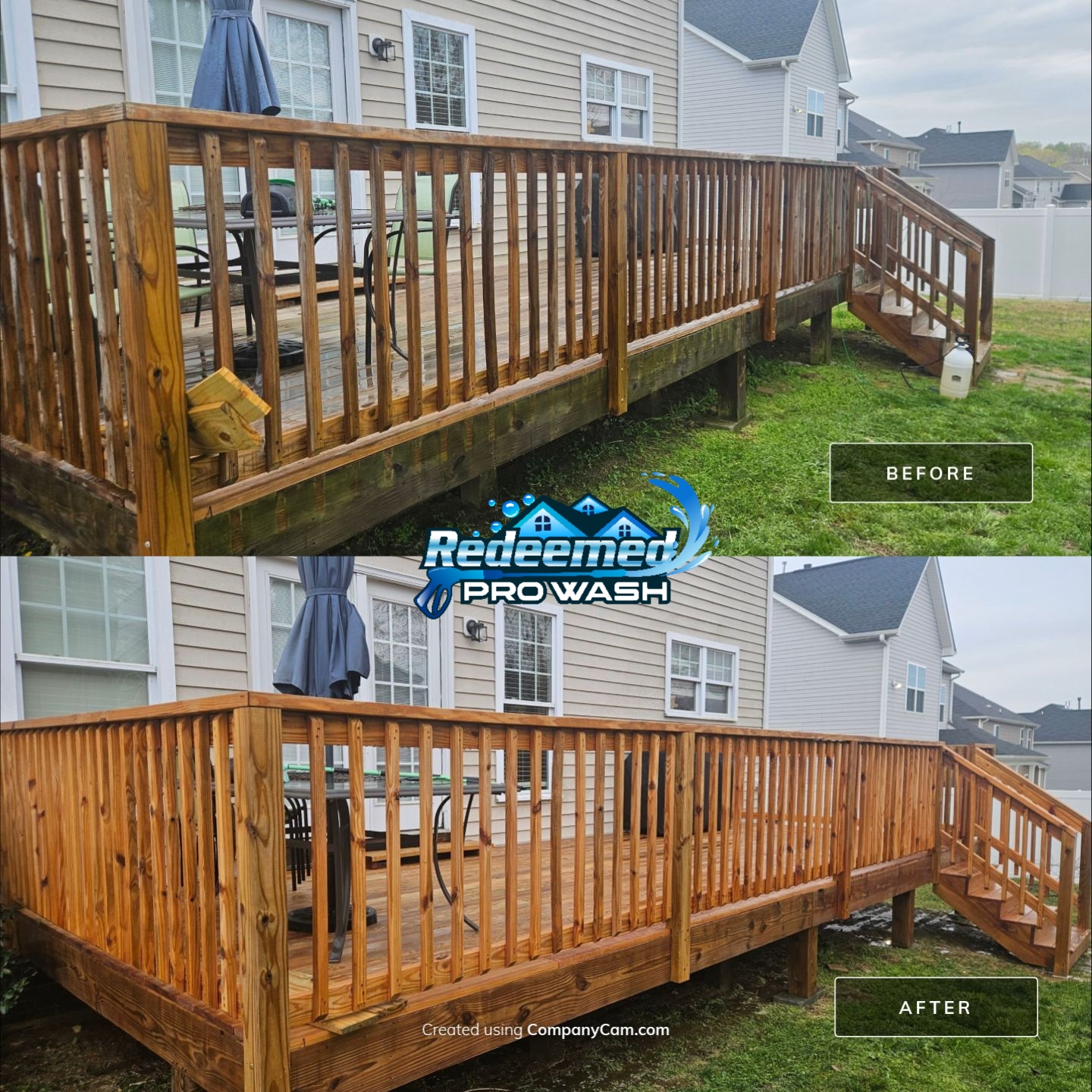 Before / After
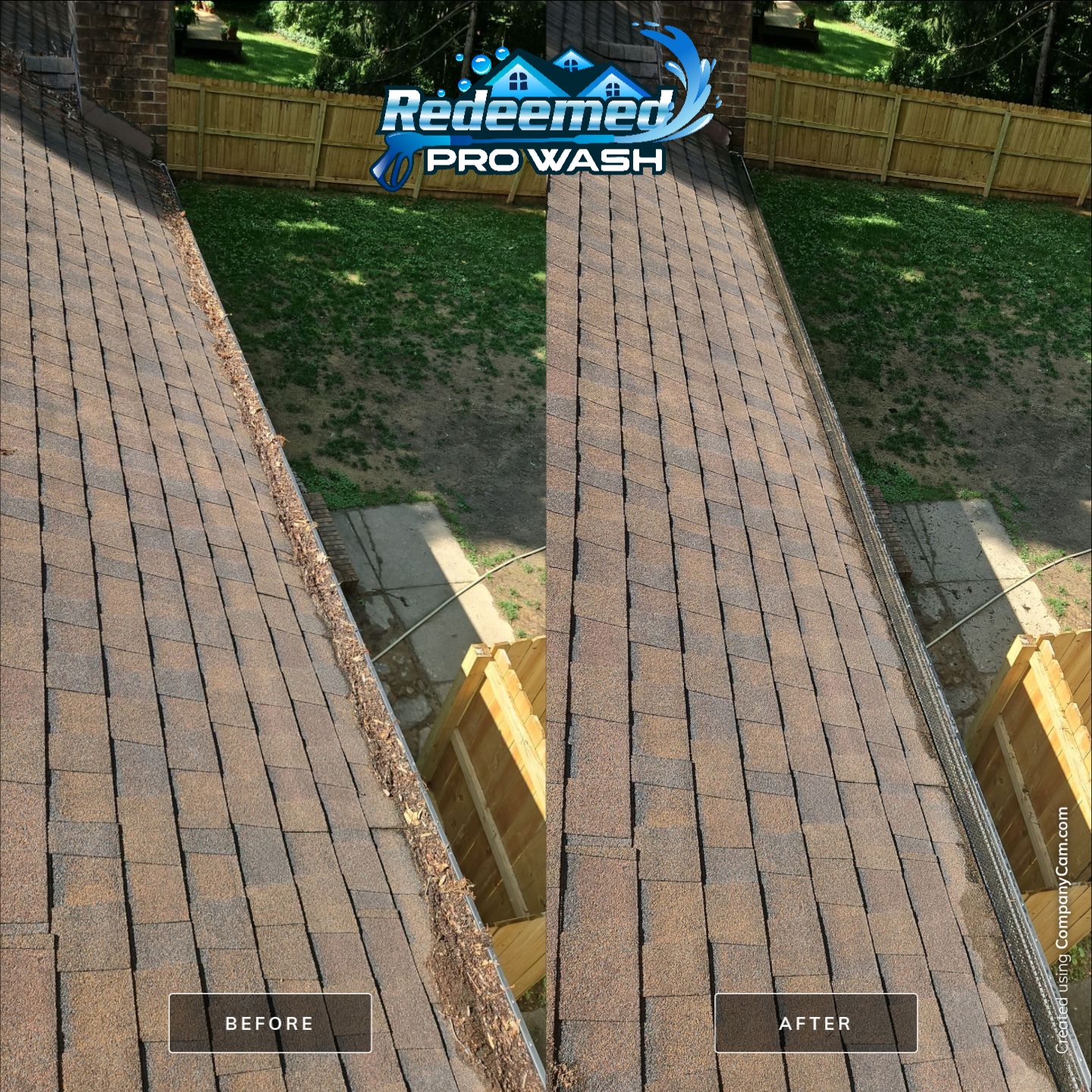 Before / After
 Before / After
Deck Cleaning Across the NC Triad
We provide deck cleaning in these communities and more:
Related Services
Deck Cleaning FAQs
Our deck cleaning starts at $249. The final price depends on the size of the deck, the decking material, how weathered or mold-covered it is, whether wood brightening is included, and the complexity of the structure. We give free, no-pressure estimates, so the best way to get an accurate number is to let us look at your actual deck.
We use low pressure paired with the right cleaning solutions, which is a soft-wash approach. A deck is soft wood or composite, not concrete. High pressure gouges wood, raises a rough fuzzy grain, and can void composite warranties. The cleaning is done by the chemistry and a controlled low-pressure rinse, not by brute force.
A wood brightener is a mild acidic rinse applied after cleaning. Deck cleaners are alkaline and leave the wood at a high pH that dries dull and uneven. The brightener neutralizes that pH, opens the wood pores, and restores the natural warm tone of the wood. On a wood deck it is the second half of the job and it is what makes the wood ready to accept stain.
Yes. Composite and PVC decks still collect pollen, film, and mold in shaded spots, and they still need cleaning. We soft-wash composite with the correct detergent and a low-pressure rinse. We do not brighten composite because it has no wood grain to restore, and we avoid high pressure and harsh chemistry that could mar or lighten the boards.
In most cases, yes. The gray on a wood deck is a layer of sun-damaged, loosened wood fibers, and the right cleaner combined with a brightener lifts that layer and brings back the natural color. We are honest about limits, though. Deep-set stains or wood that is already badly damaged may not come back completely, and we will tell you what to realistically expect at the estimate.
Absolutely. Cleaning is step one of any stain or seal job. Stain only bonds to clean, open, correctly pH-balanced wood. Applying finish over a dirty deck or an unbrightened surface traps grime and causes the new coat to peel early. We clean and brighten, then the wood needs to dry roughly 24 to 48 hours before staining.
For most Triad decks, once a year keeps the wood healthy. Decks in heavy shade, under trees, or on the damp north side of a house often do better with twice-yearly cleaning, usually after spring pollen and again in late summer or fall, because our humidity feeds mold and algae in shaded spots.
We use eco-conscious, plant-safe solutions and we pre-wet and rinse the surrounding landscaping before and after cleaning to protect it. Protecting your yard is part of how we work. If you have specific plants or pets you are concerned about, tell us and we will take extra care around them.
We are based in Gibsonville and serve the whole North Carolina Triad, including Greensboro, High Point, Winston-Salem, and Burlington, plus surrounding communities. If you are not sure whether you are in our area, just give us a call and we will let you know.
Yes. Redeemed Pro Wash is licensed and insured, and we are owner-operated with 50 five-star Google reviews. Brian handles the work himself, so the person you talk to is the person cleaning your deck.