House Washing Services in North Carolina
Gentle soft wash cleaning that removes mold, mildew, algae, and Triad pollen from your siding without high-pressure damage. Licensed, insured, and owner-operated.
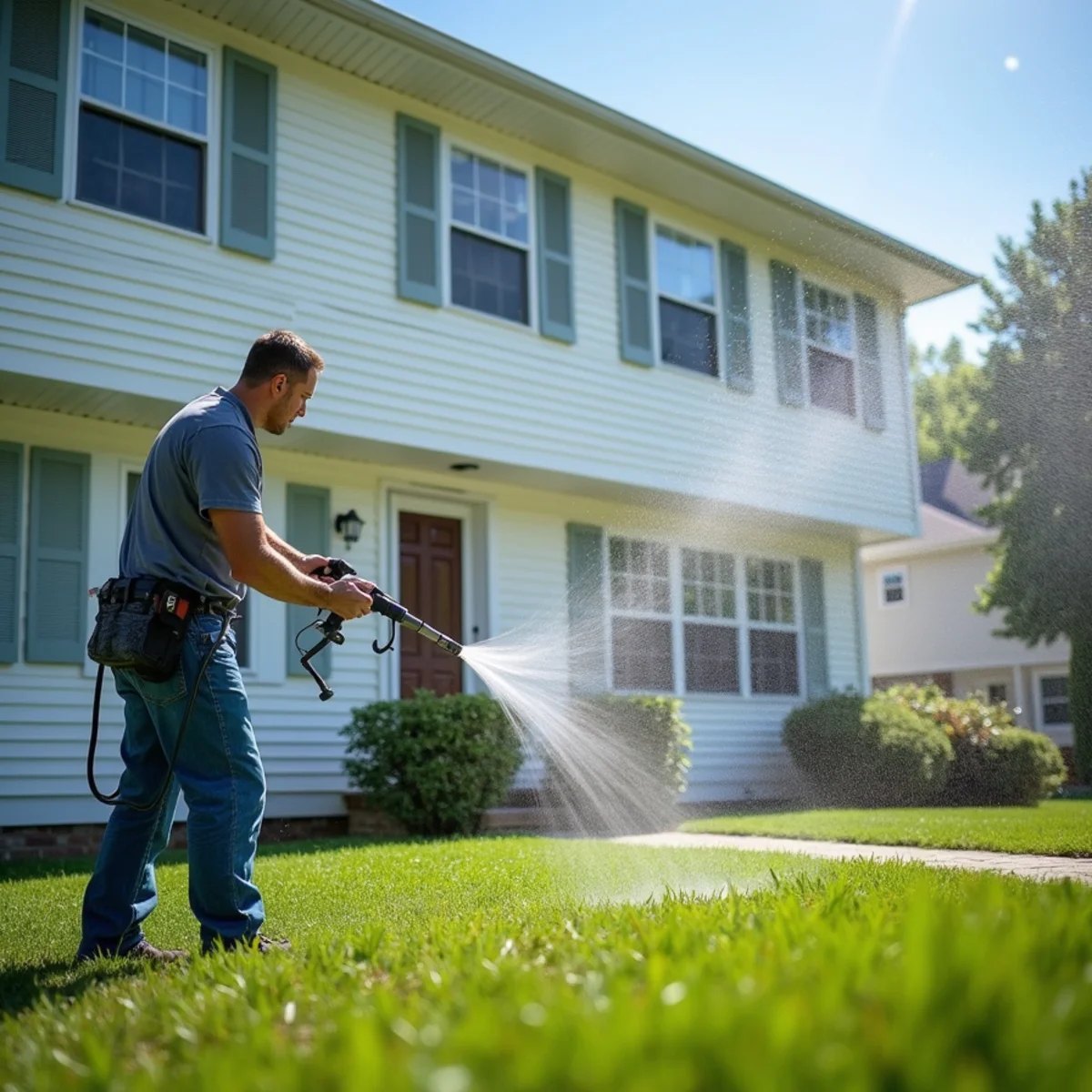
House washing services in North Carolina keep your siding clean, bright, and protected against the mold, mildew, algae, and heavy pollen our Triad climate throws at it every year. At Redeemed Pro Wash, we soft wash homes across Gibsonville, Greensboro, High Point, Winston-Salem, Burlington, and the surrounding area using low-pressure cleaning and plant-safe solutions that lift organic growth at the source instead of blasting it off the surface.
North Carolina is hard on exterior walls. Warm, humid summers feed black algae streaks and green mildew. Spring coats everything in yellow pine pollen. Red clay splashes up onto light siding, and shaded, north-facing walls stay damp long enough for growth to take hold. A proper house wash addresses all of it and restores the curb appeal you had the day the siding went up.
This page explains how house washing actually works, why soft washing is the correct method for vinyl, brick, HardiePlank, stucco, and painted siding, what goes wrong when the pressure is too high, and the honest factors that shape your price. We are licensed and insured, owner-operated, and backed by 50 five-star Google reviews. Estimates are always free.
Key Takeaways
- Soft washing is the correct method for house siding: low pressure plus plant-safe solutions that kill mold, mildew, and algae at the source for longer-lasting results.
- High-pressure washing can crack vinyl, etch HardiePlank and paint, blow out brick and stucco, and force water behind your walls, which is why we avoid it on siding.
- North Carolina's humidity, spring pollen, red clay, and shaded north-facing walls make annual house washing a smart baseline for most Triad homes.
- Redeemed Pro Wash is owner-operated, licensed and insured, and backed by 50 five-star Google reviews across the Triad.
- House washing starts at $299 with honest, upfront pricing and free estimates. Call Brian at (351) 242-0666.
What House Washing Is (And What It Is Not)
House washing is the exterior cleaning of your home's walls, siding, soffits, fascia, trim, and other vertical surfaces to remove mold, mildew, algae, pollen, dirt, cobwebs, and general grime. It is not the same as pressure washing your driveway. Your siding is a finished, sometimes fragile surface, and it needs a gentler, smarter approach than flat concrete does.
The confusion comes from the word "pressure." Many people assume a house wash means a powerful jet of water scouring the walls. For most homes, that is exactly the wrong method. The dirt and biological growth on your siding are not stuck on by force. They are living organisms and organic film that need to be dissolved and killed, not merely knocked loose. That is the whole reason soft washing exists.
A good house wash cleans the surface you can see and treats the growth you cannot. Black streaks, green film, and gray hazing on siding are colonies of algae, mildew, and mold. If you only remove the visible layer, the roots stay behind and the problem returns quickly. The right cleaning solution handles both, which is why the method matters as much as the effort.
Why We Soft Wash: The Method and the Science
Soft washing uses low pressure combined with plant-safe cleaning solutions to do the work. Instead of relying on force, we apply a gentle detergent-based solution that breaks down and kills the mold, mildew, and algae living on your siding. After the solution has time to work, we rinse the surface with low pressure and the growth washes away with it. The solution does the cleaning. The pressure just rinses.
This matters because algae and mildew form a biofilm, a thin living layer that clings to the surface and re-grows from any roots left behind. High pressure can strip the visible stain while leaving the biology intact, so the streaks come back in months. A soft wash treats the organism directly, which is why the results look better and last longer. Independent industry sources note that soft washing typically keeps siding cleaner far longer than pressure alone, often one to three years depending on the home's environment.
Soft washing also protects the house itself. A pressure washer aimed at siding can force water up behind panels and under laps, where it gets trapped against your sheathing and insulation. That trapped moisture is exactly what you are trying to prevent. Low-pressure rinsing cleans the surface without driving water where it does not belong. It is the difference between washing your home and injuring it.
Siding Materials We Clean and How We Treat Each One
Every siding material behaves differently, and a house wash should be tailored to the surface. Vinyl siding is common across the Triad and cleans up beautifully with a soft wash, but it can crack, chalk, or have water driven behind it when hit with high pressure. We clean vinyl with low pressure and the right solution strength so it comes out bright without stress on the panels.
HardiePlank and other fiber cement siding is durable but has a factory-baked paint finish that high pressure can etch, dull, or strip. Soft washing is the manufacturer-friendly way to clean it. Painted wood siding is even more sensitive. Too much pressure lifts paint, splinters the grain, and forces water into the wood. We keep the pressure low and let the solution carry the load so the finish stays intact.
Brick and stucco look tough, but they are porous. Aggressive pressure can blow out mortar joints, chip brick faces, and pit or crack stucco, and once water is forced into those pores it invites more staining and growth. A soft wash lifts algae and grime out of the texture without damaging it. Stone, block, and composite surfaces get the same careful treatment. In every case we match the solution and pressure to the material, not the other way around.
The North Carolina Problem: Algae, Pollen, Red Clay, and Humidity
The North Carolina Triad is a demanding environment for exterior surfaces, and it shows up on your walls in a few predictable ways. The green and gray film that creeps across shaded siding is mildew and algae, fed by our long, humid, warm season. North-facing and tree-shaded walls stay damp the longest and are almost always the dirtiest side of the house.
Spring brings a heavy coat of yellow pine pollen that clings to siding, trim, and screens and won't fully rinse away with rain. Left on the surface, it becomes a food source that feeds more growth. Then there is our red clay. Iron-oxide-rich soil splashes up onto lower siding and foundations during storms and leaves rust-toned staining that ordinary rinsing struggles to touch.
These are local, specific problems, and they respond to a local, specific approach. We know how Triad homes get dirty because we clean them every week in Gibsonville, Greensboro, High Point, Winston-Salem, and Burlington. We tailor the solution to what is actually on your siding, whether that is a shaded wall full of algae or a pollen-caked south face after a heavy spring.
What Goes Wrong With the Wrong Approach
Most siding damage we see was caused by good intentions and a rented pressure washer. High pressure on vinyl can crack panels and force water behind them. On HardiePlank and painted surfaces it etches and strips the finish. On brick and stucco it blows out mortar and pits the face. The damage is often invisible on day one and shows up later as trapped moisture, peeling, or new staining.
There is also the biology problem. Pressure alone tends to remove the surface stain while leaving the algae and mildew roots behind. The wall looks clean for a few weeks, then the streaks return, and the homeowner assumes the growth is just aggressive. In reality the cleaning method never killed it. This is the single most common reason a house "won't stay clean."
The other risk is people and property. Ladders, high walls, second stories, and water near electrical fixtures and meters are real hazards. As a licensed and insured company, we carry the coverage and use the technique that protects your home, your landscaping, and everyone on site. Doing it right the first time is almost always cheaper than fixing a shortcut.
What to Expect: Our House Washing Process
We start with a walk-around of your home so we understand the siding type, the condition, the problem areas, and anything that needs protection. This is also when we confirm the estimate and answer your questions. There are no surprises once we begin.
Before we apply any solution, we protect your property. We pre-wet and rinse landscaping, shrubs, and delicate plants so our plant-safe solution stays where it belongs, and we take care around fixtures, lights, and openings. Then we apply the cleaning solution at low pressure and give it time to break down the mold, mildew, algae, and grime on the surface.
Once the solution has done its work, we rinse the home from top to bottom with low pressure until the growth and residue wash away and the siding is clean. We do a final walk-around with you so you can see the difference and confirm you are happy. A typical single-story home is often finished in a few hours; larger or two-story homes take longer. We will give you a realistic time frame when we quote the job.
How Often Should You Wash Your House in the Triad?
For most North Carolina homes, a house wash once a year keeps siding looking clean and stays ahead of algae and mildew before they take hold. Our humidity and long warm season give organic growth plenty of time to establish, so annual cleaning is a sensible baseline for the Triad.
Some homes need it more often. If your house sits under heavy tree cover, faces north, backs up to woods, or holds moisture on a shaded side, you may see growth return faster and benefit from cleaning every six to twelve months. Homes in sunnier, more open, better-drained spots can often stretch closer to eighteen months between washes.
The best schedule is the one that keeps growth from ever fully establishing, because it is easier to maintain a clean surface than to recover a heavily overgrown one. Regular washing also removes pollen and clay staining before they build up. We are glad to recommend a realistic frequency for your specific home during the free estimate.
Honest Pricing and a Free Estimate
Our house washing starts at $299, and the final price depends on your home. The biggest factors are square footage, the number of stories, the siding material and its condition, how much mold, mildew, algae, and staining is present, and access considerations like landscaping, slopes, or tight spaces. A one-story vinyl ranch with light growth is a very different job from a two-story home with heavily shaded, algae-covered walls.
We price honestly and explain what drives the number so you know exactly what you are paying for. We will not overpromise. Cleaning restores your siding's appearance and helps prevent premature aging and staining, and while heavy or set-in stains sometimes lighten rather than disappear entirely, most homes come out dramatically brighter. We will always tell you upfront what to realistically expect.
Redeemed Pro Wash is owner-operated, licensed and insured, and backed by 50 five-star Google reviews from homeowners across the Triad. We use eco-conscious, plant-safe solutions and treat your property like it is our own. If you want your home looking its best, contact us for a free estimate. Call Brian at (351) 242-0666 and we will get you a clear, no-pressure quote.
What We Clean
- Vinyl siding
- HardiePlank and fiber cement siding
- Brick exterior walls
- Stucco and EIFS surfaces
- Painted wood siding
- Soffits, fascia, and eaves
- Trim, shutters, and window frames
- Gutversite exteriors and downspouts
- Front porches, columns, and railings
- Stone and composite siding
Our Process
- Step 1
Walk-Around and Inspection
We assess your siding type, condition, and problem areas, identify what needs protecting, and confirm your free estimate before any work begins.
- Step 2
Protect Landscaping and Property
We pre-wet and rinse plants and shrubs and take care around fixtures and openings so our plant-safe solution stays where it belongs.
- Step 3
Apply the Soft Wash Solution
We apply an eco-conscious, low-pressure cleaning solution that breaks down and kills mold, mildew, algae, and grime at the source.
- Step 4
Dwell Time
We give the solution time to work so it dissolves the biofilm and organic staining instead of just loosening the surface layer.
- Step 5
Low-Pressure Rinse
We rinse the home top to bottom with low pressure until the growth and residue wash away and the siding is clean and bright.
- Step 6
Final Walk-Through
We review the results with you so you can see the difference and confirm you are completely satisfied with the clean.
Pro Tips from Brian
- Watch the north-facing and tree-shaded walls first. They stay damp longest and almost always grow algae and mildew before the rest of the house does.
- Rinse pine pollen off siding and screens in spring even between washes. Left on the surface, pollen becomes a food source that feeds more growth.
- If black streaks return within weeks of a cleaning, the method killed the surface but not the roots. A proper soft wash treats the organism, not just the stain.
- Never let anyone use high pressure on vinyl, HardiePlank, or painted siding. It can crack panels, etch the finish, and force water behind the walls.
- Address red clay splash-up on lower siding early. Iron-oxide staining sets in over time and is far easier to lighten when it is fresh.
- Keeping a clean surface on a yearly schedule is cheaper and easier than recovering a house where growth has been building for several seasons.
What Affects Your Price
House Washing starts at $299. Most companies hide pricing — we don't. Here's what shapes the final number:
- Square footage and the number of stories, since larger and taller homes take more time, solution, and care to reach safely.
- Siding material and its condition, because vinyl, HardiePlank, brick, stucco, and painted wood each require different handling.
- The severity of mold, mildew, algae, and staining present, as heavily overgrown or shaded walls need more solution and dwell time.
- Access and site conditions like dense landscaping, slopes, tight side yards, or fixtures that require extra protection and setup.
- The presence of set-in stains such as red clay or long-established algae, which may take additional treatment to lighten.
- Any add-on surfaces you include, like gutters, soffits, or nearby concrete, bundled into the same visit.
Every estimate is free, written, and itemized — no surprise fees.
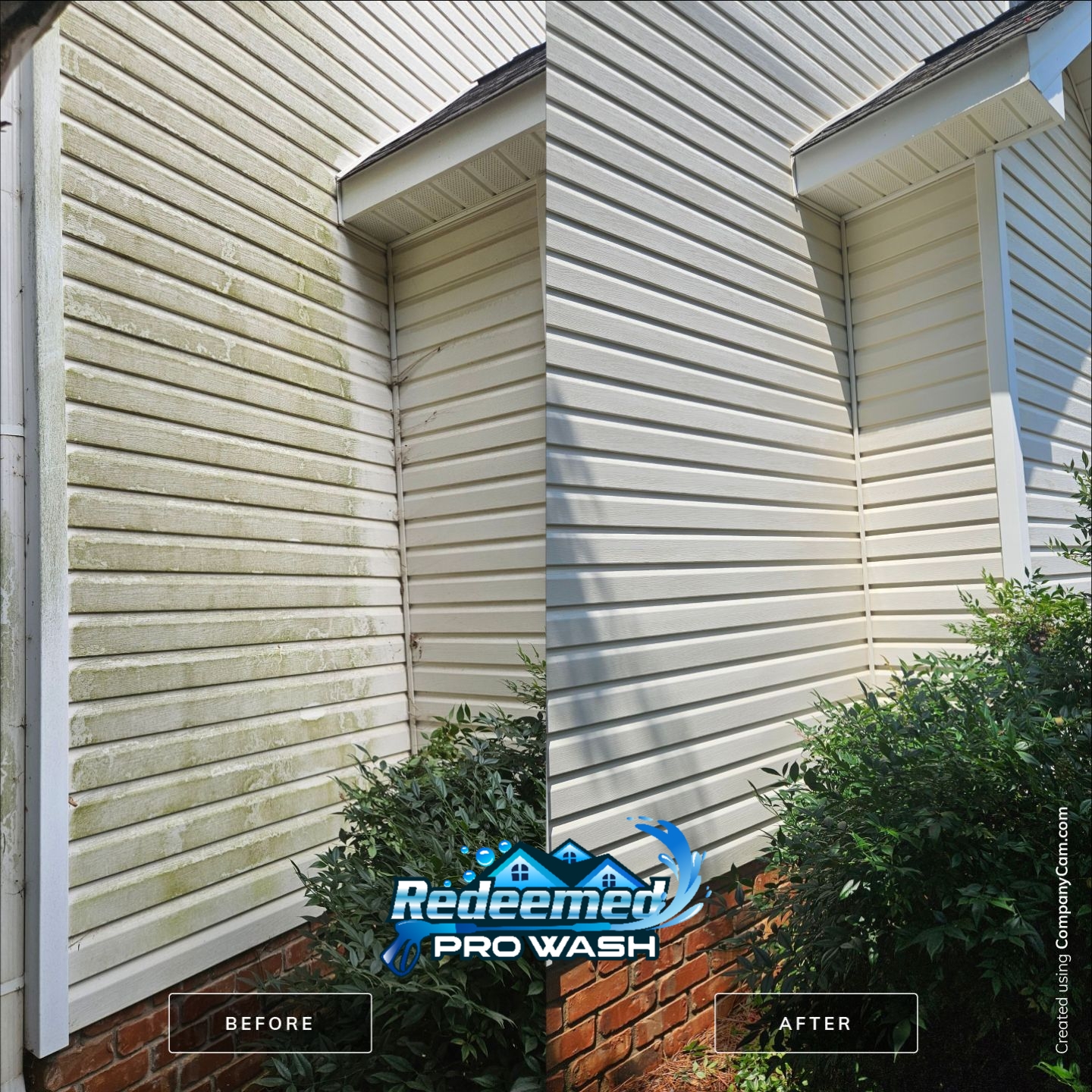
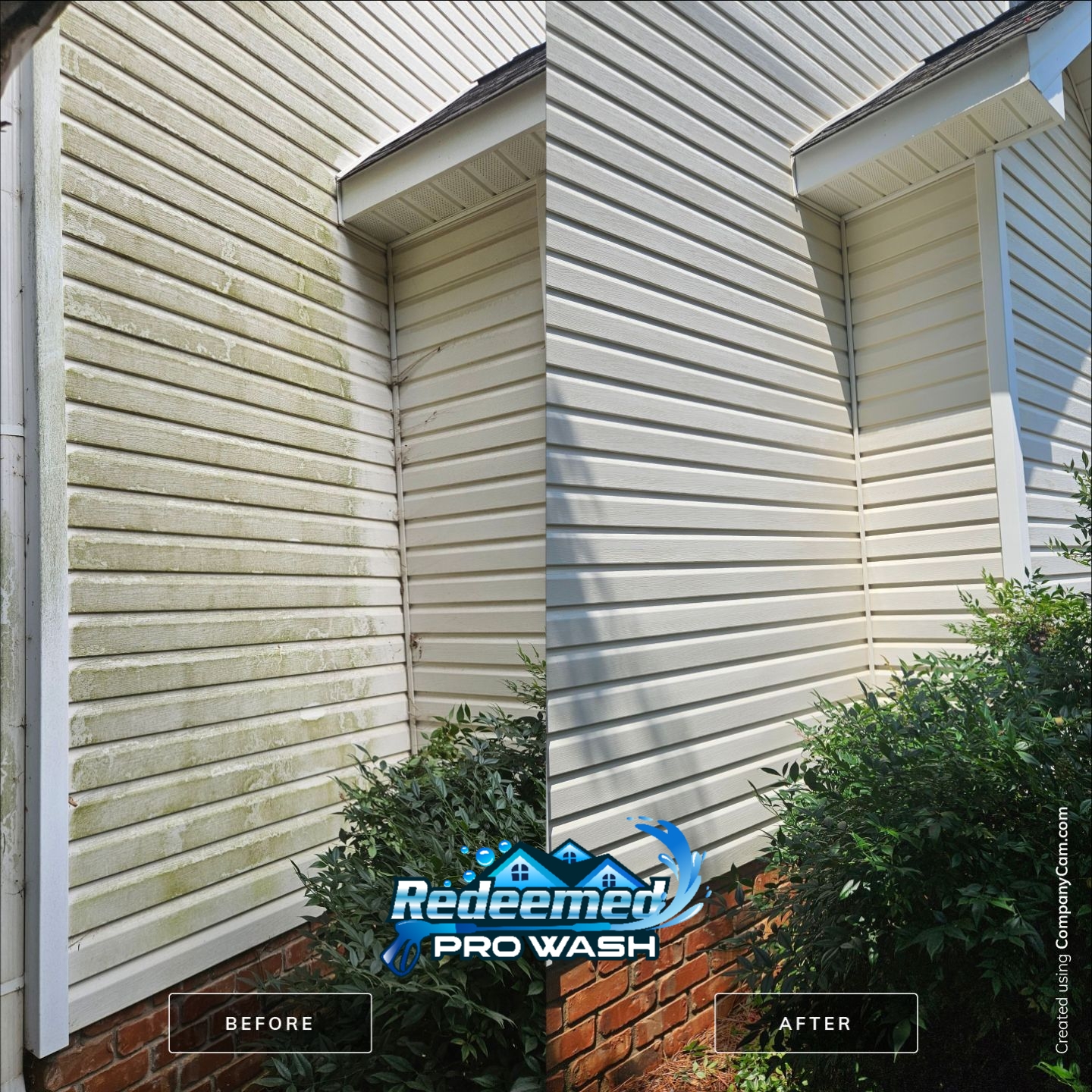
House Washing — Before & After
Actual work from Redeemed Pro Wash customers across the Triad.
 Before / After
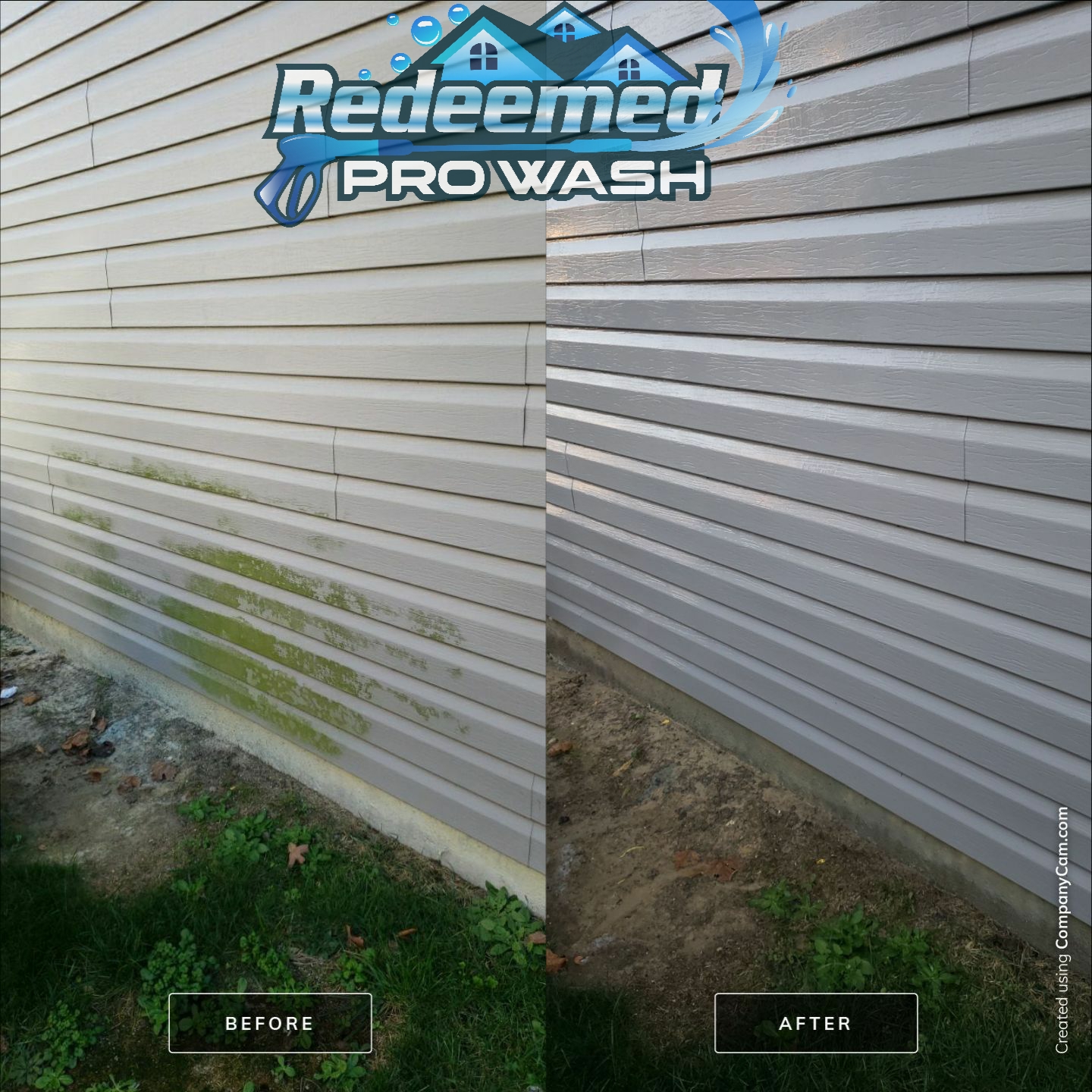 Before / After
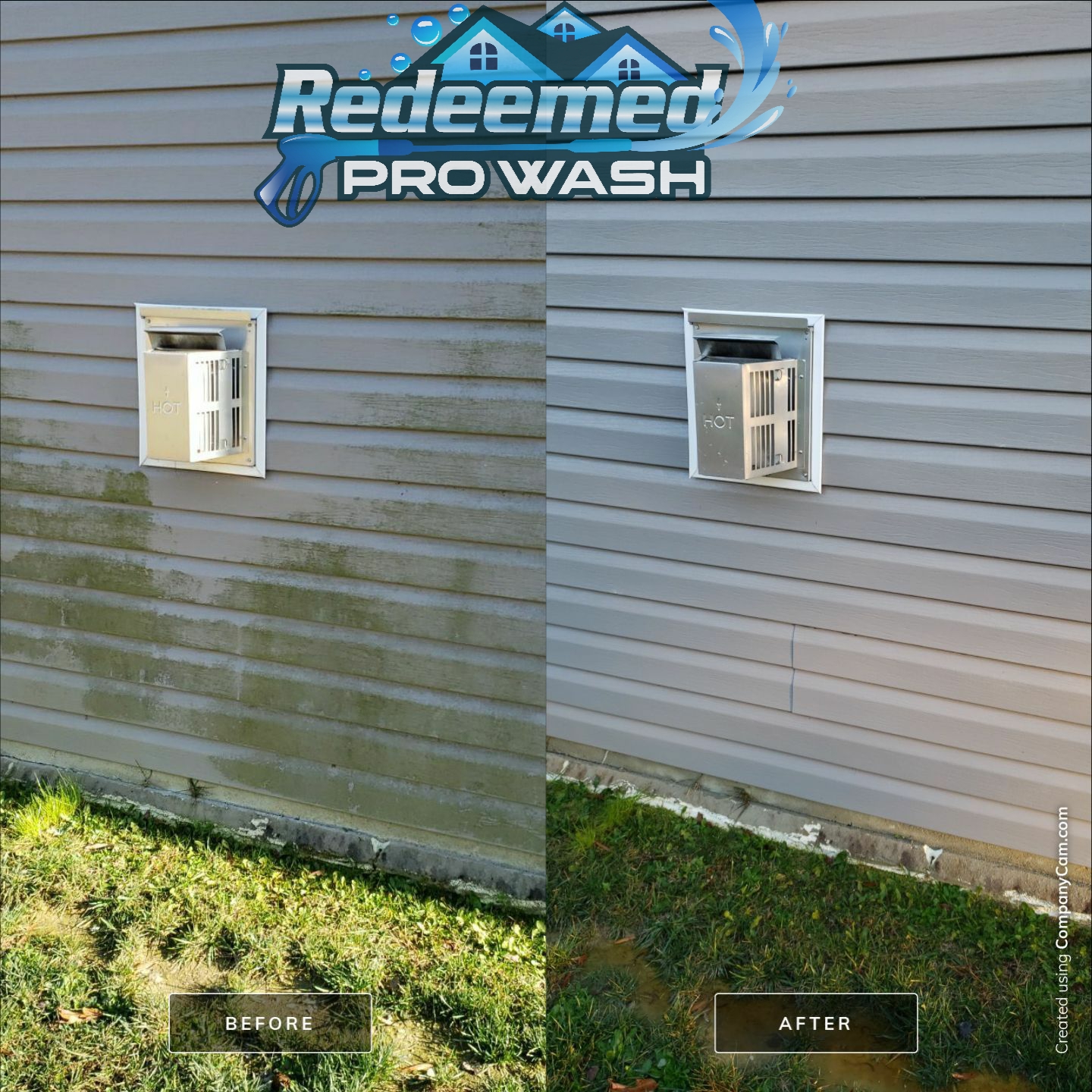 Before / After
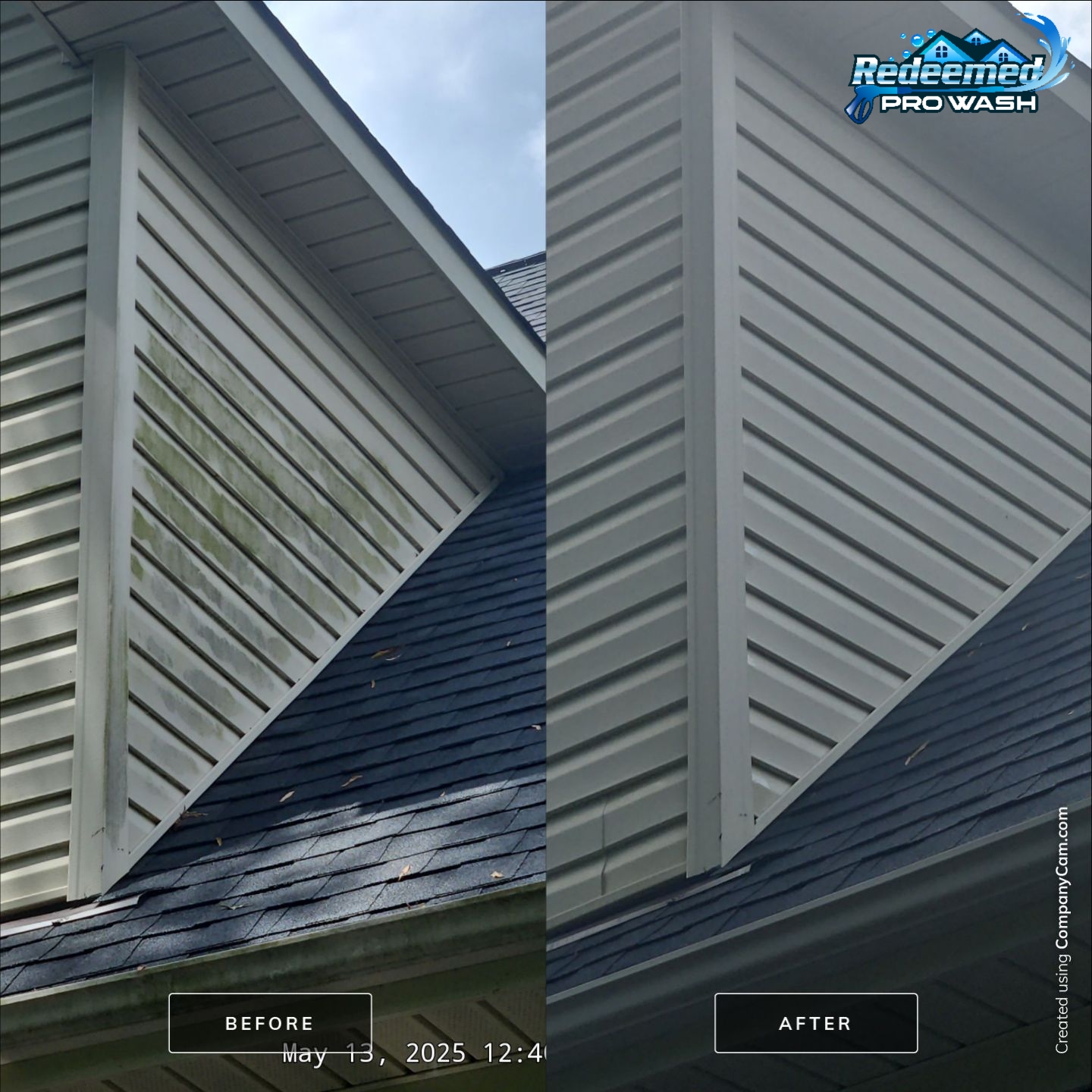 Before / After
House Washing Across the NC Triad
We provide house washing in these communities and more:
Related Services
House Washing FAQs
Soft washing uses low pressure plus plant-safe cleaning solutions to dissolve and kill mold, mildew, and algae, then rinses them away. Pressure washing relies on force alone. For siding, soft washing is the correct method because it cleans deeper, lasts longer, and will not crack panels or force water behind the walls.
Not when it is done correctly. We match the pressure and solution to your specific siding, whether that is vinyl, HardiePlank, brick, stucco, or painted wood, and we keep the pressure low so the finish and the panels stay protected. The damage people worry about comes from high-pressure washing, which is exactly what we avoid.
We use eco-conscious, plant-safe solutions and we pre-wet and rinse your shrubs and plants before, during, and after the wash so the solution stays where it belongs. Protecting your landscaping is a standard part of our process, not an afterthought.
For most Triad homes, once a year keeps siding clean and stays ahead of algae and mildew. Homes that are heavily shaded, face north, or back up to woods may benefit from cleaning every six to twelve months, while sunnier, more open homes can sometimes go a bit longer.
Yes. Those streaks are colonies of algae and mildew, and our soft wash solution is designed to break them down and kill them at the source rather than just rinsing off the visible layer. That is why the results look better and stay clean longer than pressure alone.
We can significantly improve red clay and iron-oxide staining, and in many cases lighten it dramatically. Set-in clay stains sometimes lighten rather than disappear completely, and we will always give you an honest expectation of the result before we start.
A typical single-story home is often finished in a few hours. Larger homes and two-story houses take longer. When we give you your free estimate, we will provide a realistic time frame for your specific home.
You do not have to be home, as long as we have access to the areas we need and outdoor water. Many customers prefer to be there for the final walk-around so we can review the results together, but that is entirely up to you.
Our house washing starts at $299. The final price depends on your home's size, number of stories, siding type and condition, the severity of the staining and growth, and access. We give honest, upfront quotes and free estimates so you know exactly what you are paying for.
We are based in Gibsonville, NC and serve the whole Triad, including Greensboro, High Point, Winston-Salem, and Burlington, along with surrounding communities and statewide. We are licensed, insured, owner-operated, and backed by 50 five-star Google reviews.