Driveway Cleaning Services in North Carolina
Even, stripe-free concrete cleaning that lifts red clay, oil, rust and algae — done right by a licensed, insured, owner-operated crew serving the NC Triad. Free estimates, starting at $199.
Driveway cleaning services in North Carolina have to do more than rinse off dust. Here in the Triad, concrete fights red clay run-off, iron-oxide staining, spring pollen, humidity, black algae streaks and the oil and tire marks that come with everyday parking. Redeemed Pro Wash cleans driveways the right way — with the correct pressure, the correct surface tool and the correct cleaners for each stain — so you get an even finish instead of streaks, zebra stripes or etched concrete.
We are owner-operated, licensed and insured, and based in Gibsonville. Brian Griffin runs every job personally, so the person quoting your driveway is the person cleaning it. Homeowners across Greensboro, High Point, Winston-Salem, Burlington and the surrounding towns have left us 50 five-star Google reviews for exactly this kind of careful, honest work.
Below we walk through how driveway concrete actually gets dirty, why the wrong method can permanently damage it, what our pressure washing process looks like, how often you should clean, and the honest factors that affect price. Driveway cleaning starts at $199, and estimates are always free.
Key Takeaways
- Concrete is porous, so North Carolina red clay, oil, rust and algae soak in and need targeted cleaners plus controlled pressure — not just water.
- A rotating surface cleaner gives an even, stripe-free finish and protects the concrete; a bare high-pressure wand can etch the surface permanently.
- Most Triad driveways benefit from cleaning every six to twelve months, more often in shaded, tree-covered or north-facing areas.
- Cleaning restores appearance honestly — deep, old oil or clay stains may lighten dramatically rather than vanish, and we tell you what to expect upfront.
- Driveway cleaning starts at $199 from a licensed, insured, owner-operated local crew, and estimates are always free.
Why North Carolina Driveways Get So Dirty
Concrete looks solid, but it is porous. The surface is full of tiny pores that soak up water, oil and pigment like a sponge. That is why a driveway that gets rinsed by every rainstorm still turns gray, green and rust-orange over time — the grime is not sitting on top, it is working its way in.
The Triad adds its own set of problems. Our red piedmont clay is rich in iron oxide, and when clay-heavy run-off dries on concrete it behaves like a dye, leaving orange and rust-colored staining that a garden hose will never touch. Add in heavy spring pollen, long humid summers and shaded, north-facing sections of driveway, and you get the black streaks and green film of algae and mildew that spread across so many local driveways.
On top of the natural staining, everyday use leaves its mark: oil and transmission drips under where you park, black tire scuffs at the turn-in, rust from patio furniture, grills or a leaking downspout, and organic buildup along the edges where leaves collect. Each of these needs a slightly different approach, which is the whole reason professional driveway cleaning exists.
Pressure Washing vs. Soft Washing: Which Your Driveway Needs
Driveway concrete is one of the few exterior surfaces that genuinely calls for real pressure washing. Unlike vinyl siding or a shingle roof — which we clean with a gentle, low-pressure soft wash — solid, sound concrete can take the mechanical energy needed to lift ground-in dirt, and the flat horizontal surface is built for it.
But pressure alone is only half the job. Water pushes dirt out of the pores; it does not dissolve algae roots, break the iron bond in clay stains, or cut through oil. That is why our process is really a hybrid. We pre-treat the surface with the right cleaner for the stains present — a plant-safe, eco-conscious solution for algae and mildew, a degreaser for oil, and specialized products for clay and rust — let it dwell, and then pressure wash. The chemistry does the loosening so the pressure can stay controlled instead of cranked to damaging levels.
There is an important honest caveat here. Cleaning restores appearance; it does not guarantee that every deep, old stain will vanish. Oil that has soaked in for years, or rust that has penetrated the concrete, may lighten dramatically but not disappear completely. We will always tell you upfront what to realistically expect for your specific driveway before we start.
How the Wrong Method Damages Concrete
The single most common way homeowners and cut-rate crews ruin a driveway is using a narrow, high-pressure wand tip held too close for too long. Concrete has a thin top layer of cement 'cream,' and too much PSI in one spot blasts that layer off — exposing the rougher aggregate underneath, etching visible marks into the surface, and in bad cases causing spalling, where the concrete flakes and pits. That damage is permanent. No amount of re-cleaning brings the smooth surface back.
The second common mistake is 'zebra striping' or 'tiger striping' — those uneven light-and-dark bands you see on driveways cleaned with a bare wand. They happen because a person waving a wand back and forth inevitably varies their distance and speed, so some passes clean more than others. The result looks almost worse than the original dirt because the difference is so obvious.
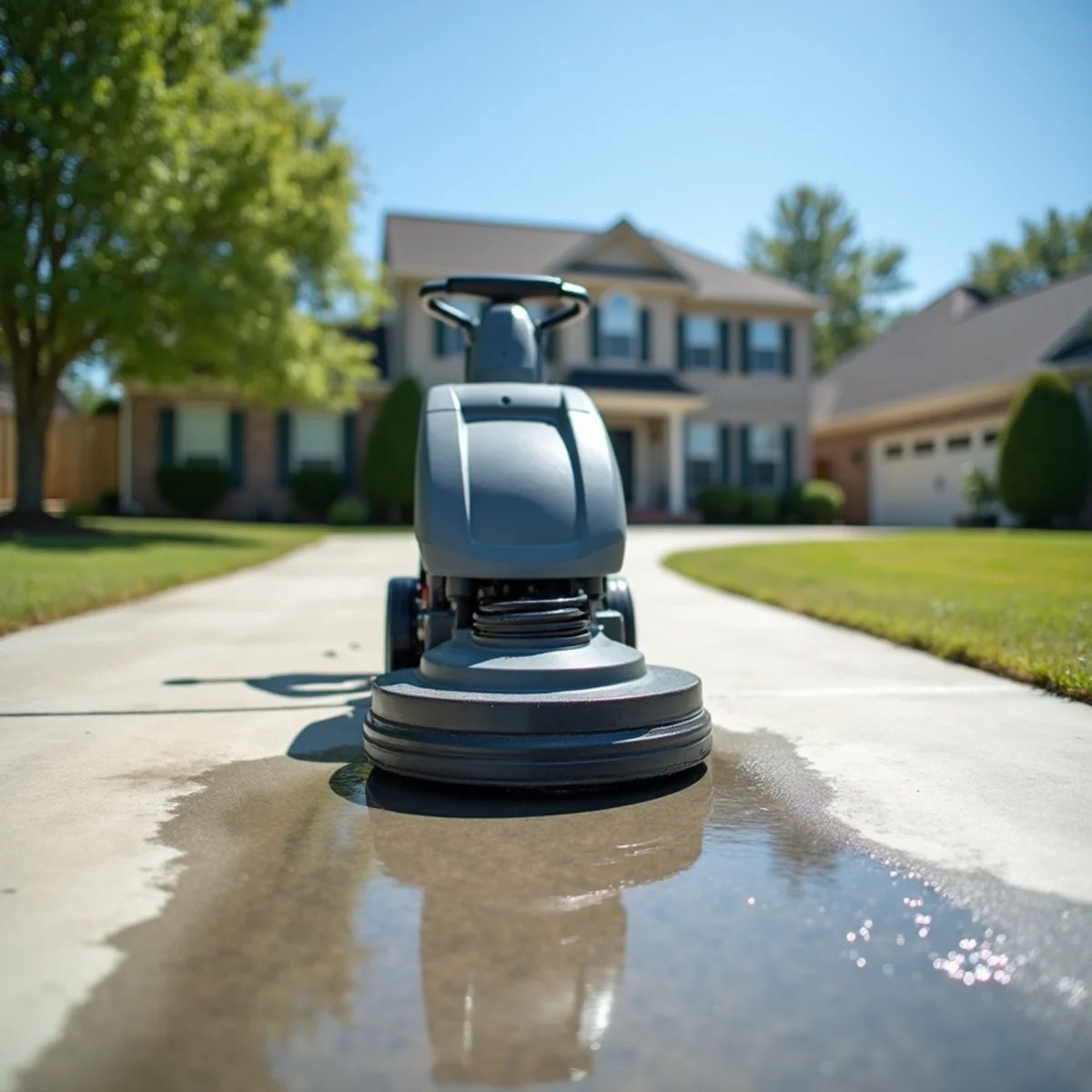
This is why we clean the open field of the driveway with a rotating surface cleaner rather than a bare wand. A surface cleaner spins two nozzles inside a covered housing that rides at a fixed height, spreading the pressure evenly across a wide path. It produces a consistent, stripe-free finish, protects the concrete from point-blast etching, and is far faster. We then use a controlled wand only for the edges, corners and detail work the surface cleaner cannot reach — feathering those passes so they blend instead of striping.
Tackling the Tough Stains: Red Clay, Oil, Rust and Tire Marks
Red clay and iron-oxide staining is the Triad's signature driveway problem. Because the iron acts as a pigment, plain pressure washing pushes the loose mud off but leaves the orange tint behind. We treat clay staining with a cleaner formulated to break the bond between the iron and the concrete, then rinse — which lifts far more of the color than water alone. Deeply set, long-standing clay stains may still show some faint shadow; we are honest about that rather than promising a perfect result.
Oil and grease drips need a dedicated degreaser and dwell time. We apply the product directly to the stained area, let it pull the oil up out of the pores, and agitate as needed before washing. Fresh spots usually clean up well; older, saturated oil stains typically lighten significantly but can leave a ghost, especially on unsealed concrete.
Rust — from furniture, fertilizer, a grill or metal that has been sitting on the concrete — is a different chemistry again and responds to a specialized rust remover rather than a general cleaner. Tire marks and scuffs at the turn-in are largely surface rubber and organic film, and generally clean up cleanly with pre-treatment and the surface cleaner. Because these stains each need different products, we identify what is actually on your driveway during the estimate and price the treatment accordingly.
What to Expect on Cleaning Day
We keep the process simple and low-stress for you. Before we arrive, the only thing we ask is that vehicles, portable basketball hoops, planters and anything else be moved off the driveway so we have a clear surface to work. If you have delicate landscaping along the edges, point it out and we will take extra care.
On site, we start by inspecting the concrete and identifying the specific staining, then pre-treat the surface with the appropriate cleaners and give them time to dwell. Next we run the surface cleaner across the open field in even, overlapping passes for a consistent finish, and detail the edges and problem stains by hand. We finish by rinsing the whole driveway down toward the street or drain so no residue dries back onto the clean surface.
A typical residential driveway is usually a same-day job measured in a couple of hours, depending on size and how heavy the staining is. We are careful around garage doors, siding, and plant beds, and we protect the areas that should not take direct pressure. When we leave, you get an even, brightened surface — not a striped one.
How Often Should You Clean Your Driveway in the Triad?
For most homes, once a year keeps a driveway looking good and stops grime from settling in. In our climate, though, a lot of Triad driveways do better on a roughly every-six-months rhythm because the humidity, shade and pollen let algae and mildew come back faster than in drier regions — especially on north-facing sections that never get much direct sun.
Your ideal frequency depends on your specific conditions. Driveways under heavy tree cover, near flower beds, or with a lot of shade collect organic growth quickly and benefit from more frequent cleaning. A sunny, open driveway with light traffic can often go longer. Regular cleaning also makes each visit easier, because stains have less time to bond into the concrete.
Beyond looks, routine cleaning is genuine maintenance. Algae and mildew make concrete slick and can create a real slip hazard on a wet driveway or walkway, and removing organic growth and staining keeps the surface in better shape between the bigger, more expensive projects of resurfacing or replacement.
A Word on Sealing and Protecting Clean Concrete
Cleaning and sealing are two separate steps, and it helps to understand the difference. Pressure washing removes what is on and in the surface; a concrete sealer is a protective coating applied afterward that helps the concrete shed water, oil and stains so they sit on top instead of soaking in. A sealed driveway is easier to keep clean and more resistant to future clay and oil staining.
If your driveway is already sealed, that is one more reason not to hand it to someone swinging a high-pressure wand. Too much pressure or a too-narrow tip can strip or etch the sealer, leaving the concrete exposed again. Our controlled, surface-cleaner method is gentler on an existing coating.
We focus on doing the cleaning right first, since a proper wash is also the correct prep if you decide to seal. During your estimate we are happy to talk through whether sealing makes sense for your concrete and how to time it, so you can make an informed decision rather than a rushed one.
Get a Free Driveway Cleaning Estimate
Redeemed Pro Wash is a local, owner-operated company that treats your driveway the way we would treat our own. We are licensed and insured, we use eco-conscious, plant-safe solutions, and we have earned 50 five-star Google reviews across Gibsonville, Greensboro, High Point, Winston-Salem, Burlington and the wider Triad. We also serve customers statewide across North Carolina.
Driveway cleaning starts at $199, and your estimate is always free. Because Brian personally looks at the concrete and the specific stains — clay, oil, rust, algae or tire marks — you get an honest, accurate price and a clear picture of what results to expect, with no surprises on the invoice.
Call or text Brian at (351) 242-0666 for your free driveway cleaning estimate. If you are also thinking about the rest of your exterior, ask about house washing, roof cleaning and sidewalk cleaning while we are out — we are glad to quote it all in one visit.
What We Clean
- Concrete driveways
- Red clay and iron-oxide stains
- Oil, grease and transmission drips
- Rust stains
- Black tire marks and scuffs
- Algae, mold and mildew streaks
- Garage floors and aprons
- Curbing and driveway edges
- Sidewalks and walkways connected to the drive
- Pollen and organic buildup
Our Process
- Step 1
Inspect and identify stains
We look over the concrete and pinpoint exactly what we are dealing with — red clay, oil, rust, algae or tire marks — so we choose the right cleaner for each.
- Step 2
Pre-treat and dwell
We apply eco-conscious, plant-safe solutions and targeted stain treatments, then let them dwell to loosen algae, break the clay-iron bond and pull oil out of the pores.
- Step 3
Surface-clean the field
A rotating surface cleaner rides at a fixed height across the open driveway in even, overlapping passes for a consistent, stripe-free finish with no etching.
- Step 4
Detail the edges and stains
We hand-treat corners, seams and stubborn spots with a controlled wand, feathering each pass so it blends instead of leaving zebra stripes.
- Step 5
Rinse and inspect
We rinse the whole surface toward the drain so no residue dries back on, then walk the driveway with you to check the results.
Pro Tips from Brian
- Move cars, planters and basketball hoops off the driveway before your appointment so the crew can clean the full surface in one pass.
- Ask for a surface cleaner, not a bare wand, on open concrete — it is what prevents the zebra striping you see on poorly cleaned driveways.
- Treat fresh oil drips quickly; the longer oil soaks into porous concrete, the more likely it leaves a permanent shadow even after professional cleaning.
- In the shaded, north-facing sections of your driveway, expect algae to return faster and plan cleanings closer together than the sunny areas.
- Consider sealing after a professional wash — a sealed driveway resists red clay and oil staining and is easier to keep clean.
- Never let anyone hold a narrow high-pressure tip close to the concrete; it etches the surface permanently, and that damage cannot be washed back out.
What Affects Your Price
Driveway Cleaning starts at $199. Most companies hide pricing — we don't. Here's what shapes the final number:
- Total square footage of the driveway — larger areas take more time and product.
- Type and severity of staining — heavy oil, rust or set-in red clay require specialized treatments and extra dwell time.
- Amount of detail and edge work versus open field the surface cleaner can cover quickly.
- Degree of algae and mildew growth, which is heavier on shaded, north-facing concrete.
- Whether you add connected surfaces like sidewalks, curbing or the garage apron in the same visit.
- Access and water availability at the property.
Every estimate is free, written, and itemized — no surprise fees.
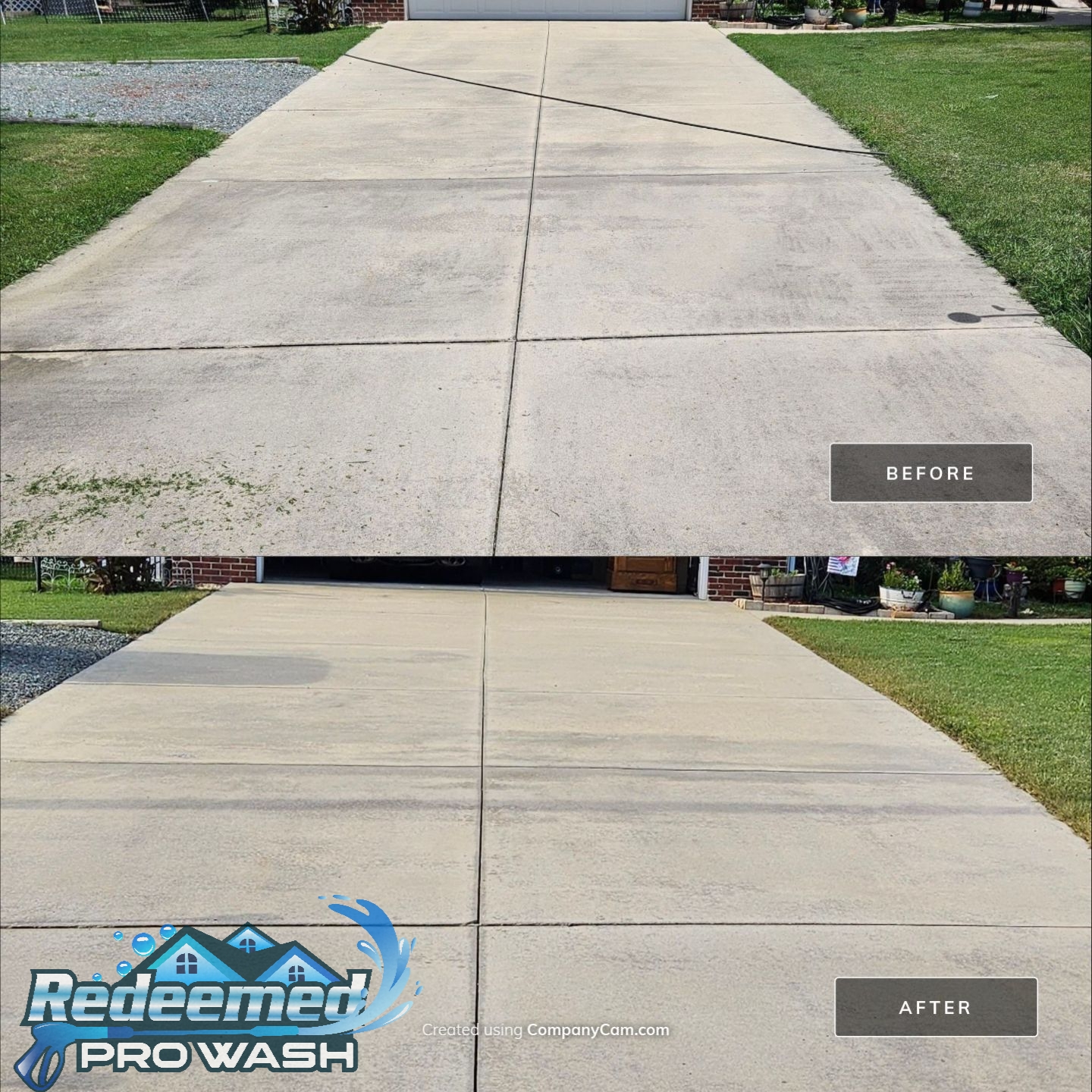
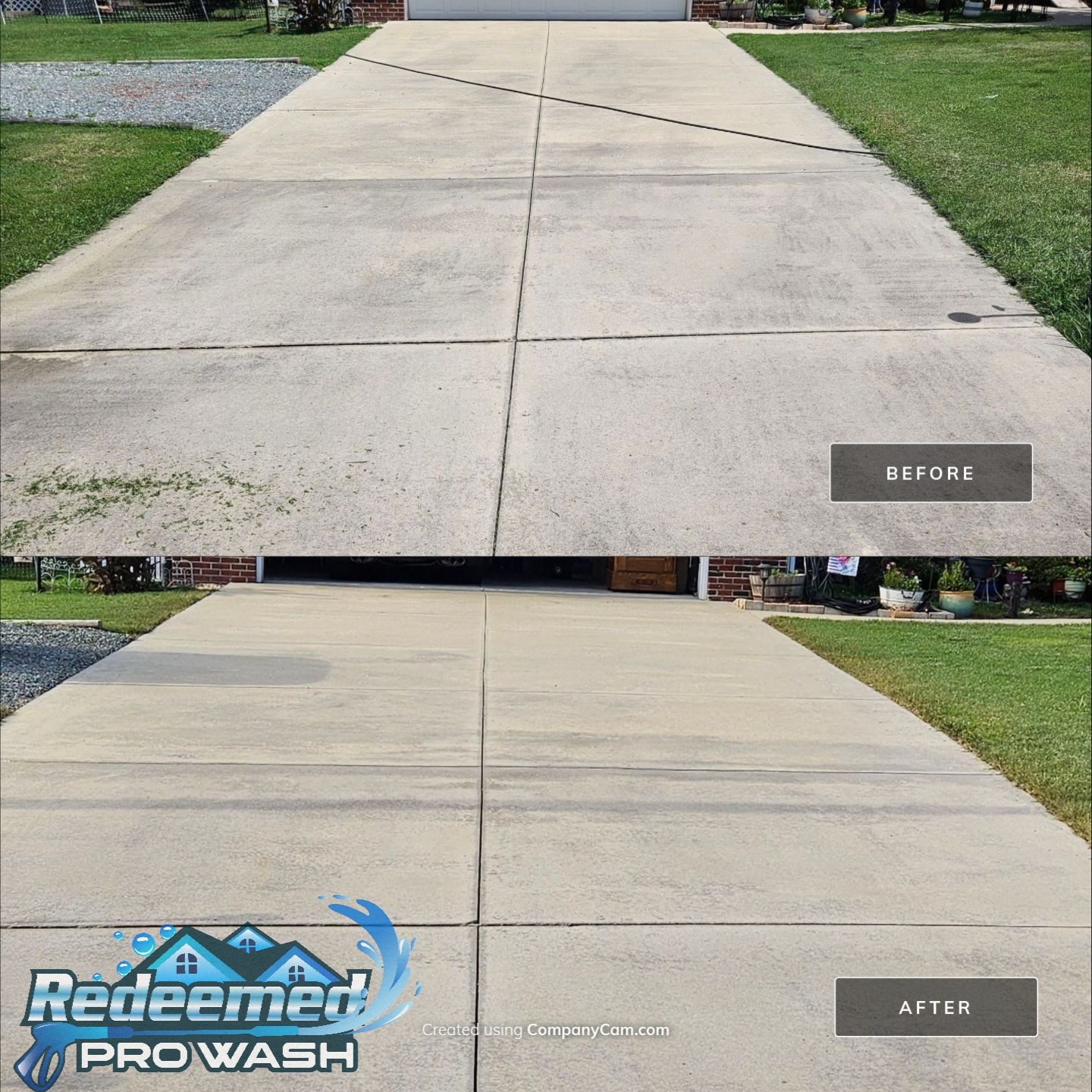
Driveway Cleaning — Before & After
Actual work from Redeemed Pro Wash customers across the Triad.
 Before / After
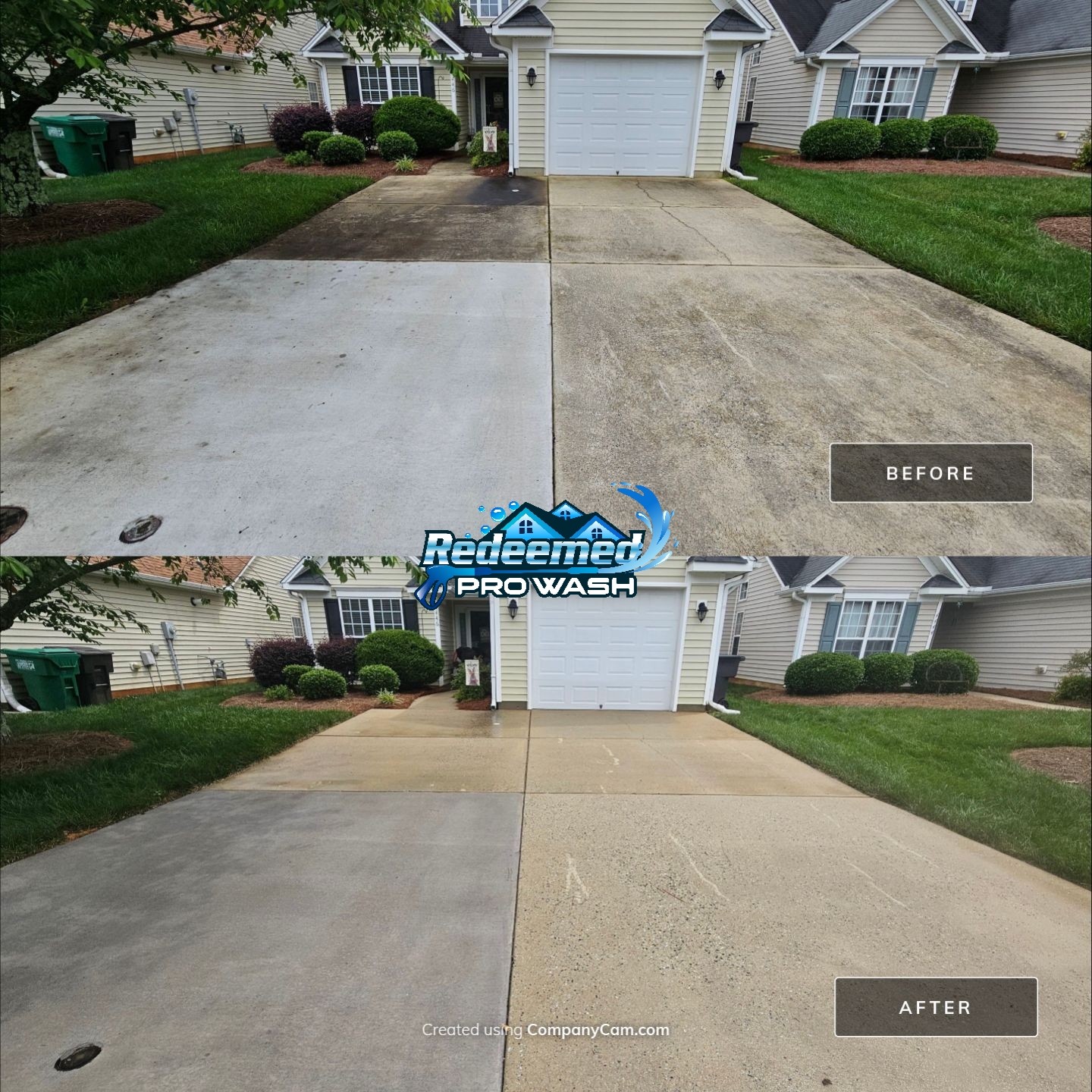 Before / After
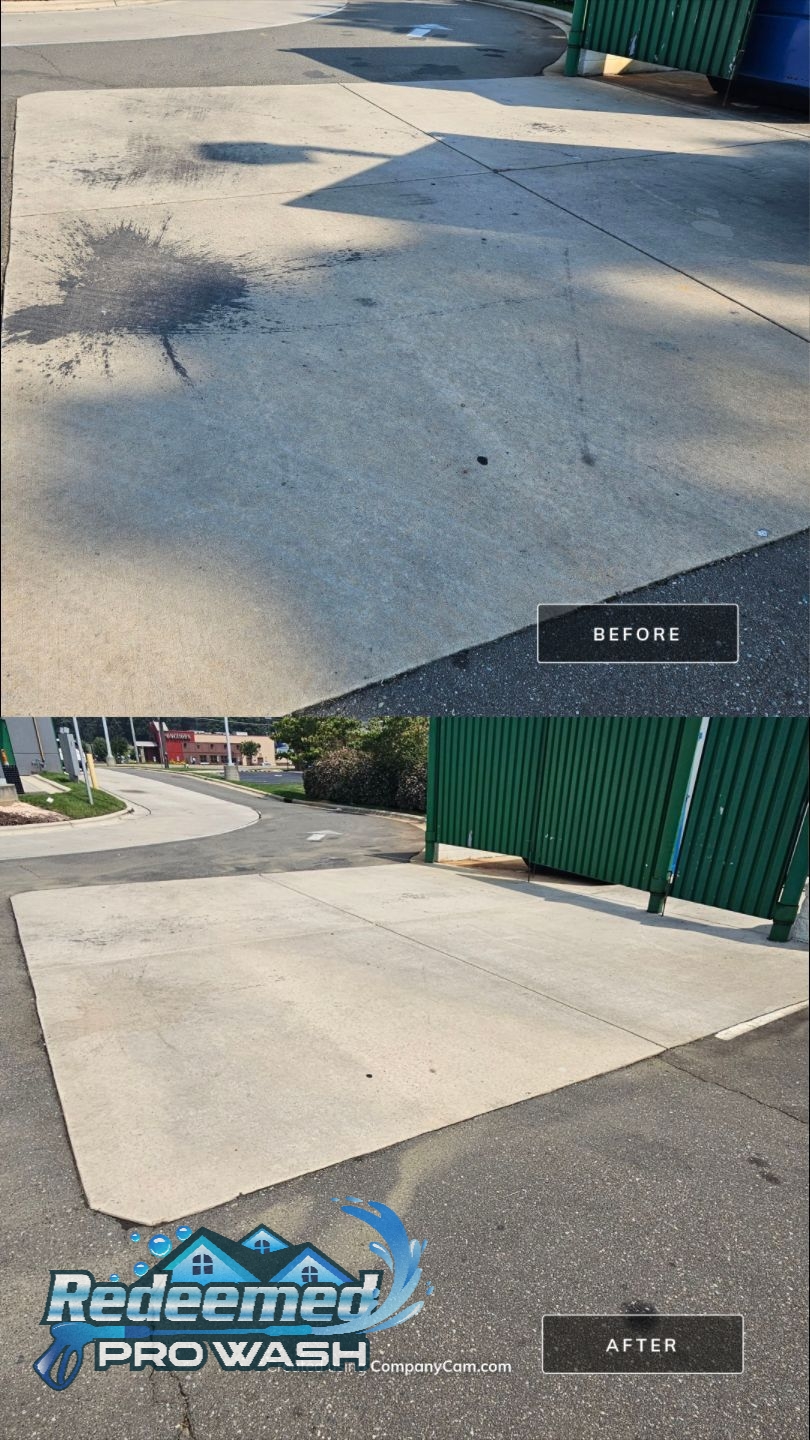 Before / After
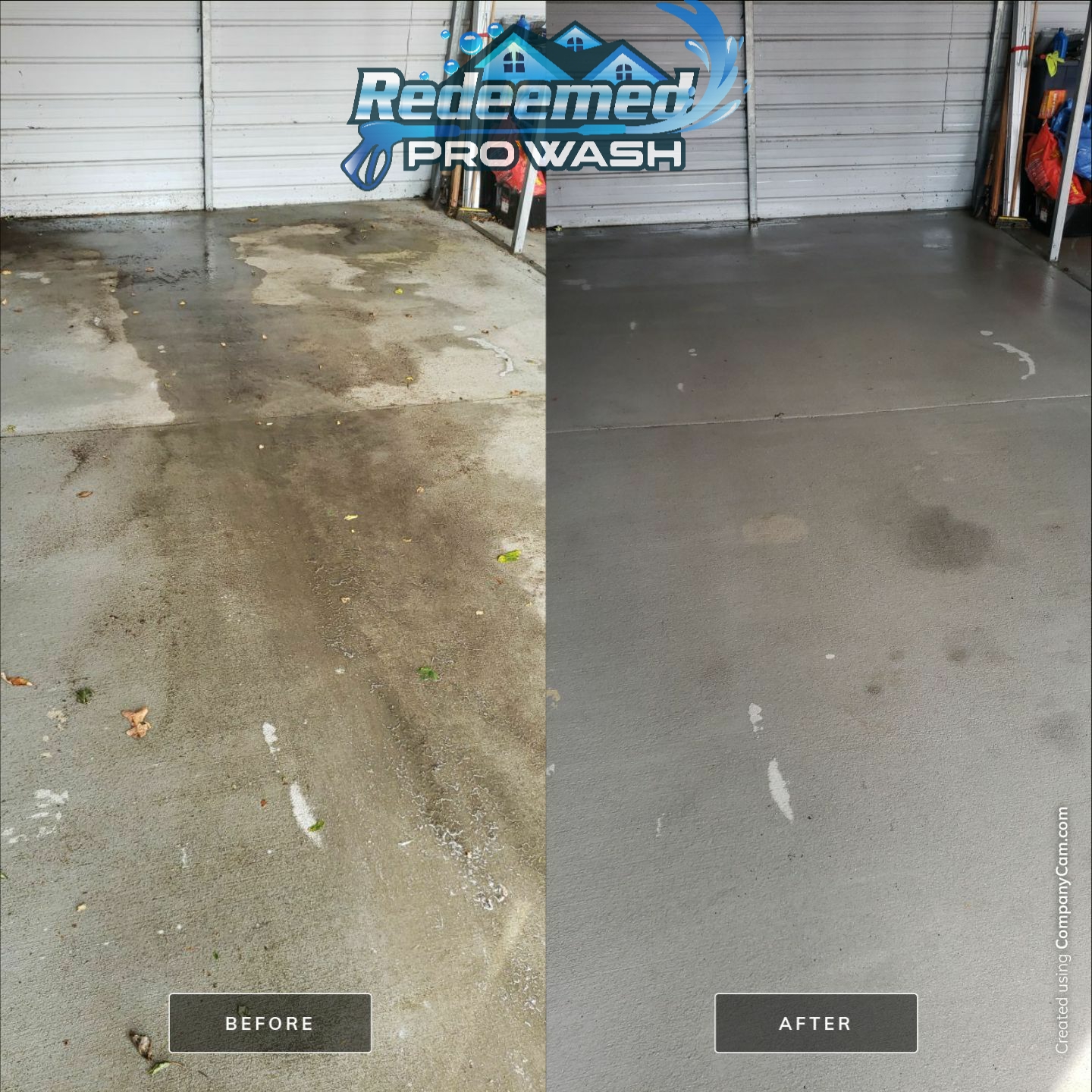 Before / After
Driveway Cleaning Across the NC Triad
We provide driveway cleaning in these communities and more:
Driveway Cleaning FAQs
Our driveway cleaning starts at $199. The final price depends on the size of the driveway and the type and severity of staining — heavy oil, rust or set-in red clay need extra treatment. Because Brian looks at your specific concrete, you get an honest, accurate quote with no surprises. Estimates are always free.
In most cases, yes — significantly. Red clay stains the concrete because it is rich in iron oxide, which acts like a dye, so plain pressure washing leaves the orange tint behind. We pre-treat clay staining with a cleaner that breaks the iron-to-concrete bond, then wash it away. Very old, deeply set clay stains may leave a faint shadow, and we will tell you honestly what to expect for your driveway.
Not when it is done correctly. Damage happens when someone uses a narrow, high-pressure tip too close to the concrete, which strips the top layer and etches the surface permanently. We use a rotating surface cleaner that spreads pressure evenly and controlled techniques on the edges, so you get a clean, even finish without etching or striping.
A surface cleaner is a covered tool with spinning nozzles that rides at a fixed height over the concrete, spreading pressure evenly across a wide path. It gives a consistent, stripe-free finish, protects the surface from point-blast etching, and works much faster than a bare wand. It is the main reason our driveways come out even instead of showing zebra stripes.
For most Triad homes, once a year keeps concrete looking good, but many driveways do better every six months because our humidity, shade and pollen bring algae and mildew back faster. Shaded, north-facing and tree-covered driveways benefit from more frequent cleaning than open, sunny ones.
Usually, yes. We apply a dedicated degreaser to oil spots and let it dwell to pull the oil out of the concrete pores, and tire marks generally clean up with pre-treatment and the surface cleaner. Fresh stains clean up best; older, saturated oil may lighten a lot but can leave a ghost, especially on unsealed concrete. We will set honest expectations before we start.
Yes, please move vehicles and anything else off the driveway — like planters, grills and basketball hoops — so we can clean the entire surface. If you have delicate landscaping along the edges, just point it out and we will take extra care around it.
We use eco-conscious, plant-safe solutions and rinse surrounding areas as we work. We are careful around plant beds, siding and garage doors, and we control our pressure and technique to protect them. Being licensed and insured, we take that responsibility seriously on every job.
Sealing is optional but worth considering. A sealer is a protective coating applied after cleaning that helps concrete shed water, oil and stains, so a sealed driveway resists future clay and oil staining and stays cleaner longer. A proper wash is also the correct prep for sealing. We are happy to talk through whether it makes sense for your concrete during the estimate.
Yes. We are based in Gibsonville and serve Greensboro, High Point, Winston-Salem, Burlington and the surrounding towns, plus customers statewide across North Carolina. Call or text (351) 242-0666 to check your address and book a free estimate.