Key Takeaways
- Pressure washing suits hard surfaces like concrete, brick, and stone.
- Soft washing suits delicate surfaces like vinyl siding and roofs.
- Never pressure wash a roof; it can strip shingle granules.
- The wrong method can crack siding, gouge wood, or force water inside walls.
- A good pro matches the method to each surface on your property.
When people think about cleaning a house exterior, they usually picture a high-pressure wand blasting away grime. But there is an important difference between soft washing and pressure washing, and using the wrong one can damage your home. Knowing which method fits each surface is the key to a clean, safe result.
Here in the North Carolina Triad, both methods have their place. Our humidity, pollen, and red clay create a mix of dirt and organic growth that needs the right approach. The trick is matching the method to the surface. Soft washing is gentle and chemical-driven. Pressure washing is powerful and best for tough, hard surfaces.
This guide breaks down how each one works, where each shines, and how to know which your home needs.
What Is Pressure Washing?
Pressure washing uses a high-pressure stream of water to physically blast dirt, grime, and stains off a surface. The force does the work. It is fast and effective on hard, durable materials that can take the pressure.
This is the right method for concrete driveways, sidewalks, brick, and stone. Around the Triad, it is what cuts through baked-on red clay, tire marks, and the algae film that builds up on shaded concrete. When you need to lift heavy grime from a surface that will not be harmed by force, pressure washing is the tool.
The catch is that the same force that cleans concrete can crack, gouge, or strip softer surfaces. High pressure aimed at vinyl siding, shingles, or wood can force water behind the material, break seals, and cause real damage. Power is only helpful when the surface can handle it.
Think of pressure washing as the tool for surfaces you could walk on or park a car on. If it is hard, flat, and built to take weight and weather, it can usually take pressure too. That simple test covers most of the concrete and masonry around a typical Triad home.
What Is Soft Washing?
Soft washing uses low pressure combined with specialized cleaning solutions. Instead of relying on force, it relies on the cleaning agents to break down dirt, kill algae, and remove mildew at the root. The low-pressure rinse then washes it all away gently.
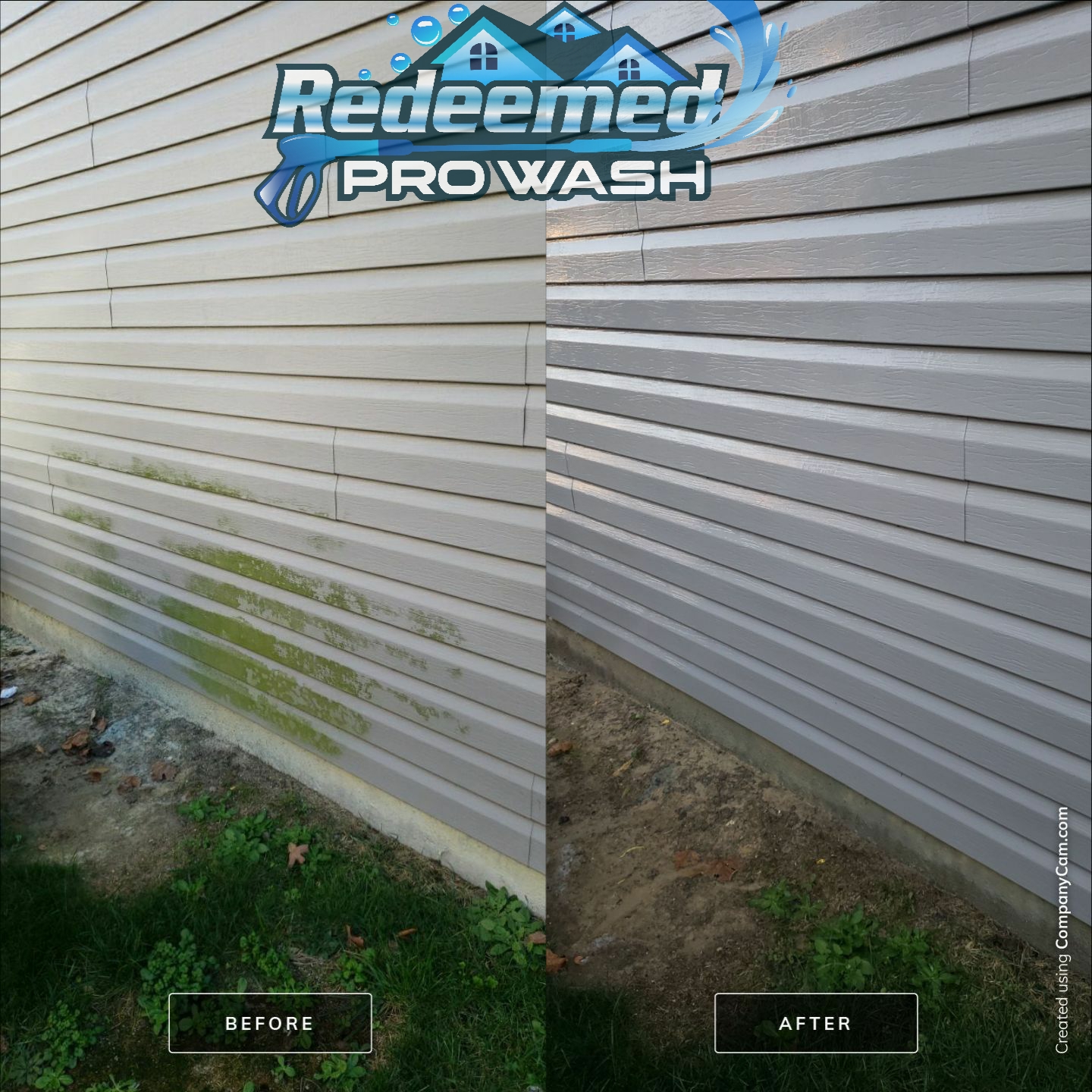
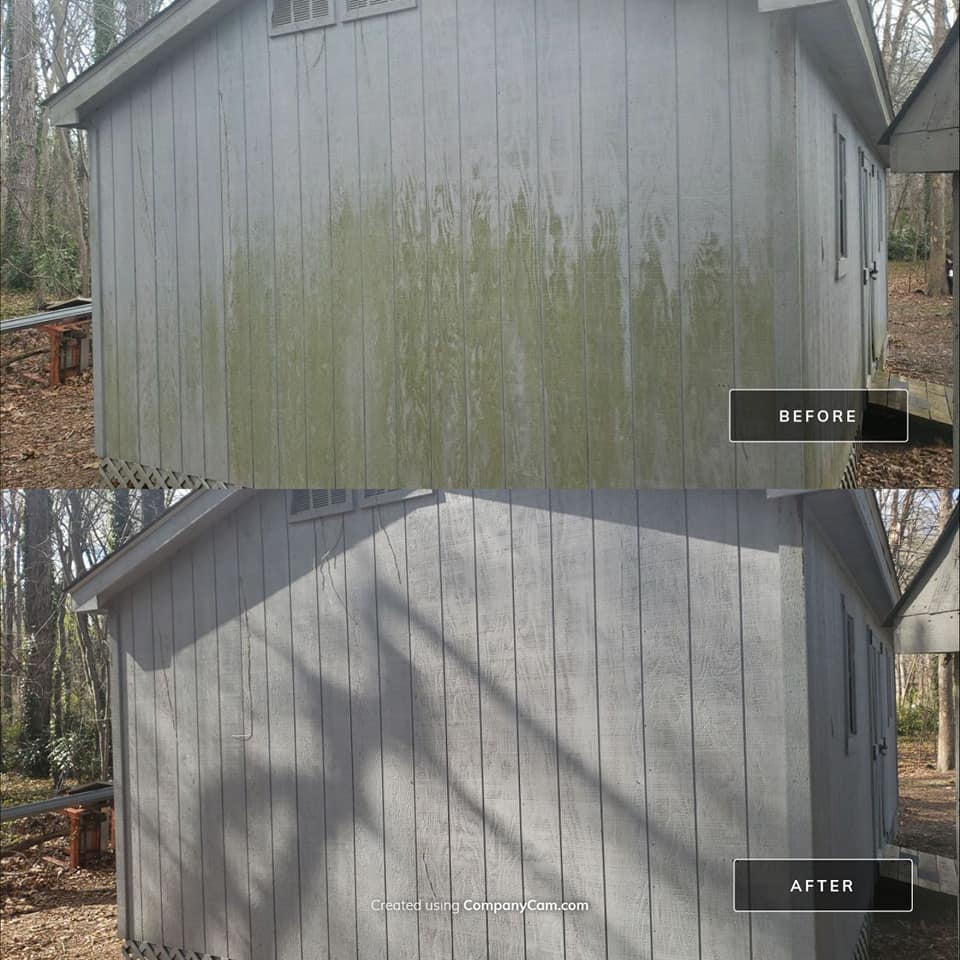
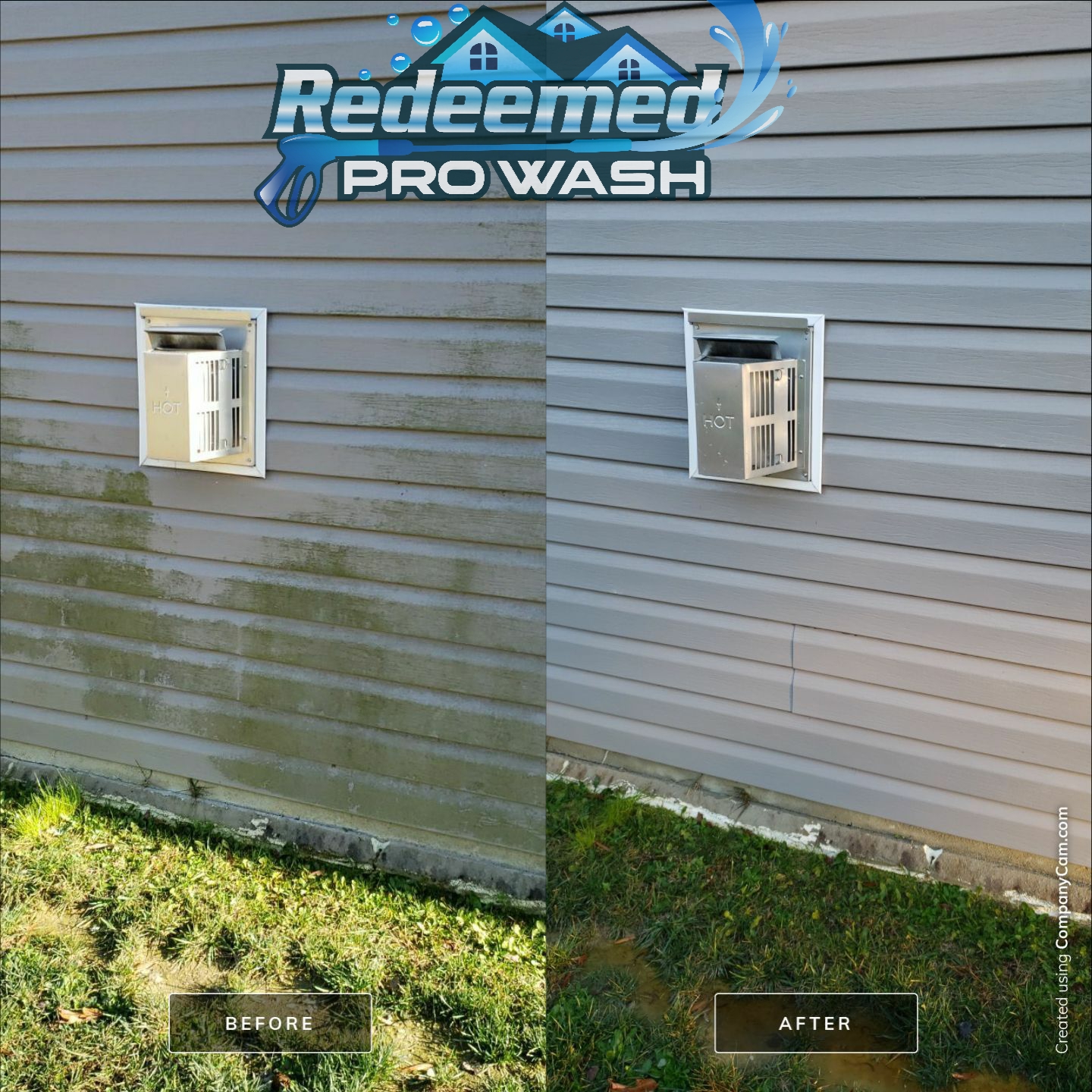
This is the method for delicate and porous surfaces: vinyl siding, painted surfaces, roof shingles, and often wood. It cleans thoroughly without the risk of damage that high pressure brings. Because the solution kills the algae and mildew rather than just blasting the top layer off, the surface tends to stay cleaner longer.
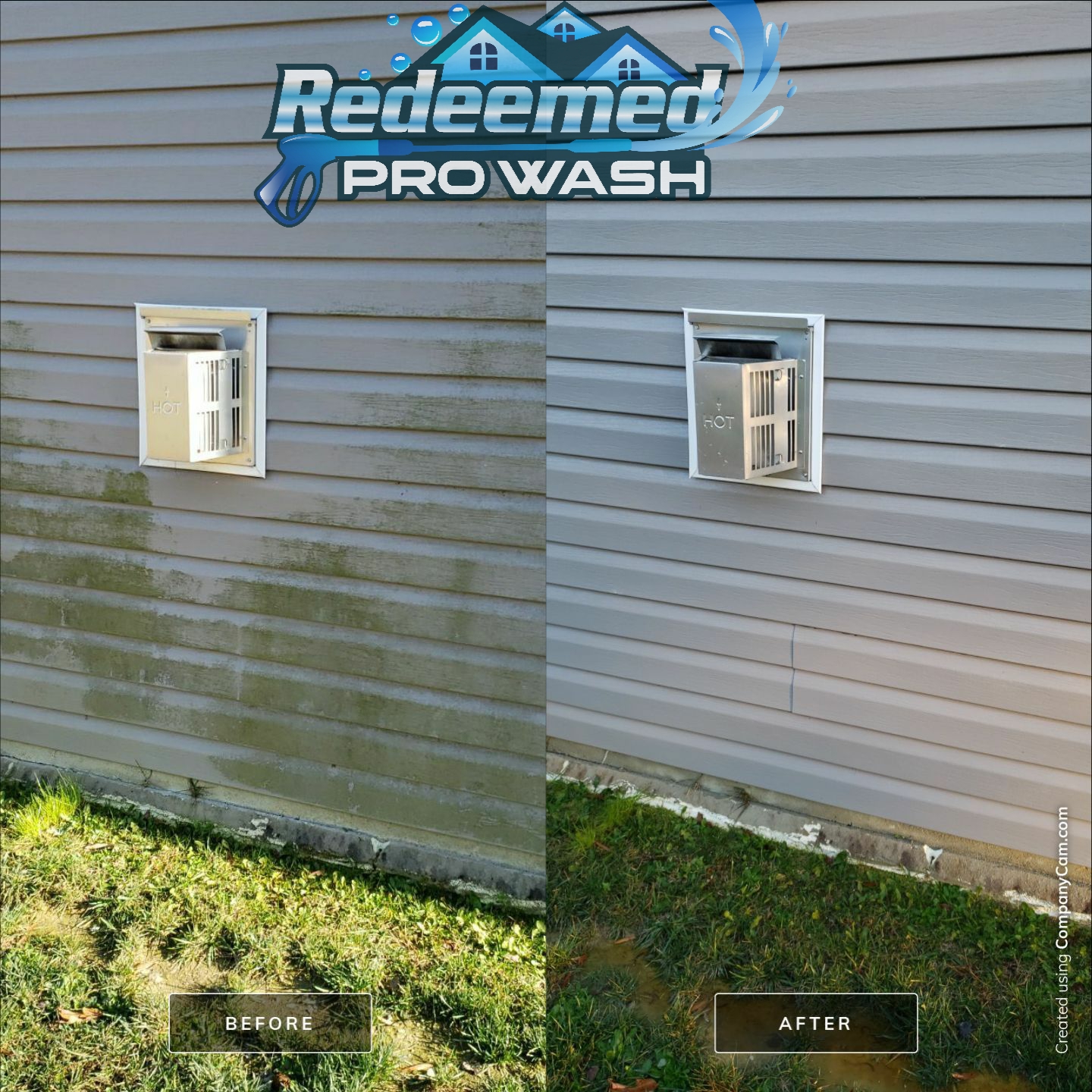
For most house exteriors and nearly all roofs in North Carolina, soft washing is the safer and smarter choice. It handles the mildew and black algae streaks our humid climate produces without putting your siding or shingles at risk.
Which Surfaces Need Which Method
The simple rule is this: hard and durable gets pressure, soft and delicate gets soft washing. Getting this right protects your home and gets a better clean.
Use pressure washing on concrete driveways, sidewalks and walkways, patios, brick, and stone. These surfaces are built to take force and often need it to release ground-in red clay and algae.
Use soft washing on vinyl siding, roofs, stucco, painted wood, and other delicate exteriors. A good professional often uses both on a single property, pressure washing the driveway while soft washing the house and roof. Matching the method to the surface is exactly what separates a safe, quality job from a risky one.
Why the Wrong Method Causes Damage
Using high pressure on the wrong surface is one of the most common ways homeowners accidentally damage their own homes. On vinyl siding, too much pressure can crack panels or drive water behind them, where it can lead to trapped moisture and mildew inside the wall.
On a roof, high pressure is even worse. It can strip the protective granules off asphalt shingles and dislodge them entirely. That is why reputable companies never pressure wash a roof. Roofs get soft washed, always.
Wood decks and fences can splinter, fuzz up, or gouge under heavy pressure. Even when pressure washing is the right call, it takes the right technique, angle, and distance. This is where local experience matters more than raw horsepower.
How to Choose the Right Approach
You do not have to memorize a chart. The easiest path is to have a professional look at your property and match the method to each surface. A good company arrives ready to do both and chooses based on what your home actually needs.
When you get an estimate, it is fair to ask which method they will use on each surface and why. A trustworthy answer will sound a lot like this article: soft washing for the house and roof, pressure washing for the concrete. If someone wants to pressure wash your roof or siding at full force, that is a red flag.
The goal is a clean home with zero damage. That comes from knowledge and care, not just a powerful machine.
Let Redeemed Pro Wash Match the Method to Your Home
At Redeemed Pro Wash, we use both soft washing and pressure washing, and we choose the right one for each surface on your property. We are an owner-operated, licensed and insured company based in Gibsonville, serving Greensboro, High Point, Winston-Salem, Burlington, Elon, and the surrounding Triad.
Owner Brian Griffin will walk your property, explain what each surface needs, and clean it with the safe, correct method. Your vinyl siding and roof get a gentle soft wash. Your driveway and walkways get the pressure they need to come clean. You get a great result with no shortcuts and no risk.
Want an honest recommendation for your home? Reach out for a free estimate and we will tell you exactly what your surfaces need.
Related Services & Areas
Frequently Asked Questions
Pressure washing uses a high-pressure water stream to blast dirt off hard surfaces like concrete. Soft washing uses low pressure plus cleaning solutions to gently remove dirt, algae, and mildew from delicate surfaces like siding and roofs.
No. High pressure can strip the protective granules off shingles and dislodge them. Roofs should always be soft washed, which uses low pressure and cleaning solutions to remove algae and streaks safely.
Yes. Soft washing relies on cleaning solutions that break down dirt and kill algae and mildew at the root, so it cleans thoroughly and often keeps surfaces cleaner longer than force alone.
Concrete driveways are hard and durable, so pressure washing is usually the right choice. It cuts through ground-in red clay, tire marks, and algae that soft washing alone may not fully lift.