Key Takeaways
- Black roof streaks are a living algae, Gloeocapsa magma, not dirt.
- It feeds on shingle filler and thrives in NC's warm, humid climate.
- Streaks run downward as rain carries algae down the roof slope.
- Only soft washing removes streaks safely; pressure washing damages shingles.
- Cleaning restores appearance and can avoid unnecessary early roof replacement.
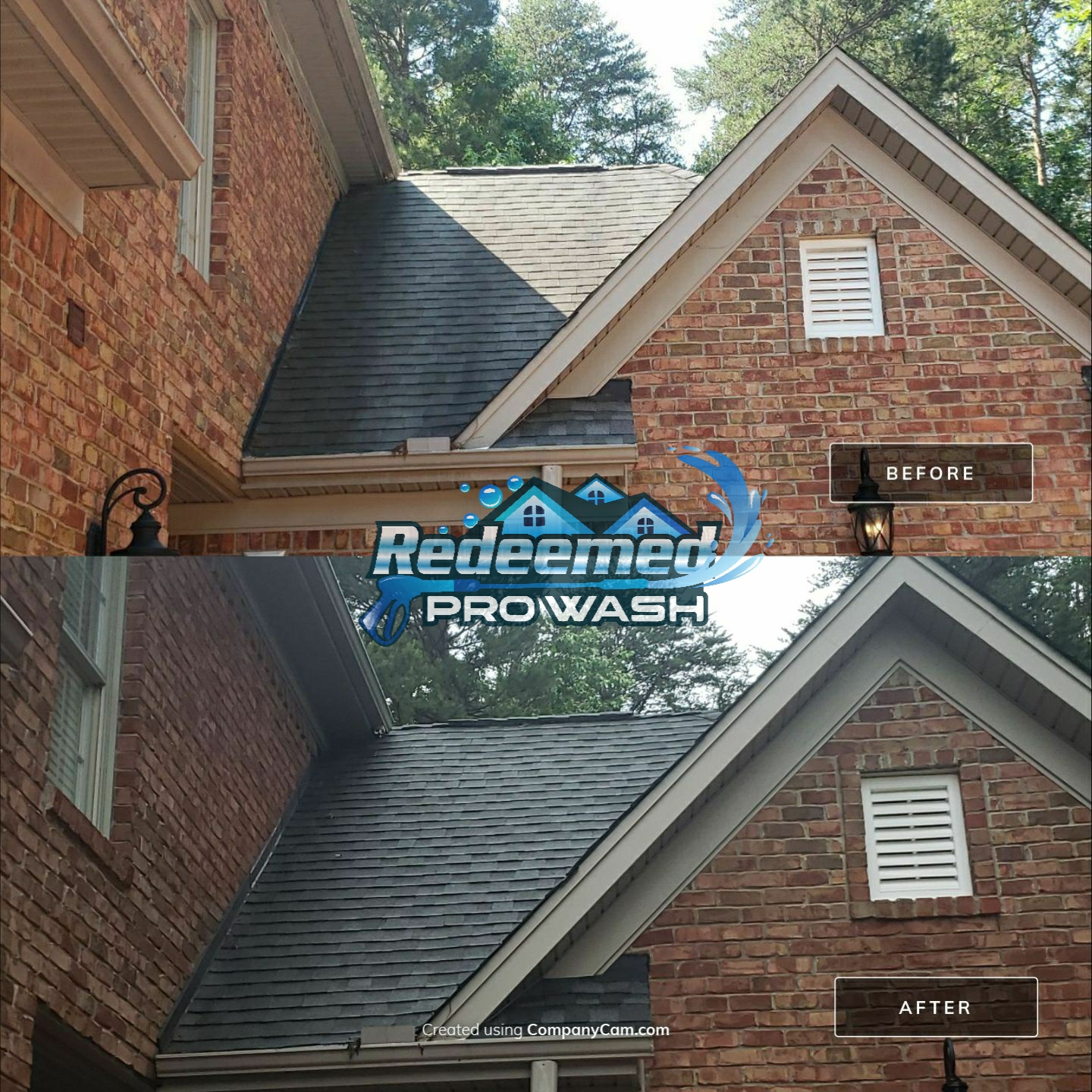
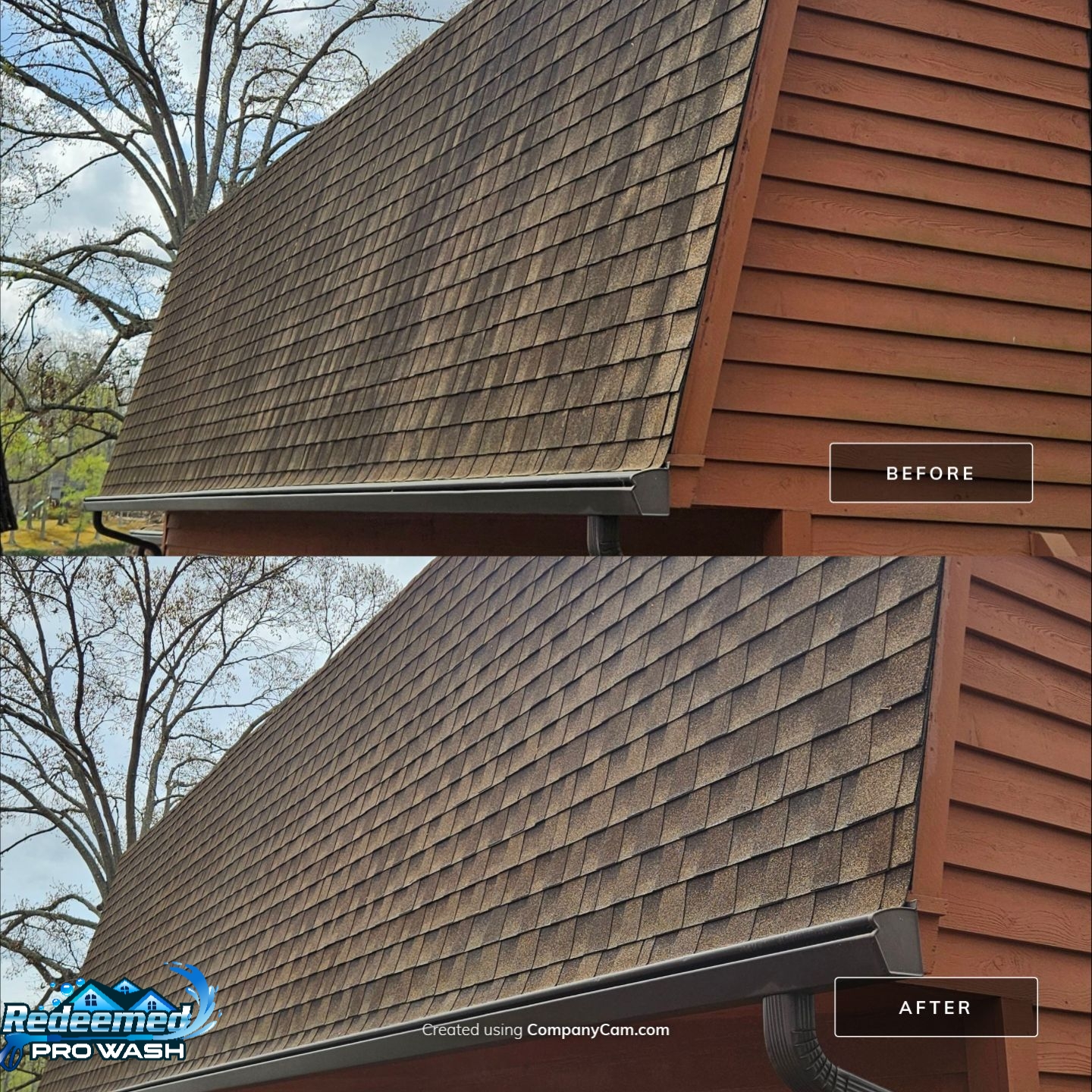
If you have noticed dark black streaks running down your roof, you are seeing one of the most common roof problems in North Carolina. Those black streaks on your roof are not dirt, and they are not permanent damage. They are a living algae, and our warm, humid Triad climate is exactly what it needs to thrive.
Homeowners in Gibsonville, Greensboro, and across the Triad see these streaks appear slowly, usually first on the shaded, north-facing slopes of the roof. Over a few seasons, what started as a faint gray shadow becomes obvious black stains visible from the street.
The good news is that these streaks can be cleaned safely, and understanding what causes them helps you deal with them the right way. Let us break down what is actually growing up there.
The Real Cause: Roof Algae
Those black streaks are caused by a type of algae called Gloeocapsa magma. It travels through the air as spores, lands on your roof, and takes hold wherever conditions are right. Once established, it spreads and creates the dark staining you see.
This algae feeds on the limestone filler used in most asphalt shingles. That is why it settles in and spreads across the shingle surface. As colonies grow, they develop a dark protective coating, which is the black color you notice from the ground.
It is important to know this is a biological growth, not simple grime. You cannot just rinse it off with a hose, and scrubbing it dry does not solve the problem. Because it is alive, it needs to be treated with the right cleaning solution to remove it at the root.
This also explains why the streaks keep coming back on some homes even after a good rain or two. Rain does not kill the algae, it just wets it. Until the growth itself is treated and killed, the stains stay put and slowly spread across the shingles.
Why North Carolina Roofs Are So Prone to It
The Triad climate is close to ideal for roof algae. Our summers are hot, and our humidity stays high for months. Algae needs warmth and moisture, and North Carolina delivers plenty of both.
Add in frequent rain and heavy morning dew, and roof surfaces stay damp long enough for algae to keep growing. Homes surrounded by trees have it worse, because shade keeps the roof from drying out and falling leaves add organic material.
This is why you often see streaks appear first and worst on the north-facing side of the roof. That slope gets the least direct sun, so it stays damp the longest. If your neighbor's roof has streaks and yours does not yet, our climate means yours likely will in time.
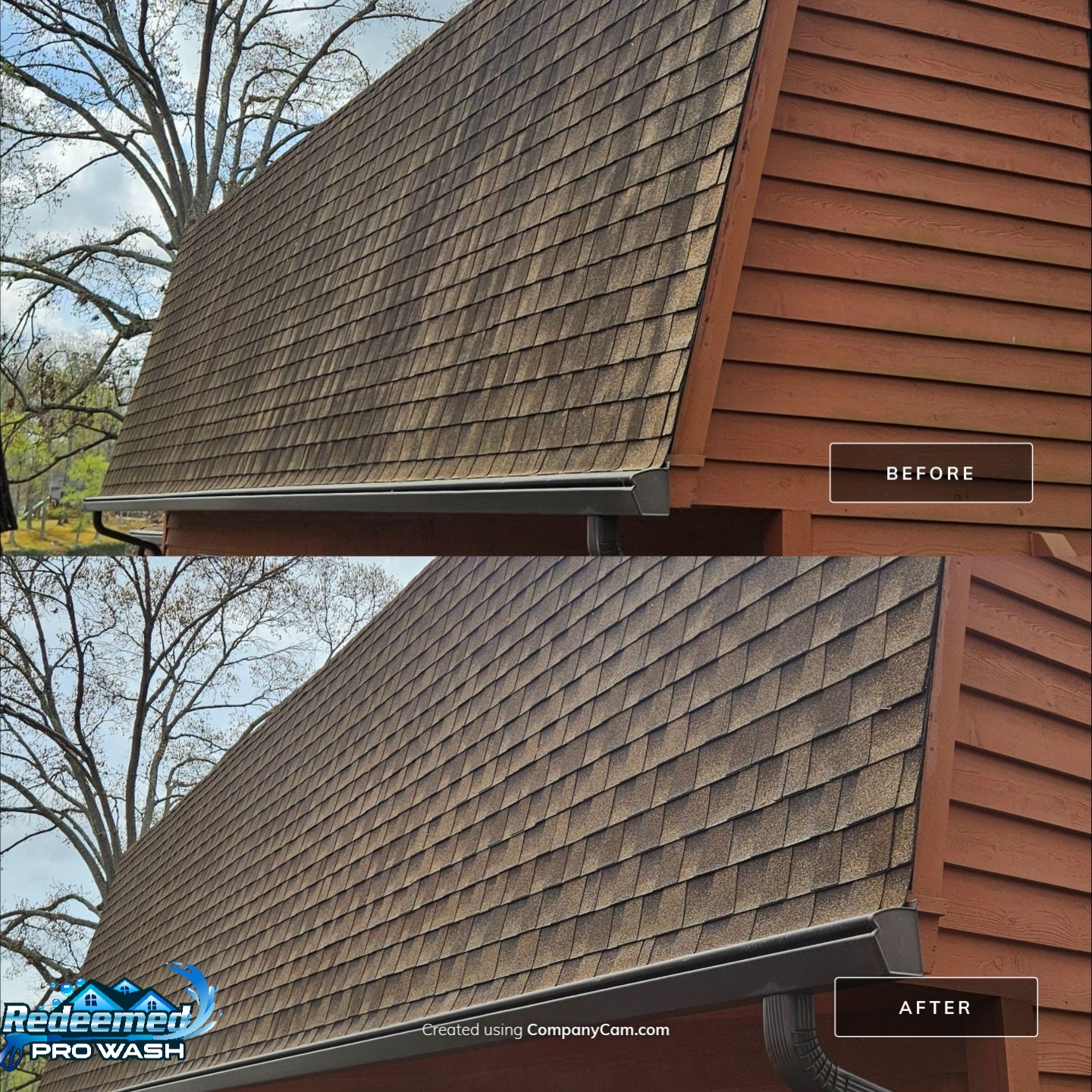
Why the Streaks Always Run Downward
There is a reason the stains form vertical streaks rather than random patches. Roof algae often takes hold near the top of the roof, close to the ridge, where it can spread along the shingles.
Every time it rains or the dew runs, water carries algae spores and residue downward across the shingles. Gravity pulls it down the slope, creating those long dark streaks that trace the path of the water.
This is also why the problem gets worse over time if left alone. Each rain spreads the algae a little further down and across the roof, so a small patch near the ridge slowly becomes a roof full of streaks.
You may also notice the streaks are heaviest below roof features like chimneys, valleys, and skylights. Water channels around those spots, carrying more algae with it, so the staining concentrates right where the runoff is strongest.
Is Roof Algae Actually a Problem?
The most obvious issue is appearance. Black streaks make a roof look old, neglected, and dirty, even when the shingles underneath are in good shape. It drags down the look of the whole house.
Beyond looks, the algae holds moisture against the shingle surface. Damp shingles stay wet longer, and that constant moisture is not good for any roofing material. Removing the algae lets the roof dry properly the way it was designed to.
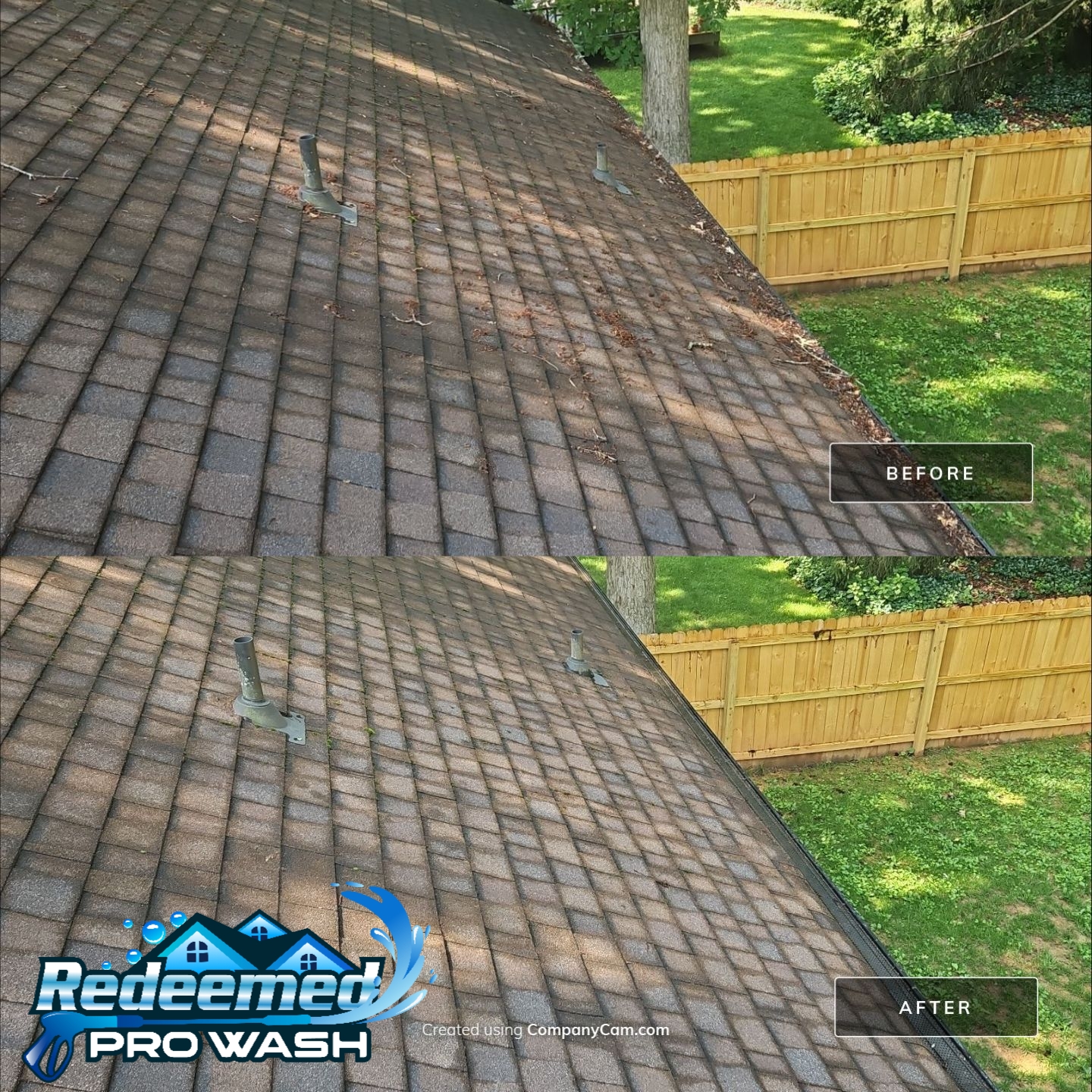
Cleaning restores the roof's appearance and removes the growth that has been sitting on it. A clean roof can help you avoid an unnecessary early replacement that some homeowners consider only because the roof looks worn out. Often the shingles are fine and just need the streaks removed.
The Safe Way to Remove Black Streaks
The correct method for removing roof streaks is soft washing, never high-pressure washing. High pressure would strip the protective granules off your shingles and could dislodge them, causing exactly the kind of damage you want to avoid.
Soft washing uses low pressure and a cleaning solution that kills the algae at the root. Once treated, the streaks lift away and the roof returns to a clean, uniform color. Because the algae is killed rather than just knocked loose, the roof stays cleaner longer.
This is not a job for a ladder and a stiff brush. It takes the right solution, the right technique, and safe handling around a roof. Doing it wrong risks damaging shingles or landscaping, or getting hurt.
Call Redeemed Pro Wash for Safe Roof Cleaning
If black streaks are creeping across your roof, Redeemed Pro Wash can clean them safely. We are an owner-operated, licensed and insured company in Gibsonville, serving Greensboro, High Point, Winston-Salem, Burlington, Elon, and the rest of the Triad.
Owner Brian Griffin uses low-pressure soft washing to remove roof algae without harming your shingles. We treat the growth at the root so your roof comes clean and stays that way longer, restoring the look of your whole home.
If those streaks are bothering you, reach out for a free estimate. We will take a look and give you honest advice on cleaning your roof the safe way.
Related Services & Areas
Frequently Asked Questions
They are a living algae called Gloeocapsa magma, not dirt. It lands on the roof as airborne spores and feeds on the limestone filler in asphalt shingles, creating dark streaks over time.
Our warm, humid climate with frequent rain and heavy dew keeps roofs damp, which is exactly what roof algae needs to grow. Shaded, north-facing slopes stay wet longest and streak first.
Yes. Soft washing with a low-pressure cleaning solution kills the algae at the root and lifts the streaks away, restoring the roof's appearance. Because the algae is killed, the roof stays cleaner longer.
You should never pressure wash a roof. High pressure strips the protective granules off shingles and can dislodge them. Roof streaks should only be removed with gentle soft washing.