Brick Cleaning Services in North Carolina
Safe, low-pressure brick cleaning for homes and businesses across the North Carolina Triad. We lift algae, dirt, and grime while protecting your mortar joints and brick face. Licensed, insured, and owner-operated.
Brick cleaning services in North Carolina call for a careful hand, and Redeemed Pro Wash brings one to every job. Brick looks tough, but the mortar joints between the bricks and the porous face of the brick itself are easy to damage with the wrong pressure or the wrong chemicals. We clean brick the way it should be cleaned: with low to moderate pressure, the right plant-safe detergents, and enough dwell time to let the cleaning solution do the work instead of the water blast.
Our owner, Brian Griffin, runs every job personally. That means the person who quotes your brick is the person who cleans it. We serve homeowners and businesses across the Triad, including Gibsonville, Greensboro, High Point, Winston-Salem, and Burlington, and we work statewide when the job calls for it. We are licensed and insured, and we have earned 50 five-star Google reviews from neighbors who trust us with their brick.
Whether you have a full brick home, a brick chimney, a brick patio, a retaining wall, or a set of brick steps, the goal is the same. Clean the surface, protect the structure, and leave the brick looking the way it did when it was new. Below we walk through exactly how we do that and why the method matters so much on brick.
Key Takeaways
- Brick is porous and needs low-pressure soft washing with the right detergent, not high-pressure blasting that can erode mortar joints and pit the brick.
- We never use acid etching, which burns brick and damages mortar. We protect your structure while lifting algae, dirt, and stains.
- The white powder called efflorescence is a moisture symptom, not a cleaning failure. We clean it without acid and help you identify the water source so it does not simply return.
- Triad conditions like humidity, spring pollen, red clay staining, and shaded north-facing walls all affect brick, and we match the cleaning solution to what is actually on your wall.
- Brick cleaning starts at $149, and we offer free estimates. We are licensed, insured, owner-operated, and backed by 50 five-star Google reviews.
Why Brick Needs a Gentle, Purpose-Built Cleaning Method
Brick is a masonry surface, and masonry is porous. Both the brick and the mortar between the joints soak up water and hold it. That porosity is exactly why brick can grow algae and pick up dark staining, and it is also why brick has to be cleaned with respect. High-pressure water aimed at a brick wall can carve tiny channels into the softer mortar joints and even pit the face of older or softer brick. Once that happens, the surface holds even more water, which invites more growth and, over freeze-and-thaw winters, more chipping and cracking.
The right approach on brick is less pressure and more chemistry. Professionals call this soft washing or low-pressure washing. Instead of trying to blast dirt off with force, we apply a cleaning solution, let it dwell so it can break down the organic growth and grime, and then rinse at a controlled pressure that the brick and mortar can handle. The detergent does the heavy lifting. The water just carries the loosened dirt away.
This is the single biggest difference between a brick surface that is cleaned well and one that is damaged in the name of cleaning. We tune the solution, the dwell time, and the flow to the specific brick in front of us, whether it is a modern veneer, a decades-old chimney, or a shaded north-facing wall covered in green film.
Soft Washing vs. Pressure Washing on Brick
People often ask whether their brick should be pressure washed or soft washed. For most brick surfaces, the honest answer is soft washing, or low pressure paired with the right detergent. Soft washing uses gentle pressure and biodegradable cleaning solutions to remove mold, algae, and dirt from delicate surfaces without driving water deep into the masonry or eroding the mortar. It is the safest way to clean the face of a brick home.
There are places on brick where a controlled, moderate rinse pressure is appropriate, such as flat brick paving or heavily soiled walkways where the surface can take more flow. Even then, the pressure stays well below what people use on bare concrete, and we keep the wand moving so no single spot takes a concentrated hit. The mistake we see most often from DIY jobs and inexperienced crews is treating a brick wall like a concrete driveway. Brick and mortar simply are not built for that kind of force.
The bottom line is that safe brick washing balances chemistry, temperature, dwell time, and flow, not raw power. We choose the lowest pressure that gets the job done, and on most brick that is low pressure by design.
The North Carolina Triad Problem: Algae, Pollen, Red Clay, and Humidity
Brick in the North Carolina Triad faces a specific set of challenges, and we see all of them week to week. Our humidity keeps exterior surfaces damp, and dampness feeds algae and mildew. That is why shaded, north-facing brick walls and the lower courses of brick near shrubs and mulch beds so often turn green or gray. The sun never fully dries them out, so the growth takes hold and spreads.
Spring brings heavy yellow pollen that settles into the texture of brick and mortar and dulls the whole surface. Our red clay soil is another culprit. Iron-rich red clay splashes up onto lower brick during rain and irrigation, and it can leave orange and rust-toned staining that a garden hose will never touch. Add the black roof streaks from Gloeocapsa magma algae that can drip down onto brick below the roofline, and you have a lot of different problems landing on one surface.
Because we work in the Triad every day, we know how these stains behave on local brick. We match the cleaning solution to what is actually on your wall, whether that is organic algae growth, a film of pollen and dust, red clay splash-up, or a combination of all three.
Understanding Efflorescence: The White Powder on Your Brick
One of the most misunderstood problems on brick is efflorescence, the white, chalky, powdery film that appears on the surface. It is not dirt and it is not mold. Brick and mortar naturally contain soluble salts. When water moves through the masonry and then evaporates at the surface, it leaves those salts behind as a white deposit. This is very common on newer brick and on walls that stay wet.
Here is the honest and important part. Efflorescence is a moisture symptom, not a cleaning problem. We can clean the visible white film off your brick, and we do it without harsh acids. But if the underlying water source is not addressed, the white deposit can return, because more water keeps carrying more salt to the surface. Common water sources include overflowing gutters, downspouts discharging too close to the wall, sprinklers hitting the brick, poor drainage, and soil or mulch piled too high against the foundation.
We will tell you the truth about what we are seeing. If your efflorescence is being driven by a drainage or moisture issue, cleaning restores the appearance, and we will point you toward the water source so the problem does not simply come back. We would rather give you a straight answer than a false promise.
Why We Never Use Acid Etching on Your Brick
Some cleaners reach for strong acids, including muriatic acid, to strip brick quickly. We do not, and there is a good reason. Harsh acid can burn the face of the brick and eat into the mortar joints. It creates a pitted, roughened surface that then absorbs even more water, which weakens the brick and mortar over time and can lead to crumbling, loose joints, and cracking. It can also discolor the brick and leave its own residue behind.
The joints between your bricks are structural. They keep water out and hold the wall together. Etching them away for the sake of a fast clean is a trade that is not worth making. Our low-pressure, detergent-based method is designed to protect those mortar joints while still lifting algae, dirt, and organic staining.
This is where hiring the right company matters. A clean that looks good on day one but quietly damaged your mortar is not a clean we are willing to deliver. We protect the structure first, and the appearance follows.
What to Expect When We Clean Your Brick
We start with a walkthrough. We look at the type and age of your brick, the condition of the mortar joints, and what is actually growing or staining the surface. If we spot cracked or missing mortar, we will point it out, because open joints can let water and cleaning solution in where you do not want them. That inspection shapes the plan.
From there we protect nearby plants and landscaping, pre-wet as needed, and apply a plant-safe cleaning solution suited to your brick. We let it dwell so it can break down the algae and grime at the root rather than just on the surface. Then we rinse at a low, controlled pressure that the brick and mortar can handle safely, working in sections so the whole surface comes out even.
For a typical brick home or a defined area like a chimney, patio, or walkway, most jobs are completed in a single visit. When we are done, the brick looks clean and uniform, the mortar is intact, and your landscaping is left the way we found it. You get a straightforward result with no surprises.
How Often Should You Have Your Brick Cleaned?
For most brick in the North Carolina Triad, a professional cleaning every one to three years keeps the surface looking its best and keeps organic growth from getting established. The right interval depends on your specific conditions. Brick that sits in shade, faces north, or stays damp under trees will grow algae faster and benefit from more frequent cleaning. Brick that gets good sun and airflow can go longer between washes.
Regular cleaning is not just about appearance. Letting algae, moss, and organic growth sit on brick keeps the surface damp and holds moisture against the masonry, and that trapped moisture is what you want to avoid over the long term. Removing that growth on a sensible schedule helps keep your brick dry between rains and protects your curb appeal at the same time.
We are happy to recommend a realistic interval for your home based on what we see. There is no need to over-clean brick, and we will not tell you to.
Honest Pricing and a Free Estimate
Our brick cleaning starts at $149, and the final price depends on the specifics of your project. Every brick surface is different, so we quote the actual job rather than a one-size-fits-all number. The most reliable way to get an accurate price is a quick look at the surface, which is exactly what our free estimate provides.
We believe in telling you the truth about your brick, whether that is a simple algae wash or an efflorescence problem tied to a water source. We are licensed and insured, owner-operated, and backed by 50 five-star Google reviews from customers across Gibsonville, Greensboro, High Point, Winston-Salem, Burlington, and the wider Triad. If you want your brick cleaned safely and correctly, call Brian at (351) 242-0666 or request your free estimate today.
What We Clean
- Full brick home exteriors and brick veneer walls
- Brick chimneys and chimney stacks
- Brick patios and paved brick areas
- Brick walkways, sidewalks, and front steps
- Brick retaining walls and garden walls
- Brick porches, columns, and entryways
- Brick mailboxes and pillar features
- Commercial and HOA brick facades
- Brick fencing and screen walls
- Shaded, algae-covered north-facing brick
Our Process
- Step 1
Inspect the Brick and Mortar
We walk the surface, identify the brick type and condition, check the mortar joints for cracks or gaps, and diagnose exactly what is staining or growing on your brick.
- Step 2
Protect Your Landscaping
We shield nearby plants, shrubs, and greenery and pre-wet as needed so our plant-safe solutions clean the brick without harming your yard.
- Step 3
Apply and Dwell
We apply a plant-safe, purpose-built cleaning solution matched to your brick and let it dwell so it breaks down algae, mildew, and grime at the root.
- Step 4
Low-Pressure Rinse
We rinse at a controlled, low to moderate pressure the brick and mortar can safely handle, working in sections so the finish comes out clean and even.
- Step 5
Final Walkthrough
We check the result with you, confirm the mortar joints are intact, and make sure your landscaping is left the way we found it.
Pro Tips from Brian
- Never let anyone use muriatic or strong acid on your brick. It can burn the brick face, etch the mortar joints, and cause long-term crumbling and cracking.
- If you see white powder returning after a cleaning, the problem is not the clean. It is a water source. Check gutters, downspouts, sprinklers, and drainage near the wall.
- Pay attention to shaded, north-facing walls and the lower brick near mulch beds. These stay damp and grow algae first, so they need attention sooner.
- Keep mulch and soil from piling up against the base of your brick. Trapped moisture against the wall feeds efflorescence and organic growth.
- Have cracked or missing mortar repaired before a wash. Open joints let water in and should be pointed up so your brick stays weather-tight.
- Aim shrubs and sprinkler heads away from the brick. Constant water hitting the wall is one of the fastest ways to grow green film and white deposits.
What Affects Your Price
Brick Cleaning starts at from $149. Most companies hide pricing — we don't. Here's what shapes the final number:
- Total square footage and the height of the brick surface, since taller walls take more setup and time
- The type and severity of staining, whether it is light pollen and dust, heavy algae, red clay splash-up, or efflorescence
- The condition of the mortar joints, since damaged joints require extra care and a gentler approach
- Access and layout, including landscaping, tight spaces, and how easy the surface is to reach safely
- The specific feature being cleaned, such as a flat patio versus a full two-story brick facade or a chimney
- Whether the surface is a single area or a whole-home wash combined with other services
Every estimate is free, written, and itemized — no surprise fees.
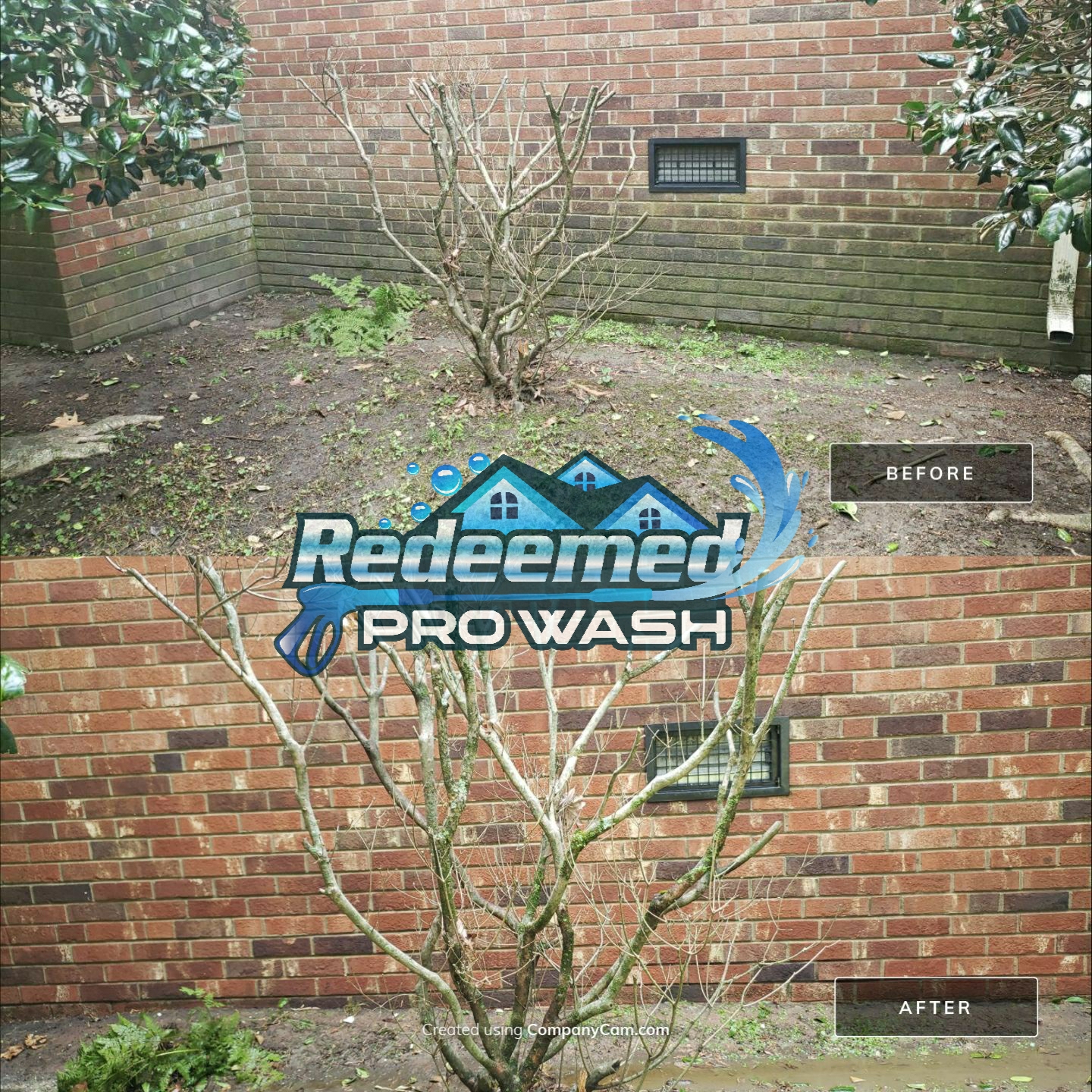
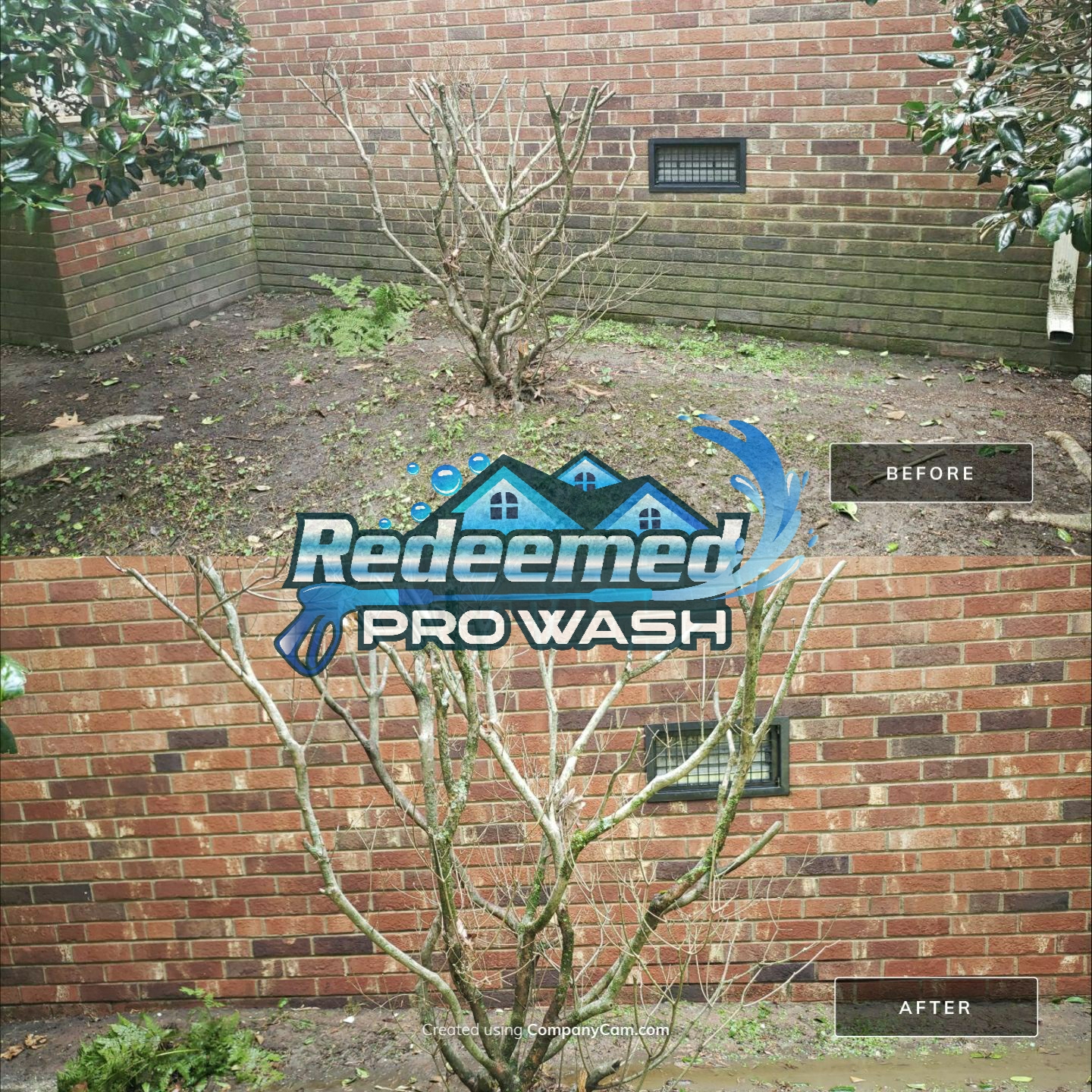
Brick Cleaning — Before & After
Actual work from Redeemed Pro Wash customers across the Triad.
 Before / After
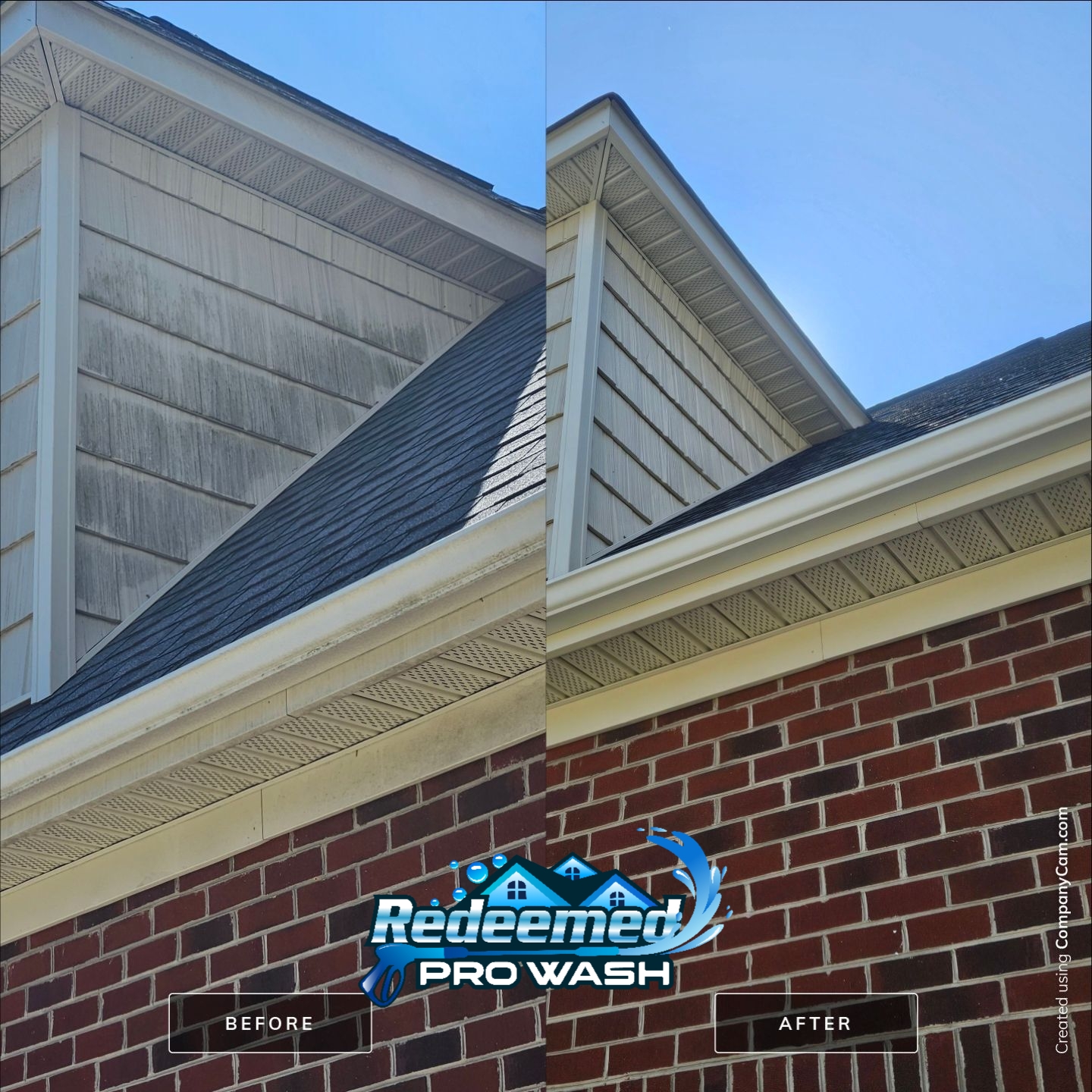 Before / After
Brick Cleaning Across the NC Triad
We provide brick cleaning in these communities and more:
Related Services
Brick Cleaning FAQs
Yes, but only with the right method. Brick and mortar are porous and can be damaged by high pressure, so we clean brick with low to moderate pressure and plant-safe detergents. We let the cleaning solution do the work and keep the pressure low enough to protect the mortar joints and the brick face.
Not the way we do it. Damage to mortar usually comes from high-pressure blasting or harsh acids. We use a low-pressure, detergent-based approach designed to protect your joints. Before we start, we also inspect for cracked or missing mortar and point out anything that should be repaired first.
No. We never use muriatic acid or other harsh acids to etch brick. Acid can burn the brick surface, eat into the mortar, and cause long-term crumbling and cracking. Our plant-safe, low-pressure method cleans effectively without that risk.
That is efflorescence, a natural salt deposit that appears when water moves through the masonry and evaporates at the surface. It is not mold or dirt. We can clean the visible film without acid, but because it is driven by moisture, it can return if the underlying water source is not addressed.
When efflorescence returns, the cleaning is not the issue. A water source is feeding it. Common causes are overflowing gutters, downspouts too close to the wall, sprinklers hitting the brick, poor drainage, or soil and mulch piled against the foundation. We will point out the likely source so you can address it.
Green and black growth thrives on damp, shaded, north-facing brick common in our humid Triad climate. We apply a plant-safe cleaning solution that kills the algae at the root, let it dwell, then rinse at low pressure. This removes the growth rather than just knocking the surface off, so results last longer.
For most Triad homes, every one to three years works well. Brick in shade, facing north, or staying damp under trees may need more frequent cleaning, while sunny, well-drained brick can go longer. We are happy to recommend a realistic interval based on your specific conditions.
Sealing is optional and depends on your brick and your goals. If you choose to seal, a breathable masonry sealer is the right kind, because it keeps water out while still letting the brick release moisture. We can talk through whether it makes sense for your situation during your estimate.
Our brick cleaning starts at $149, and the final price depends on the size, height, condition, and level of staining on your brick. Because every surface is different, we quote the actual job. The best way to get an accurate number is our free, no-obligation estimate.
We are based in Gibsonville and serve the entire North Carolina Triad, including Greensboro, High Point, Winston-Salem, and Burlington, with statewide service available when the job calls for it. We are licensed, insured, owner-operated, and backed by 50 five-star Google reviews.