Key Takeaways
- Rinse off pollen and debris regularly so they cannot feed algae.
- Treat oil and fluid spots fast before they soak into the concrete.
- Reduce shade and standing moisture to slow algae from returning.
- Manage red clay and landscaping near the driveway edges.
- A sealer and a yearly maintenance wash help results last.
A freshly pressure washed driveway looks great, and most owners want to keep it that way. The good news is that a few simple habits can keep your driveway cleaner after pressure washing for much longer. You cannot stop North Carolina weather, but you can slow down the grime that turns concrete gray again.
In the Triad, driveways face pollen in spring, humidity all summer, red clay year round, and shade that keeps things damp. Those are the forces that bring back algae and stains. Managing them is the key to lasting results.
Here are practical, no-nonsense ways to protect your clean driveway between washes.
Rinse Off Pollen and Debris Regularly
A quick rinse with the garden hose goes a long way. Spring pollen settles thick on concrete in the Triad, and if it sits it feeds algae. Rinsing the driveway every couple of weeks during pollen season keeps that layer from building up.
The same goes for leaves, grass clippings, and seed pods. Organic debris traps moisture and stains concrete as it breaks down. Blowing or sweeping it off is a two-minute job that pays off, and it keeps that debris from washing into cracks where it feeds weeds and moss.
You do not need a pressure washer for this. Just do not let debris sit and rot on the surface. A leaf blower or a stiff push broom is all it takes, and doing it after a mow or a storm keeps the driveway from ever getting a head start on grime.
Address Oil and Fluid Spots Fast
Oil, transmission fluid, and other car leaks are among the hardest stains to remove once they soak in. The trick is speed. If you catch a fresh spot, cover it with cat litter or a dry absorbent, let it draw the oil up, then sweep it away before it spreads.
For a spot that has already set, a degreaser and a stiff brush help before it goes deeper. The longer oil sits on concrete, the further it penetrates and the harder it is to lift, even for a professional.
If you have a vehicle that drips, a small mat or drip tray under the leak saves your clean driveway a lot of grief.
Manage Shade and Moisture
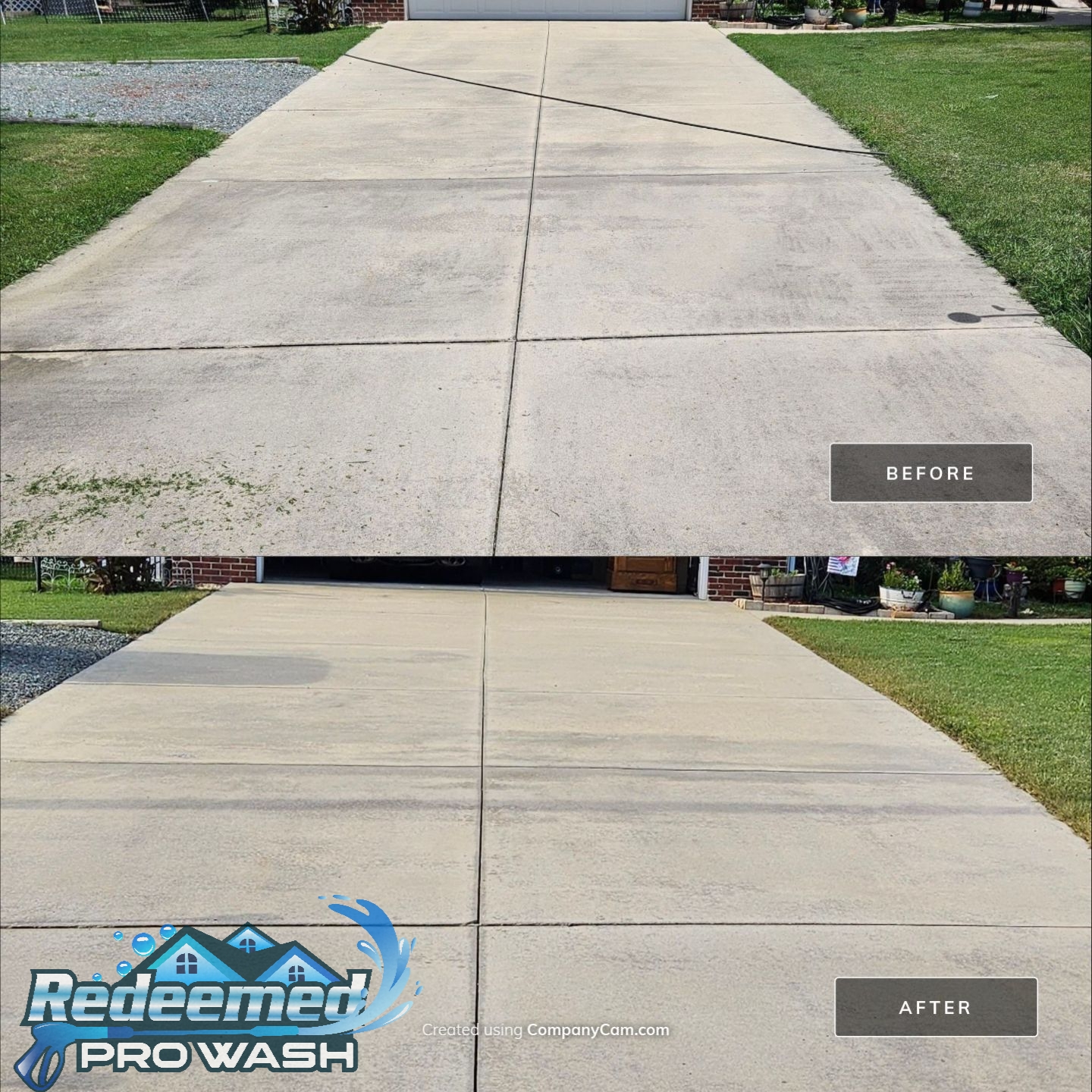
Algae loves damp shade. If part of your driveway stays wet because trees or shrubs block the sun, that is where green will return first. Trimming back branches and bushes lets more sunlight and air reach the concrete, which keeps it drier.
Check that sprinklers and downspouts are not constantly wetting the driveway. A downspout that dumps onto concrete keeps it damp and green no matter how often you clean it. Redirecting the water with a simple extension or splash block helps a lot, and it protects your foundation at the same time.
The drier your concrete stays, the slower algae comes back. In our humid climate, that is half the battle, and it is the difference between a driveway that stays clean for a year and one that greens up again in a few months.
Keep Red Clay and Landscaping in Check
North Carolina red clay stains concrete a rusty orange, and it travels easily on shoes, tires, and runoff. If you have exposed clay near the driveway, a border of mulch, gravel, or grass can reduce how much washes onto the surface.
Fertilizers and some mulches can also leave rust or tannin marks. Be mindful of where you spread them near the driveway edges. Sweeping stray fertilizer off the concrete right away prevents rust spots.
Little landscaping choices around the edges make a real difference in how quickly the driveway discolors.
Consider a Sealer and a Maintenance Wash
A quality concrete sealer adds a layer that makes the surface easier to clean and more resistant to stains. It is not permanent and needs reapplying over time, but it can help a freshly cleaned driveway stay cleaner longer. This works best applied after a thorough wash while the concrete is clean.
Even with good habits, a yearly maintenance wash keeps the driveway from slipping back to gray. Regular light cleaning is far easier than letting years of buildup return.
We can advise on timing during your visit and handle the periodic wash whenever you are ready.
Simple Habits That Add Up, and the Next Wash
None of these steps take much effort on their own, but together they make a real difference. Think of it as a short routine rather than a chore. A quick rinse here, a swept-up spill there, a branch trimmed for more sun. Over a season, that upkeep is what keeps your driveway from sliding back to gray.
It also helps to walk the driveway now and then and look for the early signs. A faint green edge, a new oil drip, a spot that stays wet after rain. Catching these small things early is far easier than dealing with a full return of algae and stains. The homeowners who keep their driveways cleanest are not doing anything heroic, they are just staying a step ahead of the pollen, moisture, and red clay our climate throws at them.
Even with the best habits, concrete eventually needs a fresh professional clean. A surface cleaner brings back that even, uniform finish across the whole slab, which no garden hose can match. It is the reset that makes your upkeep easy again.
Redeemed Pro Wash serves Gibsonville, High Point, and the wider Triad. We are local, owner-operated, licensed and insured, and honest about what a wash can do for any tough stains. When your driveway is ready for a refresh, reach out for a free estimate and we will get it looking clean again.
Related Services & Areas
Frequently Asked Questions
It depends on shade, moisture, and traffic. In the Triad, many driveways look clean for a year or more with basic upkeep, while damp, shaded ones may show algae sooner. Regular rinsing and quick stain cleanup extend the results.
A sealer makes the surface more resistant to stains and easier to rinse clean. It is not permanent and needs reapplying over time, but it helps a freshly cleaned driveway hold its look longer, especially against oil and red clay.
Cover it quickly with cat litter or another dry absorbent to pull the oil up, then sweep it away and scrub any remainder with a degreaser. Speed matters, because oil penetrates concrete the longer it sits.
That section likely stays damp from shade or nearby water. Trimming back plants for more sun and redirecting downspouts or sprinklers helps the concrete dry out, which slows algae growth in our humid climate.