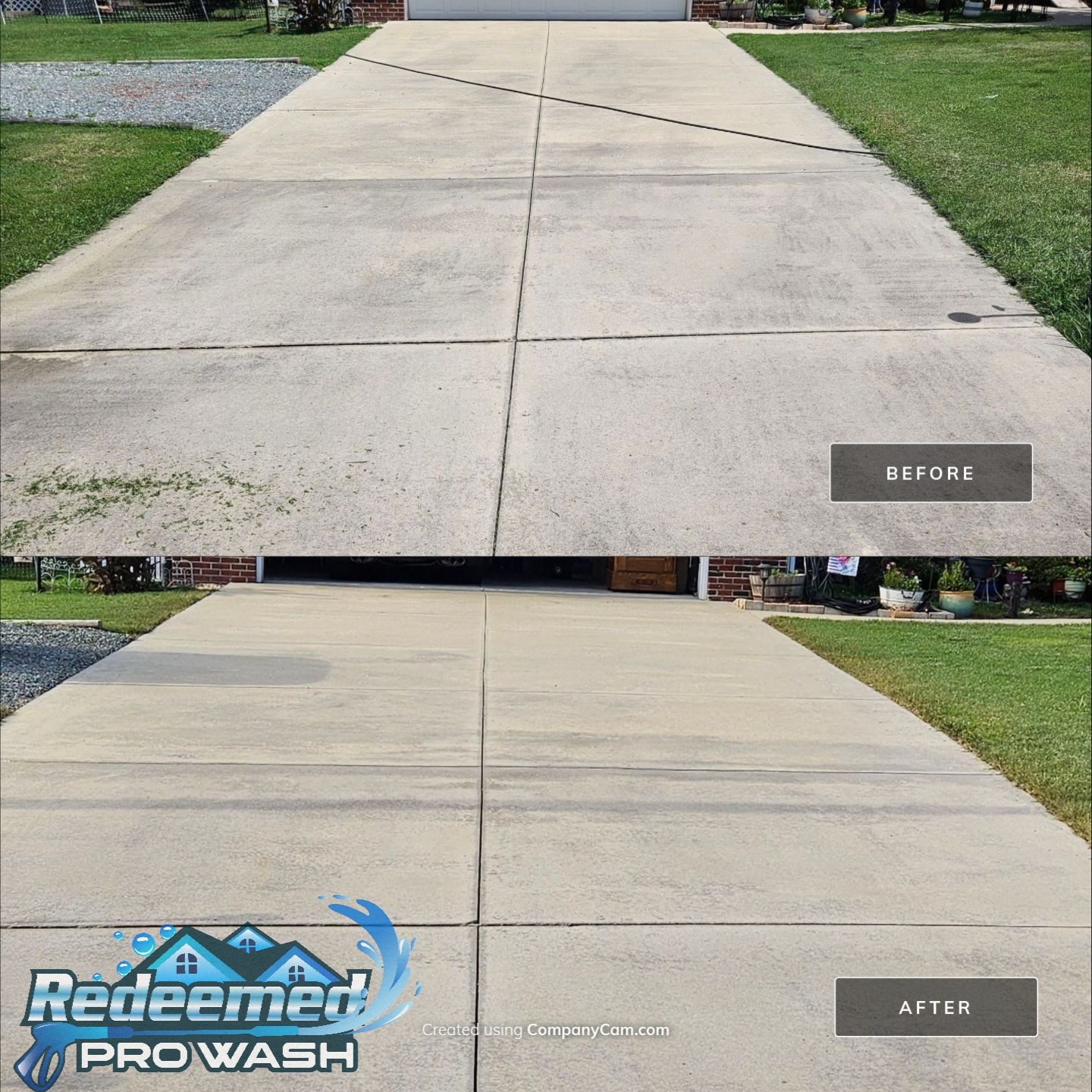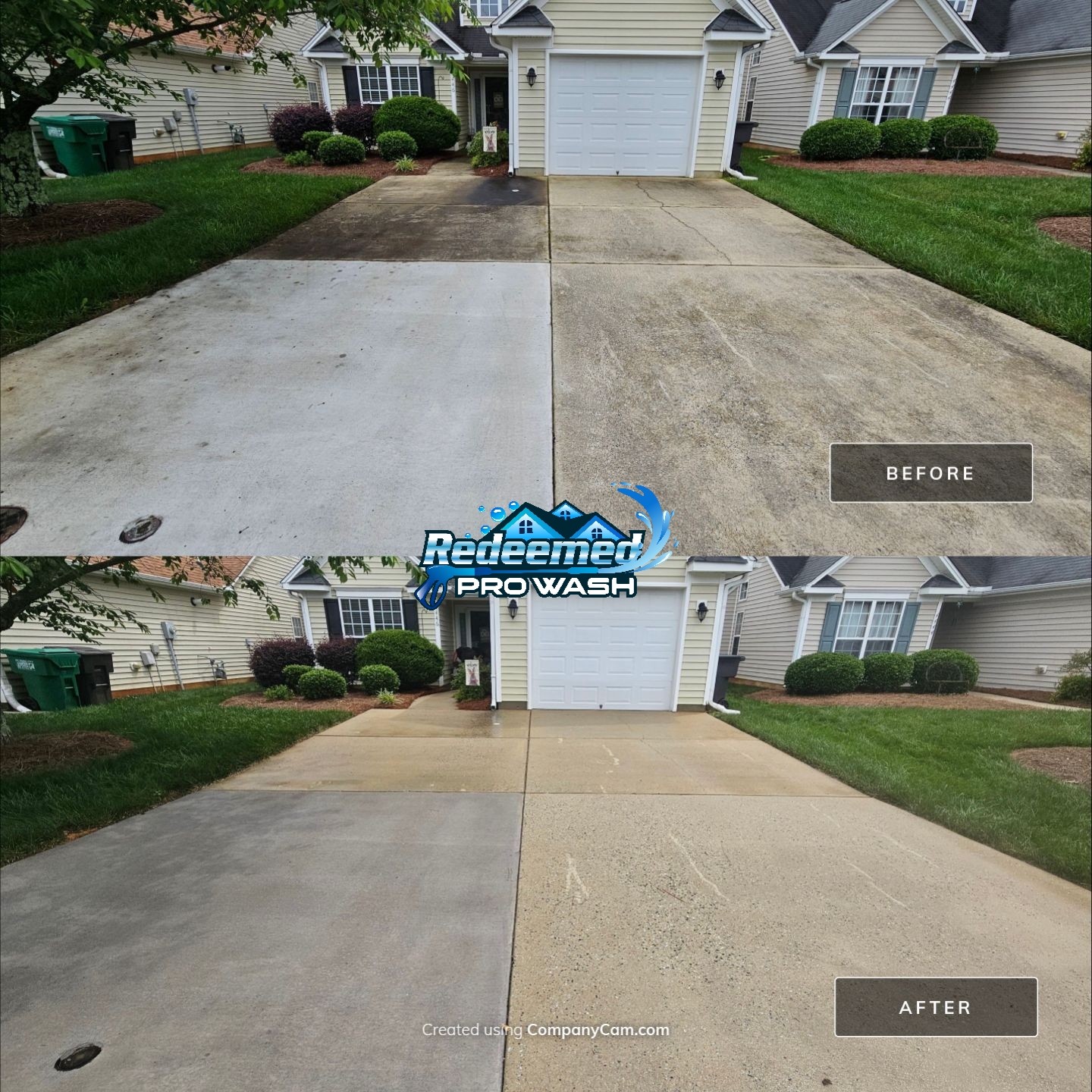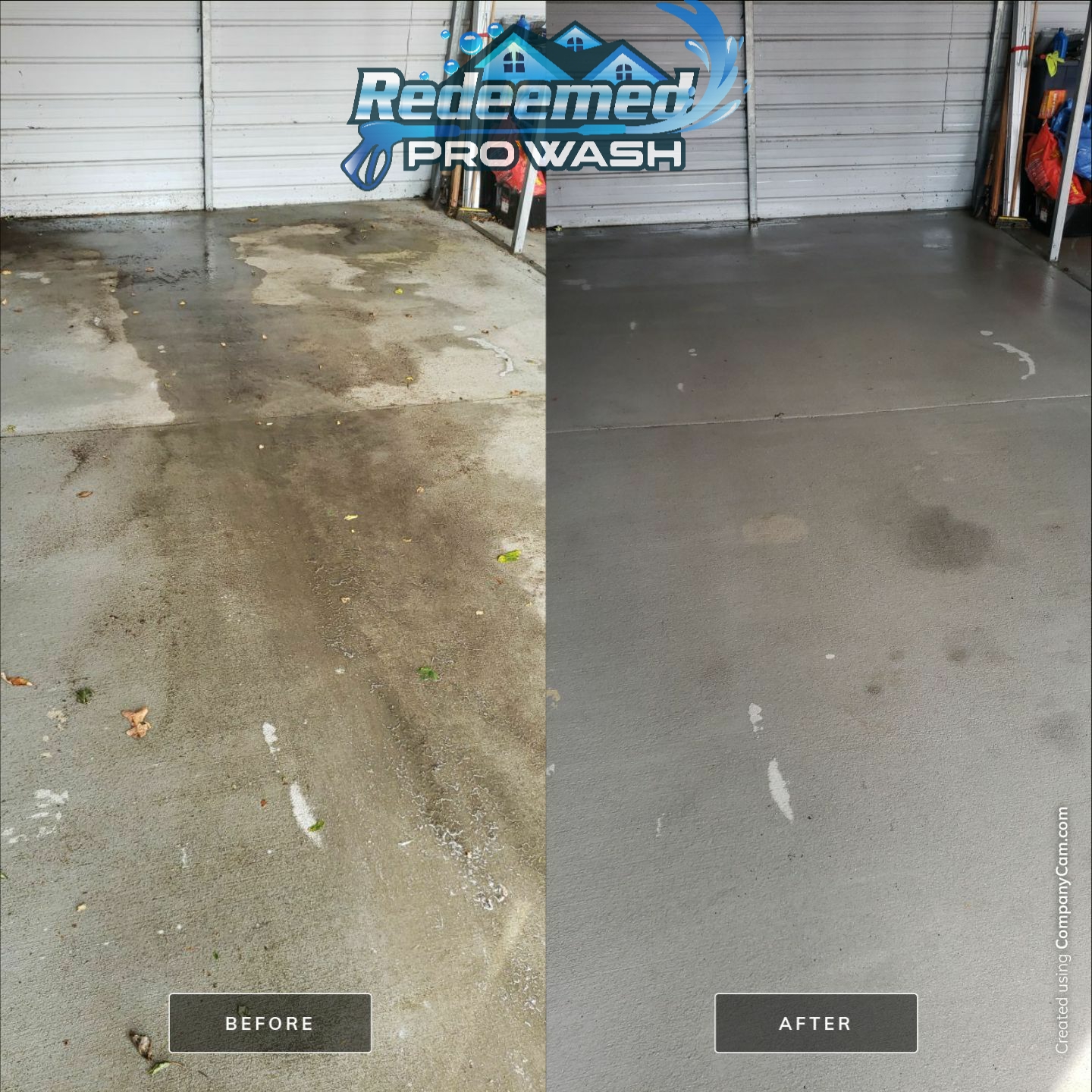
Key Takeaways
- Black and green on concrete is living algae, mold, and mildew, not just dirt.
- Shade keeps concrete damp, which is exactly what the growth needs.
- North-facing and tree-covered areas are the worst trouble spots in the Triad.
- Pressure alone often leaves the roots behind and can etch concrete.
- A cleaning solution that treats growth at the root gives longer-lasting results.
If you have noticed your concrete turning black and green in shaded areas, you are seeing a very common North Carolina problem. That dark, slick film is not just dirt you can sweep away. It is living growth, and it thrives in exactly the damp, shaded spots our humid Triad climate creates all year long.
The good news is that this staining is treatable and preventable. It also tells you something useful about your property. Wherever concrete goes black and green, moisture is sitting on the surface and sunlight is scarce. Once you understand that, the fix makes a lot more sense.
Here is why it happens, why shade makes it so much worse, and how Redeemed Pro Wash cleans it the right way in Gibsonville, Greensboro, Burlington, and across the Triad.
What the Black and Green Actually Is
The green tint on concrete is usually algae. The black staining is often mold, mildew, and other organic growth, sometimes mixed with runoff from the black roof-streak organism that spreads onto surrounding surfaces below the roofline.
All of these are living organisms, not stains that a broom or a garden hose will remove. They root down into the tiny pores of the concrete and feed on moisture, pollen, dust, and organic debris that collect on the surface. That is exactly why a quick sweep or a light rinse barely touches them and they come right back.
Over time, the growth builds a thicker layer that holds even more moisture, which in turn feeds more growth. It becomes a self-feeding cycle that gets harder to break the longer it is left alone. On top of looking bad, it can make walkways, steps, and pool decks genuinely slick and unsafe to walk on, which is a real concern for kids and older family members.
Why Shade Makes It So Much Worse
Algae and mildew need moisture to survive, and shade is what keeps that moisture around. Sunlight dries concrete out and slows growth down. Shaded areas, on the other hand, stay damp for hours or even days longer after rain or a heavy Triad morning dew.
North-facing surfaces are the classic trouble spots. They get the least direct sun over the course of the day, so they rarely fully dry out. Add a tree canopy overhead, a fence line beside them, or a house wall casting a long shadow, and you have created the perfect environment for green and black buildup to take hold and spread.
This is why one section of your driveway or patio can look filthy while a sunny stretch just a few feet away stays relatively clean. It is the same concrete, poured at the same time, but a very different amount of sun and moisture reaching the surface.
The North Carolina Factors That Feed It
Our Triad climate is nearly ideal for this kind of growth. Humid summers keep surfaces damp for long stretches. Spring pollen leaves a fine organic film that algae feed on. Frequent rain and heavy morning dew supply a steady source of the moisture these organisms need to thrive.
Red clay adds another layer to the problem. Runoff and foot traffic track clay onto concrete, and it settles into the same shaded, damp low spots, deepening the discoloration and giving the growth even more to hold onto. The result is a stubborn mix of biological growth and clay staining.
Put all of it together, humidity, pollen, dew, shade, and red clay, and it is easy to see why so many Gibsonville and Greensboro homes fight black and green concrete year after year. It is not a sign of neglect. It is the climate doing what it does.
Why High Pressure Alone Is Not the Answer
It is tempting to just blast the growth off with a high-pressure washer, and on hard concrete you sometimes can knock the surface layer loose. But pressure alone usually treats the symptom, not the underlying cause of the discoloration.
If you only knock off the top layer and leave the roots behind in the pores, the growth returns fast, often within a few months. Worse, too much pressure can etch or scar the concrete, leaving zebra-stripe streaks and an uneven, rough surface that actually traps more grime and holds more moisture down the road.
The better approach is a cleaning solution that kills the organic growth at the root, paired with the right amount of pressure or a gentle, controlled rinse. That combination removes the black and green more completely and slows down how quickly it comes back.
How Redeemed Pro Wash Cleans It
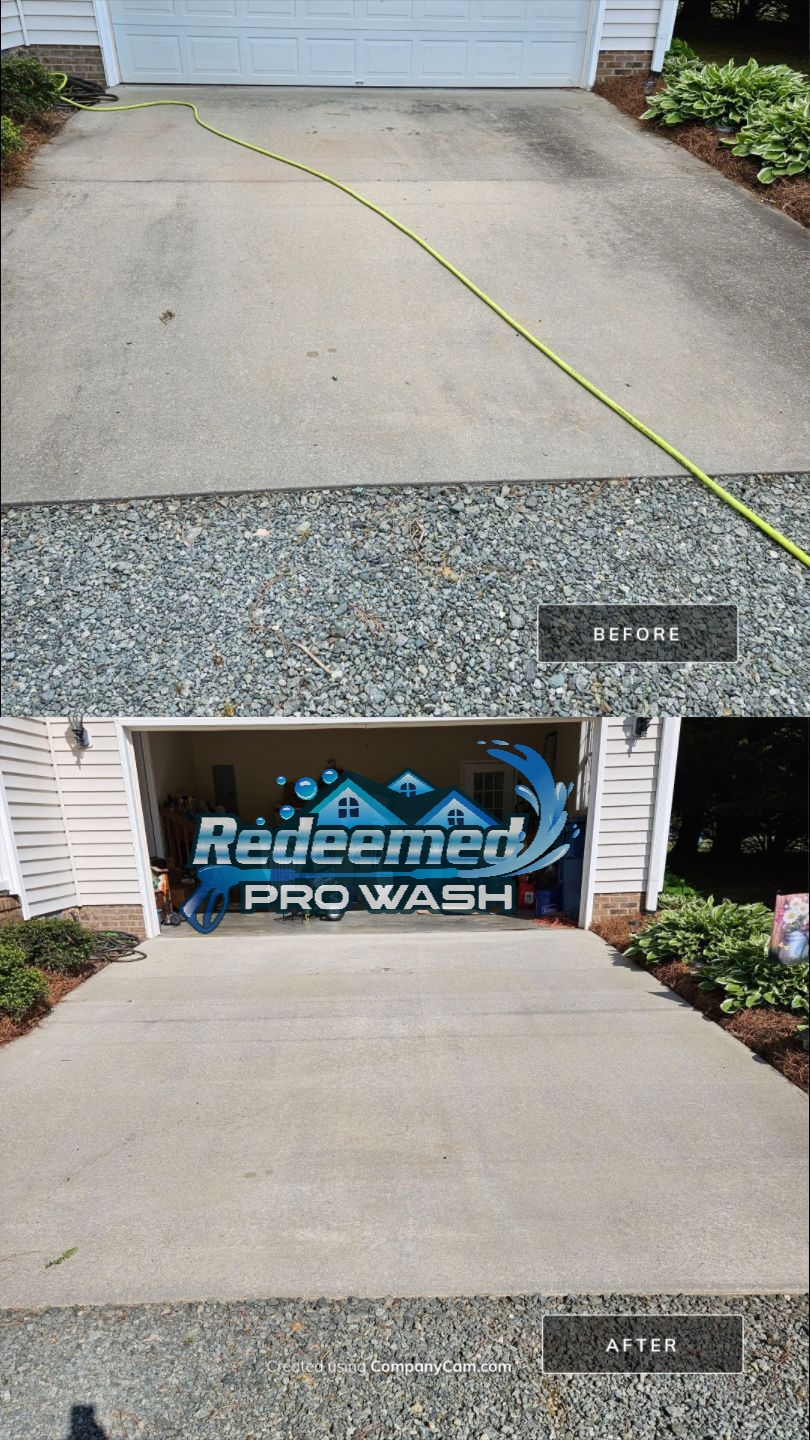
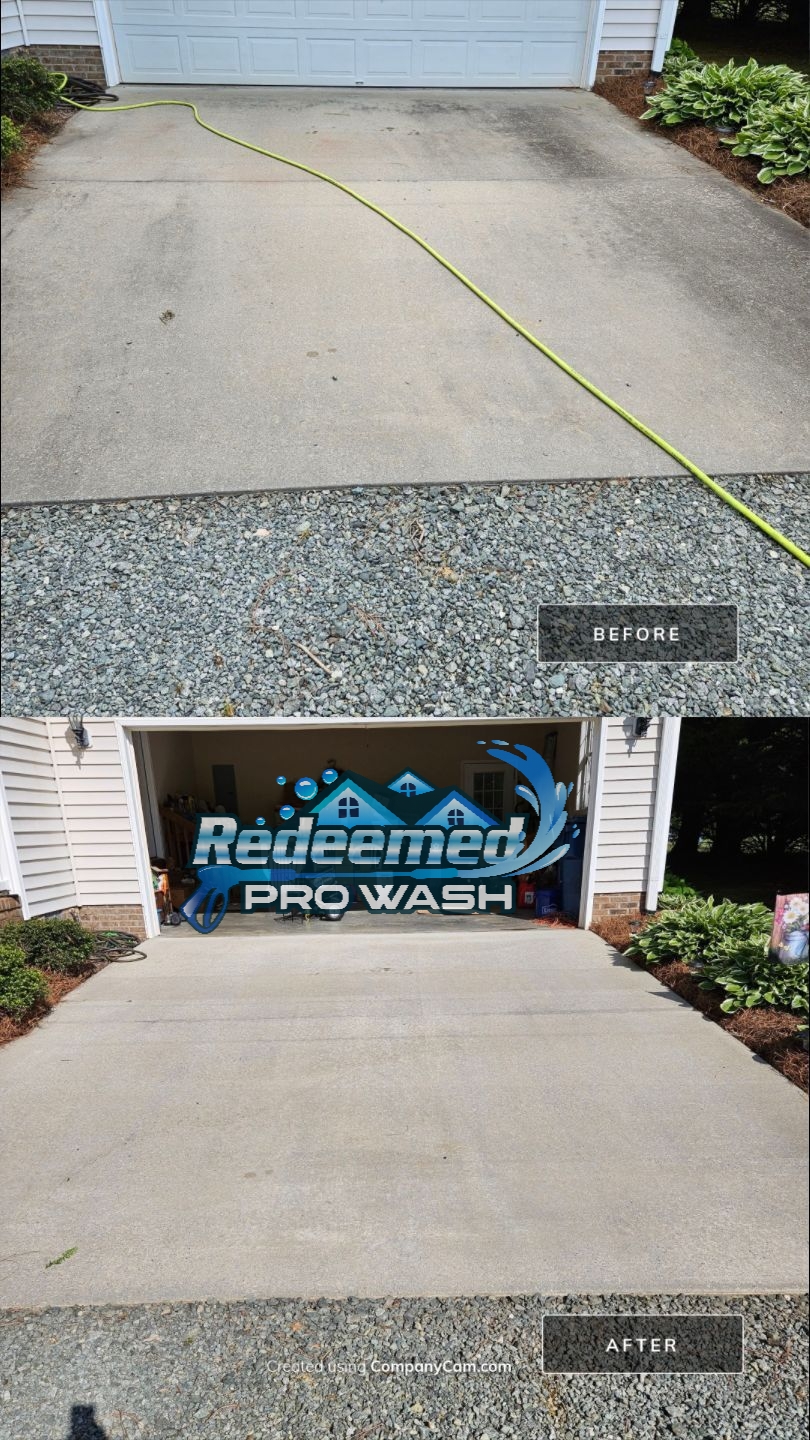
At Redeemed Pro Wash, we clean shaded, discolored concrete by treating the growth, not just spraying at it. We use cleaning solutions that break down the algae, mold, and mildew, then rinse the surface clean. That approach lifts the black and green and helps keep it away longer than pressure alone ever could.
We clean driveways, sidewalks, patios, and walkways this way across the Triad. Keep in mind that if a shaded area stays damp, the growth will eventually try to return, because the conditions that caused it have not changed. That is why many homeowners have us back on a regular schedule to keep their concrete safe and looking right season after season.
If your concrete has turned black and green in shaded areas, we are happy to take a look. We are local, licensed, and insured, and every estimate is free. We will tell you honestly what is causing the discoloration, what we can clean up, and what a realistic maintenance schedule looks like for your property. Reach out and we will give you an honest plan to clean your concrete and keep it looking its best.
Related Services & Areas
Frequently Asked Questions
It is not usually a health hazard, but it makes surfaces slick and can cause slips and falls. Cleaning it improves both appearance and safety, especially on walkways and steps.
The shaded, north-facing, or tree-covered sections stay damp longer, which feeds algae and mildew. Sunny areas dry out and stay cleaner. It is the same concrete, just different sun and moisture.
It can, because the shaded, damp conditions that caused it are still there. Treating the growth at the root slows the return, and regular cleaning keeps it under control.
Pressure alone often removes only the surface layer and can etch concrete if set too high. A cleaning solution that kills the growth at the root gives better, longer-lasting results.