Key Takeaways
- Mortar is softer than brick and erodes under high pressure.
- Soft washing with a cleaning solution is the safe method for brick.
- Efflorescence and deep stains need the right approach, not raw force.
- Protect nearby plants, windows, and trim from runoff.
- Call a professional for algae, efflorescence, and set-in grime.
Brick is tough, but the mortar between it is not. That is the part homeowners forget. Learning the safe way to clean brick without damaging mortar comes down to using less pressure, the right cleaning solution, and patience. Too much force blasts the mortar joints, and once mortar is chipped or hollowed out, water gets behind the brick.
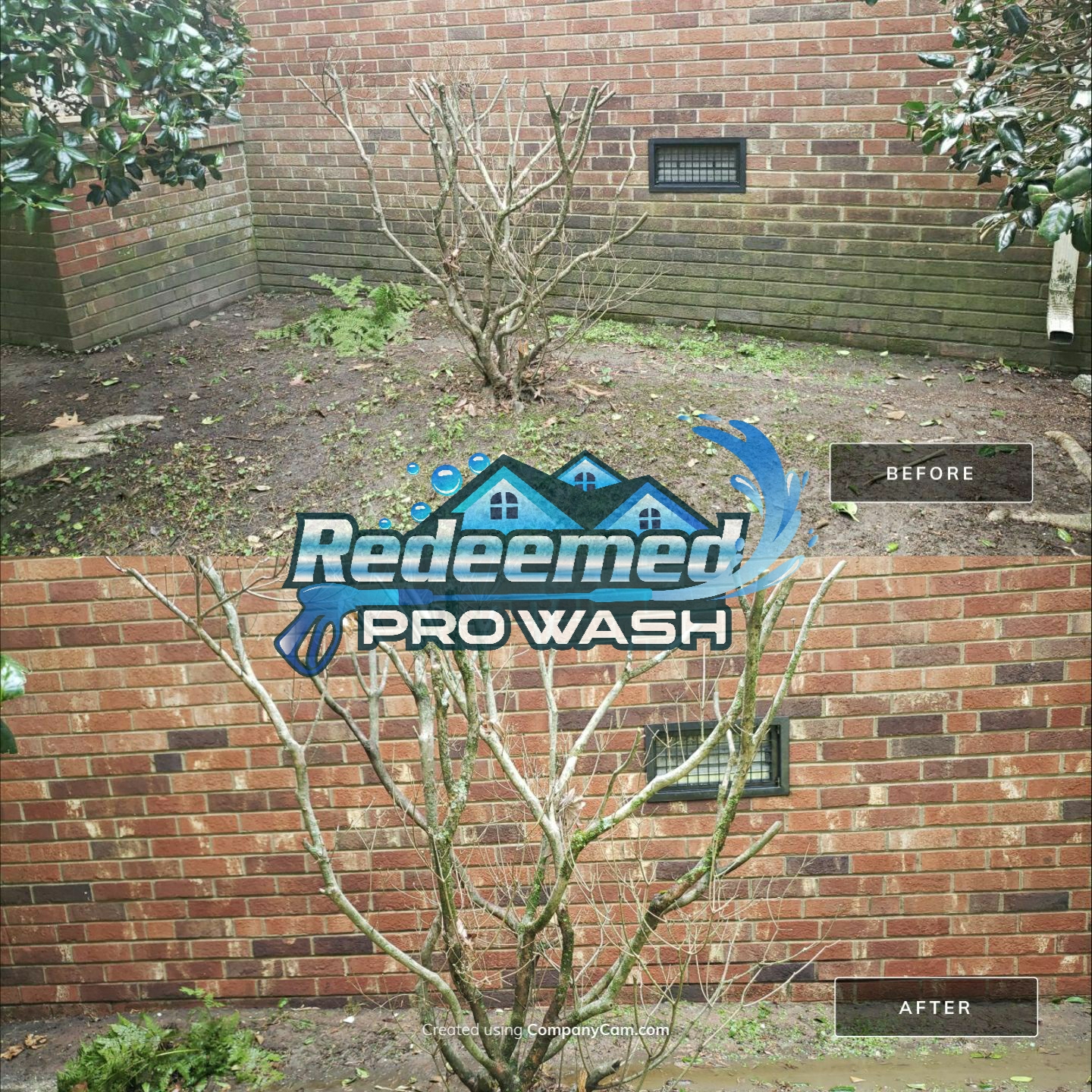
In the North Carolina Triad, brick homes, walkways, and chimneys collect green algae on shaded sides and a chalky film from humidity. It all comes off, but not with a pressure washer cranked to full blast.
Here is how to clean brick the safe way, and why the gentle approach protects your home.
Why High Pressure Damages Brick and Mortar
Mortar is softer than brick, and older mortar is softer still. A high-pressure spray can erode the joints, blow out chunks, and leave gaps where water collects. On older Triad homes, the mortar may already be weak, so aggressive washing does real harm.
High pressure can also etch the face of the brick itself, opening the surface so it holds dirt and moisture more easily. What looks clean at first can end up more porous and prone to staining.
The damage is not always obvious the day you wash. It shows up later as spalling brick, crumbling joints, and moisture problems inside the wall. That is why the method matters far more than raw power, especially on an older home where the mortar has already softened with age.
Soft Washing Is the Safe Method
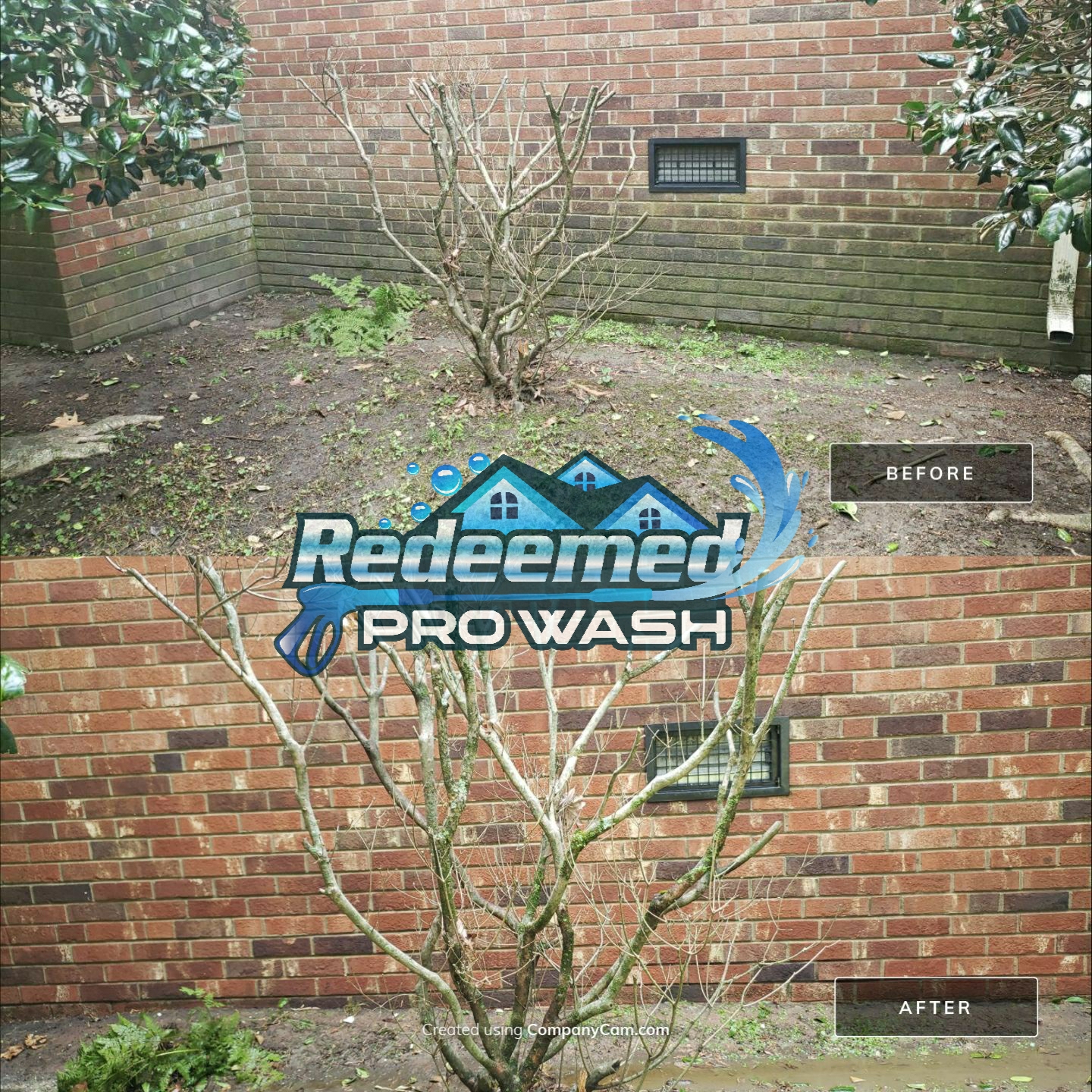
The safe way to clean brick is soft washing. This uses low pressure combined with a cleaning solution that does the work. The solution breaks down algae, mildew, and grime so it can be rinsed away gently, without hammering the mortar.
Soft washing treats the growth at the root, which means it stays gone longer than a quick blast that only knocks off the surface. For shaded brick walls that grow green in our humidity, this is exactly what is needed, and it works just as well on brick walkways, steps, and chimneys.
It is the same principle we use on roofs and siding. Let the solution clean, and keep the pressure low. The brick and mortar both come out ahead, and you avoid the slow damage that heavy pressure causes over time.
Dealing With Efflorescence and Stains
That white, chalky powder on brick is efflorescence, mineral salts pushed to the surface by moisture. It is common on brick foundations and walls in humid areas. It needs the right approach rather than raw pressure, and cleaning it does not fix the moisture source behind it.
Red clay stains, tannin from leaves, and rust each respond to different treatments. We are honest that some deep or old stains lighten but do not fully disappear. Brick is porous, so stains can sink in over time.
The goal is to clean thoroughly without forcing water or harsh force into the wall. A careful, targeted approach protects the brick while getting the best result the surface allows.
Protecting Plants, Windows, and Trim
Cleaning brick is not only about the brick. The solution and rinse water run off onto landscaping, so plants near the wall need to be wet down before and rinsed after to protect them. Windows, wood trim, and metal fixtures also need care.
This is part of doing the job right. A rushed wash that kills your shrubs or spots your windows is not a good result, even if the brick looks clean.
A careful crew plans for the runoff and protects everything around the work area. It is a small step that makes a big difference.
When to Call a Professional
You can rinse light dust off brick with a hose, but for algae, efflorescence, and set-in grime, a professional soft wash is safer and more effective. It is easy to damage mortar with a rented pressure washer, and hard to undo that damage.
A professional matches the pressure and solution to the age and condition of your brick. On older homes with soft mortar, that judgment protects your walls.
If your brick has loose or missing mortar already, that is a repair to handle before or after cleaning. We will point out anything we notice so you can plan.
Caring for Brick and Letting a Local Pro Help
Once your brick is clean, a little attention keeps it that way. Trim shrubs and branches back from shaded brick walls so they get more sun and air, which keeps them drier and slows algae from returning. In our humid Triad climate, dryness is your best defense.
Keep an eye on where water lands, too. A downspout that splashes brick or a sprinkler that keeps a wall damp will grow green no matter how well it was cleaned. Redirecting that water protects both the look and the mortar. And if white efflorescence keeps coming back, treat it as a signal to check for a moisture source behind the wall, since cleaning handles the surface but lasting dryness keeps the powder from returning.
Brick is one of those surfaces where the method matters more than the muscle. The wrong pressure can quietly damage mortar in a way that costs far more to fix than the cleaning ever would. A careful, low-pressure soft wash gets the best result the brick allows while protecting the joints.
Redeemed Pro Wash serves Gibsonville, Greensboro, Winston-Salem, and the surrounding Triad. We are local, owner-operated, licensed and insured, and honest about what a wash can and cannot remove from porous brick. If your brick home, walkway, or chimney needs a safe clean, reach out for a free estimate.
Related Services & Areas
Frequently Asked Questions
You can, but it is risky. High pressure erodes mortar joints and etches the brick face, and the damage often shows up later as crumbling joints and moisture problems. Soft washing with low pressure and a cleaning solution is far safer.
That is efflorescence, mineral salts drawn to the surface by moisture. It can be cleaned with the right method, but it also points to a moisture source behind the brick worth checking, since cleaning alone does not stop it from returning.
Most algae, mildew, and grime come off cleanly. Brick is porous, so deep red clay, rust, or tannin stains may lighten significantly but not vanish. We look at your brick first and tell you honestly what to expect.
Yes. Soft washing relies on a cleaning solution to break down growth and grime, so it does not need high pressure to work. It cleans thoroughly and treats algae at the root, which keeps the brick cleaner longer than a quick blast.